Capital Radio London has announced the results of a youth research study which examines the unique role that radio plays in young Londoners’ lives. The research has received full IPA approval.
Although this age group is a popular subject for research, Capital felt that most youth studies had concentrated on investigating youth lifestyle and attitude groups and how media and advertising relate to them. The aim of the Capital Youth study was to find out how young people interact with radio and how they perceive radio advertising.
An important difference that separates this research from earlier studies is that it defined the youth market as 7-18 year olds. The majority of youth research studies concentrate on 16-24 year olds, but Capital believes that media begins to have an influence at an early age, for example, the average Spice Girls fan is between 7 and 9 years old.
The study, using both qualitative and quantitative research, identified three broad groupings within the youth market: pre-puberty, puberty and post-puberty.
Media in general and radio in particular were found to fulfill different needs for young people as they pass through puberty. During pre-puberty media tends to be lightweight, entertaining and distracting. Young children still rely on their parents to lead the way on media choice and often copy the media consumption habits of the rest of the family.
During puberty, media consumption shifts more into the private domain of the bedroom; this reflects the adolescents increasing independence from parental guidance. This group tends to actively choose entertainment and information which they know differentiate their own tastes from the rest of the family.
According to the report, during post-puberty, media becomes a window into adult life. Media choice can lead, influence and reflect new discoveries born of increased autonomy. This group is very much aware that their own choice of music alienates their parents and relishes the opportunity to exclude them from this newly discovered world. Parents have virtually no influence on media choice at this stage.
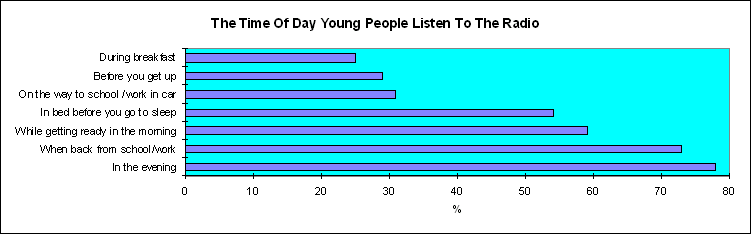
With special reference to the role of radio, the wireless was found to have a role in kids lives throughout the day. 79% of respondents have access to radios in their bedrooms and radio is seldom subject to parental censorship in the same way that TV is.
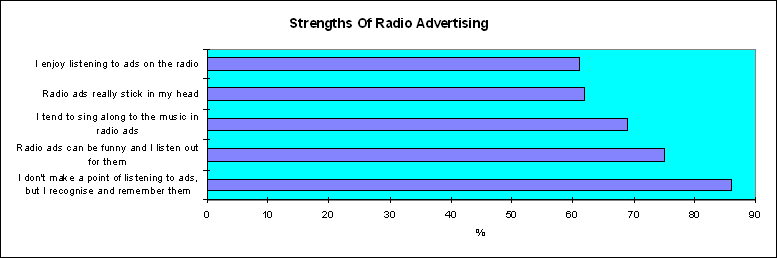

The main conclusion of the survey was that radio is an under-exploited advertising medium with enormous potential for youth advertisers. Capital Radio: 0171 766 6300