
Sponsored content
Denise Turner, insight director at Newsworks, shares the findings of the body’s ‘Come Together’ study
There is no doubt that we’ve had a tumultuous time over the last few years. People around Britain have been in a constant state of flux, wearied by the divisions of Brexit, not to mention the pandemic.
But perhaps we needed these difficult years (bear with me here!) to rediscover who we are and what is important.
Confrontational, emotional voices were gaining precedence over rational reasoned ones. For many it was as if we had lost a sense of who we are and what really matters.
In a bid to better understand these societal shifts, Newsworks has been talking to people the length and breadth of the country, from Aberystwyth in the west to Thurrock in the east, and from Southampton in the south to Dundee in Scotland via Scunthorpe in the north of England.
We’ve met some really interesting people for our ‘Come Together’ study, which spans four years, and got to the heart of the issues that people are facing.
As a nation, it seems we are full of contradictions.
Brexit has had lasting consequences with more people now identifying themselves as being Scottish, Welsh, Irish or English, rather than being from the United Kingdom or Great Britain – up from 5% in 2017 to 26% at the end of 2020.
“We love being at odds with each other and saying, well, you’re not from here. I’m from here. We like having our own tribes,” said one respondent.
“I think if anything now, there’s been more events to divide the country than there has to unite it,” said another.
Yet at the same time, we have a fresh perspective on what makes us British and a renewed sense of pride in our institutions.
When asked about what symbolises Britishness, people put the NHS in the number one spot, followed closely by the Queen and the wider Royal Family. Freedom and democracy remain vital mainstays of society.
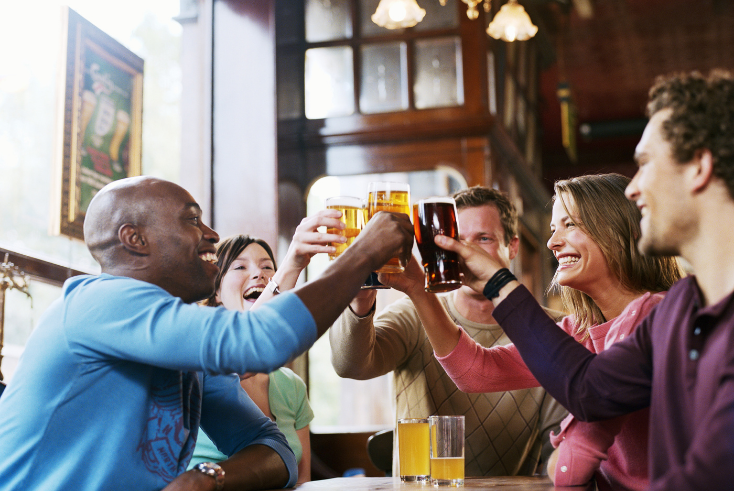
Unsurprisingly, there is also a sense of realising what we are missing out on. Even before the recent reopening, “going to the pub” featured in our top 10 of what defines Britishness.
Perhaps a chat over a pint will help to reunite us, as 74% of those surveyed admitted that in recent years they had lost the important art of listening as the country has become more polarised.
However, it seems we’re tired of division and want to move on, with eight out of 10 people keen to put their differences aside and come together as a nation.
Interestingly, 75% of people say they are now making a concerted effort to understand different perspectives.
Our research shows that news brands play a significant role in that process with two-thirds of people saying they use a variety of news sources to help them make a more informed and rounded view.
This chimes with our ‘World Without News’ research from 2020, which found that 66% of news consumers appreciate and value journalism more since the pandemic began and 70% of respondents agreed that a “world without journalism would harm democratic society”.
Vitally, 61% of ‘Come Together’ respondents said news brands help promote important campaigns, such as Marcus Rashford’s free school meals initiative.
It appears that people also have a renewed sense of purpose.
“I’m going to take it as a fresh start,” one respondent said. “I think I’m going to do things I wanted to do previously that I’d be a bit dubious about.”
In fact, two-thirds of Brits are now cautiously optimistic about the future.
So while Brexit and the pandemic may have caused conflict and an identity crisis, there are signs of hope, with a greater sense of purpose as a nation and confidence in who we are.
I for one, am all for that.
Read more about Newsworks’ ‘Come Together’ research here.