
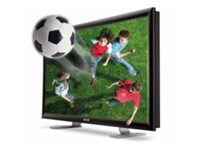
3DTV without glasses in view

By

1 minute

William Cooper Avatar

William Cooper Founder of the independent consultancy informitv, William provides thought leadership and advises clients around the world on strategy and implementation around broadband and broadcast convergence, where the internet meets television. His clients range from small start-ups to major multinationals. Previously, as head of interactive at BBC Broadcast, William operationally managed the successful launch and delivery of landmark interactive services on satellite, terrestrial and cable television across multiple channels and territories and oversaw the exponential growth of the BBC’s online services. William began his career as a broadcast journalist and has over 25 years of professional experience working in the television, video and digital media. He has a PhD in Communications from the Institute of Communications Studies at Leeds University, where he was one of their first researchers, specializing in ‘video literacy’. William is internationally recognised as a leading independent analyst and commentator on the television and online video sector. He is a regular judge of international industry awards and competitions, and has been producer, chair and speaker at over a hundred international conferences. He publishes the informitv Multiscreen Index, tracking trends in television services worldwide. He is also editor of the influential Connected Vision newsletter, which is available as a free subscription from informitv.com.


World Cup in 3D

informitv’s William Cooper on the future of 3D television without glasses…

The main problem with 3DTV is the need to wear dark glasses, which is not really practical for regular television viewing.

There are approaches which do not require glasses, using so-called autostereoscopic displays.

Philips was a proponent of this approach but after a decade of research abandoned product development.

Dimenco, a start-up company founded by four former Philips employees has licensed the technology and is now showing its 56″ lenticular screen on the Philips stand at the IFA trade show as the 3D of the future.

For many year Philips has been showing the technology behind this prototype, which is based on small lenses on the screen which refract the left and right images for each eye.

Although Philips dropped development to concentrate on the more immediate opportunity of 3DTV with glasses, it could come to market within 3-5 years, and will be available for professional and advertising applications later this year…

Read more at informitv.com


Explore more topics


Want to get involved in the discussion?