



Because we’re worth it
Opinion
Premium price point, premium brand? It depends on the media environments advertisers appear in, writes Center Parcs’ chief marketing officer and Newsworks Awards chair of judges Sara Holt.
“Is Center Parcs really worth the money?”, some consumers ask.
Near-full occupancy, consistent year-on-year growth, and high guest satisfaction suggest many think so — but that performance doesn’t explain to the unconverted why we call ourselves ‘premium’, not ‘luxury’, in a travel market chock-full of competition.
For a decade we leant on family togetherness; a real feeling we wanted guests to buy into, but a generic one. Our Bubbles campaign nailed the emotional register of switching off and reconnecting. What it couldn’t nail was why only Center Parcs could provide it.
Enter ‘We Build Better Worlds’, our newest positioning
We want our charitable work, our investment in rewilding and biodiversity, and offerings like our Aquasana Forest Spa to become genuine differentiators of premium, not just colour around the edges.
Wanting that and consumers seeing us that way are, of course, two different things — and that’s a story that needs more space than a 30-second TV ad or online display alone can give it.
Which begs the question: what can a brand like Center Parcs leverage in 2026 to truly show consumers our premium — not just tell them? In one word: credibility
With unchecked AI slop and unverifiable information running riot across the Internet, trusted media is becoming a scarce commodity. For brands looking to demonstrate their worth to consumers, deliberate placements in quality media environments are a clear opportunity.
Take news brands: their credibility, built on the long-term trust their readers place in their title’s reporting, creates a halo effect that transfers that trust to surrounding advertising. In Newsworks’ 2023 ‘Trust’ study, it found that brands stood to benefit from a 50% uplift in trust when advertising on a news brand website versus the same ad on a non-news brand site.
Importantly for Center Parcs’ mission, Newsworks’ later ‘Attention’ research (which included up-to-date analysis of the IPA Databank) found campaigns that included trusted news brands saw perceived brand quality increase by a whopping 138% compared with those that did not.
With millions adopting new ways to consume news content, trust has never been more important for advertisers. For example, more and more people are leaning into AI search functions that overwhelmingly favour journalism as an authoritative source to counteract unverifiable content. That makes a strong presence in news brands more than a nice-to-have — it’s now becoming foundational to how a brand gets discovered, discussed and understood by consumers.
That leads on to another vital layer that Newsworks has just finished studying: what that credibility translates to as a force in wider society.
The trade marketing body investigated ‘cultural relevance’, how news brands generate and amplify it and what that means for brands looking to harness its commercial benefits.
By quantifying the phenomenon’s commercial benefits, Newsworks found 15% of sales were driven by brands’ ability to be culturally relevant. That sounds small, but scaled across all UK consumer spending, it equates to £147bn. News brands, in particular, delivered the strongest ROI of all media channels analysed at £3.97 — partly because they offer advertisers culturally rich environments to place their messaging.
A compelling opportunity
For Center Parcs, news brands’ credibility and cultural relevance are a compelling opportunity to achieve our goal of proving premium and driving profit — particularly the medium’s implicit capacity for compelling storytelling.
One way this translates for advertisers is the content partnership. Whether long-form written editorial, bespoke video content or even taking over a news brand’s social media presence, the format is perfect for giving a brand’s wider narrative room to breathe.
Range Rover’s exploration of driving mindfulness was perfectly narrated in a print partnership with The Times’ LUXX magazine. Mastercard’s multimedia partnership with The Guardian included videos that put culture at the heart of its ‘Priceless Moments’. Asda’s ‘Family Matters’ tie-up with Mail Metro Media’s social channels was a natural fit for the supermarket’s audience of young parents looking for bargains.
Importantly, readers respond well to this type of content.
In a Newsworks survey, 65% said partnerships tell them more about a brand; 54% would consider a brand after seeing sponsored content; and 75% of under-35s want to see brands work with journalists more.
Intimate, engaging commercial solutions like these clearly resonate with readers and do real brand work. For Center Parcs’ ‘We Build Better Worlds’ to succeed — for products such as Aquasana to land among potential guests and, above all, to prove why we’re worth our premium reputation — these sorts of opportunities will be crucial.
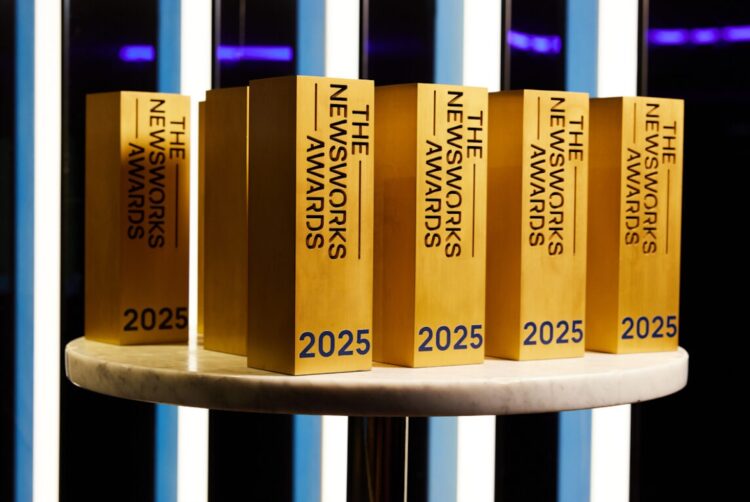
It’s the sum of this innovation and my years working on the commercial side of news that makes me excited to chair the Newsworks Awards this year.
This year’s awards include a brand-new award celebrating the best use of news brands’ social, video, and audio platforms, as well as ample opportunities to honour campaigns that are intelligent, creative, and — most importantly — effective.
Bring us your best case studies. We’re looking forward to being thoroughly impressed.
 Sara Holt is Center Parcs’ chief marketing officer and Newsworks Awards chair of judges. The deadline for entries is 6 October.