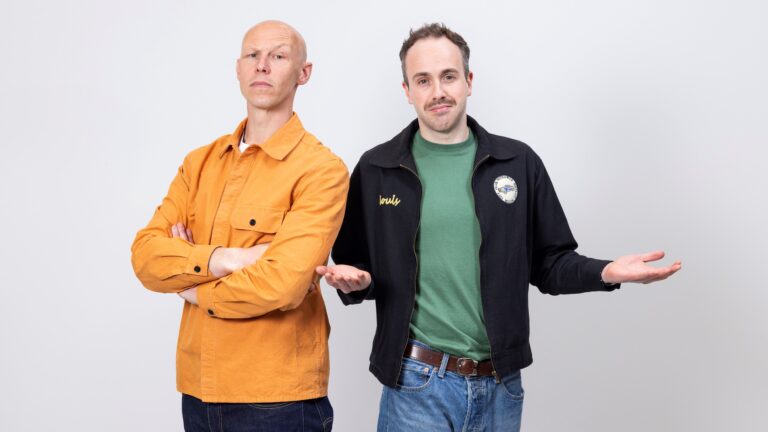
Greg Grimmer, partner, Hurrell Moseley Dawson & Grimmer, says six years on and people have finally come around to his way of thinking…
When I first conceived the subject matter for this month’s column, I was contemplating which network digital device I would use to type up the fine erudite prose demanded by my Newsline editor. This was ahead of me dislocating my shoulder during an extremely competitive middle-aged media squash contest.
Therefore I find myself in the salubrious surroundings of the Covent Garden hotel, drinking tea and eating scones in a distinctly analogue relationship with MediaTel’s own Liz Jaques (and her ancient HP laptop), desperately trying to capture my post-digital wisdom in what can only be described as a Victorian dictation session.
Anyway, back to the death of digital. Keen readers of industry commentators’ recent scribblings may have noticed that the current omnipresent trend among the great and the good is to call for the end of the moniker digital among agency clients, and indeed media owner titular behaviour.
With my normal elephantine memory and desire to appear prescient to my beloved readers – I was taken back to 2005, where I first called for the abandonment of digital job titles within the agency that I have recently taken over.
This wasn’t due to my distaste of the digital media itself – nor even an early stab at trying to avoid salary inflation among those highly-prized specialists – but it was instead an effort to try and ensure that everyone under my supervision felt a responsibility to embrace the digital media world in which they were already operating.
I remember visiting the very astute commercial director at my client Toyota to discuss the power of the world wide web for automotive marketing. At the closure of the meeting, he pointed to his one ‘digital specialist’, who was situated in a far-flung corner of the marketing department, and asked me: “Should I get another one like him?” – to which my reply was: “No but you should move him to the centre of the room and find out what he does.”
Six years on and there are now those in positions of power who are following my lead – so yet again the world comes round to Grimmer’s point of view and, in the words of Lord Melchett – ‘Au contraire, Blackadder’.
The very week I read of the call for digital to be disemboweled – I also read of two of my closest competitors appointing new heads of digital. Even more recently I was reading that News International will be looking to relocate the redundant News of the World journalists into new digital iPad specialists. I would imagine that some of these sturdy old hacks may find the change to becoming touch-screen digerati quite a difficult step!
I also remember a head of digital (sic) at News International telling me with some exasperation that he’d asked his digital sales people to start selling across newspaper products as well, which was resisted with as much luddite anger as a reverse move might have been envisaged.
So if digital as a specialism is really going to die, is this because the generalist are now the experts from the first digital age? Have they pushed the non-believers into early retirement – or into industry sectors where binary domination has not yet taken hold? Possibly.
Certainly most of the agency CEOs I meet, most of the client marketers I work with and most of the media owners that I deal with, now have a firm grasp of the implications of digital on both their long-term planning and short term revenues. But they have reached those lofty heights by understanding both the impact and effect of the non-digital and e-commerce aspects of their business.
However, I am reminded that this demise of the digital specialist is similar to the late 90s debate around integrated media solutions / total communications planning / 360 planning – all of which were prevalent in the marketing materials of both agencies and owners over an extended time period. This led to the rise of the gargantuan planning departments within the likes of Zenith, OMD and Mindshare – huge throes of bright young things pulling together multi-faceted media plans. But how do these media geniuses operate? By bringing in these silo specialists around them of course.
In the 50s with TV, in the 70s with Radio, the 80s with multi-section newspapers, every media invasion has brought keen volunteers willing to train themselves in a specialism (especially if they can see a faster dollar contained within).
The danger with digital for these specialists is that it has become all-encompassing and the keener students among you will have noticed that the most obnoxious of your contemporaries, colleagues and friends have long since disowned the generalist moniker of ‘digital’ and have instead become Mobile, Social or Behavioural specialists.
And of course once these specialisms become more understood and wide-spread the keen entrepreneur will already have moved on to the next business development fad. For the entrepreneur, this makes sense – if the venture capitalists and ad dollars flow into their chosen media basket.
However, for simple agency and media owner sales folk, you should be careful what you wish for… Today’s head of search could become the equivalent to yesterday’s head of directories and the current Head of Mobile may be viewed in the future like the current Head of Classified. Management interest always follows fast revenue growth (or indeed decline) but soon peters out once maturity of revenue ad potential is reached.
The generalist will always win unless you follow the historical precedent of General Custer – whose last words showed his lack of foresight and planning: “Where did all those fucking Indians come from?”