
With Mediatel’s Future of National Newspapers conference set to explore the opportunities and challenges facing the newspaper industry, it’s the perfect time to consider their role in a constantly changing age, writes Newswork’s Denise Turner.
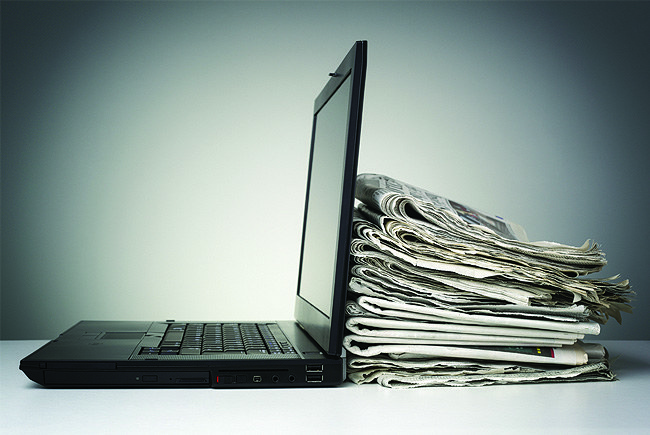
As well as opportunity, change can bring uncertainty and there are some that interpret the growth of digital as a nail in the coffin for newspapers. Just last week, headlines envisaging their eclipse at the hands of digital devices have cropped up on the back of ZenithOptimedia’s latest Advertising Expenditure Forecast, with ad spend on mobile predicted to surpass that of newspapers.
This raises a very important point: what constitutes a newspaper?
By solely referring to them as print products, ZenithOptimedia’s report isn’t taking into account the reality of how we consume media today. In their contemporary form newspapers are mobile. They exist across platforms on smartphones, tablets and desktops as well as print.
The fact that this may sound like I’m stating the obvious is testament to how well established multi-platform newsbrands now are as part our tweeting, blipping, streaming world.
The last few years have seen an unprecedented rate of change in the marketing world, driven by the revolution in digital media. Not only have we experienced significant advances in digital itself but there have also been massive changes in the delivery and consumption of existing ‘traditional’ channels. In essence we have experienced the digitisation of all media.
Content is no longer synonymous with the platform or device on which it is read. It is fluid across platforms and evolves to meet the demands of the changing landscape – changes which have affected all media, but newspapers more than most.
Just ask yourself – how less often would you have looked at your phone today if news brand content didn’t exist there? No perusing of headlines, flicking through galleries or scrolling down live feeds.
Personally, newsbrand apps have become such an ingrained part of my daily routine I can’t imagine not having them.
Thanks to mobile devices, newspapers can amplify their content beyond the borders of the paper page and reach bigger (and younger) audiences than was ever possible 10 years ago. People are still forming strong newsbrand habits, as Newsworks’ recent Generation News study shows, but they are platform agnostic. Print and mobile both play a part.
No one explains it better than Alan Rusbridger did on stepping down as Guardian editor earlier in the year: “We still tell stories in text and pictures, but the words are as likely to be in the form of live blogs as stories. We have learned to use moving pictures as well as stills. We work in audio, interactives, data, graphics and any combination of the above.
“We distribute our journalism across multiple channels, platforms and devices, including live discussion and debate. We’re on the iWatch; we’re in bed with Facebook; we’re still in the corner shop.”
Given this, it’s frustrating when forecasters solely refer to newspapers in their print format, as well as misleading. Some of the advertising spend that has been attributed to mobile in the aforementioned report will have been around content created by news brands.
As an industry what we need is a change of mind set. How we think about newsbrands needs to catch up with how we are consuming them. When it comes to adspend, we need to trade in our preoccupation with platforms and adopt a content-led approach. If brands are now buying ads on a multi-platform basis then surely that’s how we should be measuring their spend.
Until we do, no forecast is going to be able to give us a true picture. One medium displacing another makes for a good headline, but what is its worth if it isn’t based on reality? Transition and evolution is a far more accurate way of describing the relationship between newspapers and mobile.
As Sir Martin Sorrell said at an event in Sydney just last week: “The days of separation are gone”.
Denise Turner is insight director at Newsworks, the marketing body for the national newspaper industry.
Chaired by Chris Blackhurst and Dominic Mills, panellists include Raymond Snoddy, Fleet Street Fox (Susie Boniface), the Guardian’s Jane Martinson, the Independent’s Christian Broughton, Trinity Mirror’s James Wildman, GNM’s Nick Hewat, News UK’s Karin Seymour and Opera’s Adam Pace.