



IAA roundtable: Rethinking brand safety for a more nuanced media landscape
Opinion
Brand safety has long been a non-negotiable for digital advertising, but it has evolved beyond simply avoiding harmful content. The IAA’s executive director unpacks the key discussion points from a recent debate at this year’s Cannes Lions.
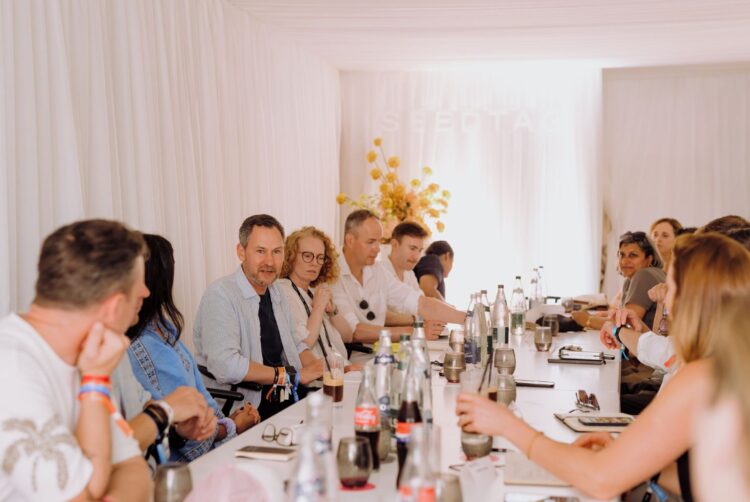
Brand safety has long been a non-negotiable part of digital advertising, but at the latest International Advertising Association (IAA) roundtable at Cannes Lions 2026, senior leaders from brands, publishers, agencies, technology companies, and industry bodies questioned whether the industry has become too cautious for its own good.
Chaired by James Longhurst, content director at The Media Leader, and hosted by contextual advertising leader Seedtag, the session brought together senior figures from across the industry, including representatives from Sky, Visa, Financial Times, The Economist, Integral Ad Science (IAS), Ipsos and Nielsen, alongside agency and legal voices.
The discussion explored how brand safety has evolved beyond simply avoiding harmful content into something far more complex. While everyone agreed that advertisers have a responsibility to protect both their brands and consumers, there was broad consensus that today’s approach often sacrifices effectiveness, quality journalism, and diverse voices in the pursuit of safety.
As AI transforms contextual understanding and media planning, the conversation centred on how the industry can move beyond blunt keyword blocklists towards more intelligent, transparent, and collaborative approaches that balance protection with opportunity.
Brand safety is no longer the same as brand suitability
One of the strongest themes throughout the discussion was that the industry continues to conflate brand safety with brand suitability. Brian Danzis, chief revenue officer at Seedtag, argued that keyword blocklists treat all risk the same, and that true suitability is more nuanced, requiring an assessment of intent, emotion, and context, not just the presence of a word. Recent reporting by Newsworks showed blocklists reaching over 34,000 words in some cases.
Participants agreed that genuinely unsafe environments such as hate speech, criminal activity or graphic violence are relatively straightforward to identify. The greater challenge lies in deciding whether high-quality journalism covering difficult but important subjects should automatically be treated as unsuitable.
Kat Daskalou, head of group media & investment, UK & Europe at Sky, argued that advertisers need to distinguish between protecting consumers and making thoughtful suitability decisions.
I think there’s a difference between brand safety and suitability.
That distinction appeared repeatedly throughout the discussion. Several brands explained that while they may avoid advertising alongside particular tragedies or highly sensitive breaking news, that should not translate into excluding trusted journalism more broadly.
The takeaway here is: distinguish between genuine brand safety risks and brand suitability decisions. Context should matter more than keywords.
When protecting brands starts hurting everyone
Perhaps the biggest concern raised around the table was that overly restrictive brand safety controls are creating unintended consequences across the entire media ecosystem.
Publishers described increasingly extensive keyword blocklists that often prevent campaigns from running against legitimate journalism, even when audiences are highly engaged. The current practice was illustrated by an example that drew recognition around the room: a bank had blocked the word “bank” from its own advertising. A rule designed to avoid association with financial crime content had become so literal it was excluding the brand’s own category.
Brendan Spain, VP, Advertising – Americas at Financial Times, noted that some advertisers block terms that appear constantly within quality business journalism.
We come up a lot against ‘good news’ versus ‘bad news’. As far as I’m concerned, there is just news.
Others warned that excessive blocking reduces advertiser reach, limits campaign effectiveness, and removes funding from the very publishers consumers trust most.
The discussion also broadened beyond news. Participants highlighted how blanket keyword approaches frequently disadvantage content covering diverse content, women’s health, LGBTQ+ communities, and sustainability, despite these being entirely appropriate environments for many advertisers. Marginalised voices and underrepresented topics are caught disproportionately by blocklists never designed with them in mind, a point raised by Elizabeth Anyaegbuna, CEO and founder of Buna Street Collective.
Rather than protecting brands, participants argued that these systems often silence important conversations and reduce investment in communities that brands actively want to reach.
The takeaway here is: overly broad blocklists don’t only reduce risk, but also reduce effectiveness, weaken trusted journalism, and unintentionally exclude diverse communities.
AI offers an opportunity to move beyond keywords
While AI featured heavily throughout the conversation, the tone was notably optimistic.
Rather than viewing it as another risk, many participants saw AI as the technology that could finally solve many of the industry’s longstanding brand safety challenges.
Advances in contextual AI mean systems are increasingly capable of understanding the meaning, sentiment, and emotional context of content rather than simply identifying individual words.
Brian Danzis from Seedtag, argued that AI-driven contextual understanding provides something audience targeting alone cannot.
Keywords can’t read the room.
Others agreed that AI makes it increasingly possible to evaluate the emotional context surrounding content, allowing brands to make far more sophisticated suitability decisions while dramatically reducing unnecessary blocking.
Rather than limiting opportunity, AI has the potential to expand it, giving advertisers greater confidence to invest in quality environments without relying on outdated keyword lists. The roundtable heard that switching from keyword blocklists to contextual, sentiment-led AI can cut blocked impressions by up to 90% without materially raising risk, a figure cited by both Csaba Szabo, MD, EMEA at Integral Ad Science (IAS), and Danzis.
The takeaway here is: embrace contextual AI as an enabler rather than simply another safety tool. Understanding meaning is more valuable than blocking words.
Collaboration will matter more than technology
Despite the optimism around AI, participants repeatedly returned to one conclusion: technology alone will not solve the problem.
Brands, publishers, agencies, verification companies, and platforms all hold different pieces of the puzzle, yet often operate with limited visibility into one another’s decisions.
Several participants argued that greater transparency around blocklists, campaign settings, and suitability frameworks would allow all sides to better understand where unnecessary restrictions exist and how they can be reduced.
The discussion also questioned the balance in accountability.
While publishers are often held to extremely high standards, many questioned whether platforms and creator ecosystems are being judged by the same criteria.
Rob Ellison, head of media Europe at Visa, argued that everyone in the ecosystem should be held to consistent standards, and urged the industry to have measurement benchmarks in place, while others called for greater government involvement in addition to industry self regulation.
The takeaway here is: progress will depend on collaboration, transparency and shared accountability rather than isolated technological solutions.
Moving from fear to opportunity
The conversation closed with an important shift in thinking.
Rather than treating brand safety as a defensive exercise designed to minimise risk, many argued the industry should start viewing it as an opportunity to improve effectiveness, strengthen trust, and support quality media.
Beyond that, the room agreed on several further principles:
- Move from keyword blocklists to contextual and emotion-led AI.
- Build transparency between brands, agencies, publishers, and verification partners to allow for strategic conversations earlier.
- Ask who brand safety is actually for, designing it to protect audiences and society, not advertisers alone.
- Industry wide collaboration must continue to build greater consensus around future standards
As Szabo summed up, the most dangerous phrase in business is: “We’ve always done it this way.”
The clearest message from the discussion was that brand safety itself is not broken. Rather, the industry’s approach to achieving it needs to evolve.
The future lies in replacing blunt rules with intelligent context, embracing AI where it improves decision-making, and recognising that protecting brands should not come at the expense of trusted journalism, diverse voices or effective advertising.
Ultimately, brand safety should enable better media investment, not simply narrower media plans.