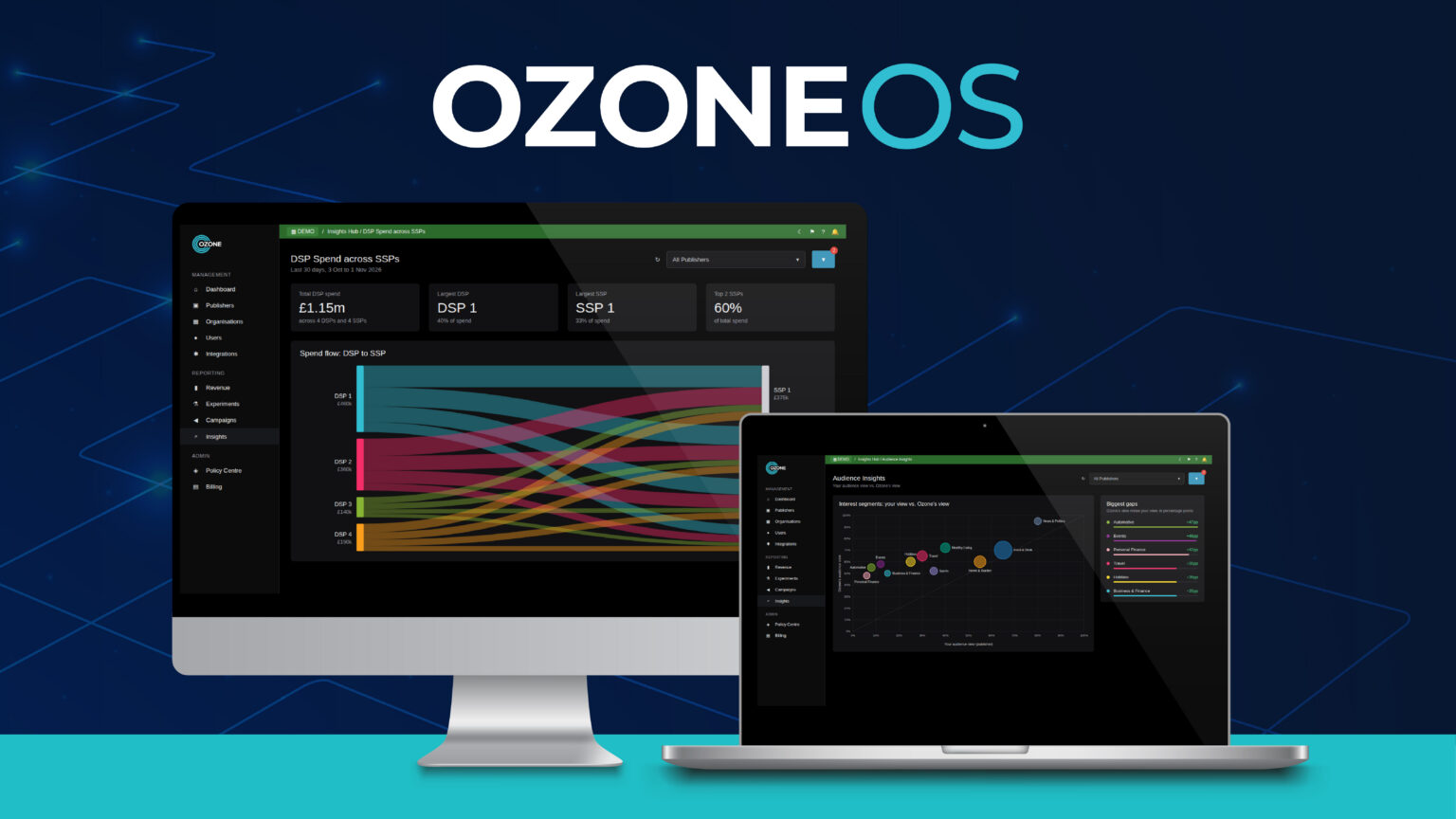

Ozone has launched a tech suite that supplements programmatic ad buying with publishers’ first-party audience intelligence.
Dubbed OzoneOS, the suite is aimed at offering publishers greater control over their programmatic monetisation in an era of declining web traffic due to AI search.
Currently, programmatic advertising pricing is primarily based on site traffic volumes, whereas first-party intelligence is mainly used for direct sales. OzoneOS aims to close that gap, with higher-quality inventory translating into higher-value programmatic buys.
“Premium publishers invest heavily in building deep relationships with their audiences, yet the technology used to monetise them doesn’t reflect that reality,” commented Ozone chief operating officer Danny Spears. “If quality journalism is to thrive, publishers need to capture more of the value they create.”
OzoneOS brings publishers’ audience insights “closer to the point of transaction” by providing publishers with estimates of what different audiences are worth and which buyers value them most.
Publishers can also use OzoneOS to streamline ad layouts, page behaviour and demand-side partners.
More informed decisions
The result, the tech platform claims, is that publishers will be able to make more informed pricing decisions for their available programmatic inventory.
Advertisers, meanwhile, will benefit from improved publisher supply.
“Buyers can keep using the same platforms, auctions and buying methods they use today. What changes is the quality of the supply they receive,” Spears told The Media Leader. “A more efficient, better-organised publisher stack means fewer wasted requests and lower costs across the supply chain, which benefits advertisers without requiring any action on their part.”
In a beta test with an unnamed “major global publisher”, Ozone claimed the new tech suite resulted in a 63% increase in revenue per page and a 66% improvement in viewability, thanks to a 69% decline in ad requests.
As Spears noted, an increase in bid values and new advertisers seeking out the improved inventory “demonstrates the increase in perceived value of this supply”.
The proposition could lend publishers a lifeline in an era in which referral traffic from Google Search has fallen precipitously, with digital ad revenue — derived in part from programmatic advertising — falling in kind.
Spears referred to AI developments as creating an “oil-and-water split in the publisher market”. Premium publishers, he noted, are continuing to invest in original news production and a mix of business models centred around growing direct traffic. On the other hand, the long tail of the web “regurgitate[s] content and monetise[s] unknown traffic opportunistically”, Spears said.
Historically, both such publishers were served by the same programmatic technology, which emphasised volume of web traffic rather than quality of audience.
“With the launch of OzoneOS, that no longer needs to be the case for audience-first publishers,” Spears continued.
Ozone has rolled out a range of new products this year. These include performance marketing product Arc, content classification solution Access and AI research and development sandbox Labs.
The tech suite launches amid a renewed effort, spearheaded by The News Alliance (of which The Media Leader is a member), to urge marketers to reinvest in news media. A new campaign argues that brands risk missing out on valuable, high-attention audiences when excluding publishing from media plans.