



PPA roundtable: “Minimum viable Meta”, why ad budgets keep flowing to platforms
Partner content
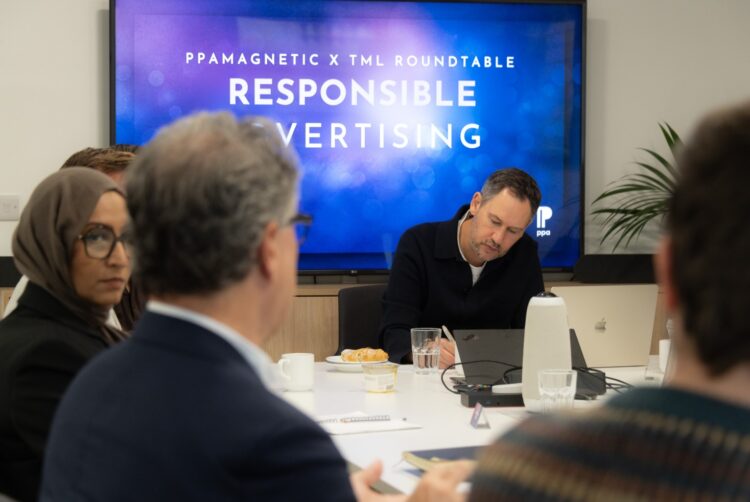
What is the “minimum viable Meta” for a media plan? That was one of the questions asked at a roundtable hosted in October by The Media Leader under Chatham House rules, in partnership with the PPA Magnetic.
The roundtable, staged to discuss the future of responsible advertising investment, brought together leaders from independent and hold co agencies, magazine publishers and brand marketers. Also in the room was Ian Russell of the Molly Rose Foundation, the charity set up in memory of his daughter Molly.
The discussion centred on how algorithm-driven media decisions have undermined effective advertising based on context and attention.
The conversation was sparked by an uncomfortable reality facing the publishing industry, and media as a whole. Proven effectiveness is not translating into ad budget growth.
PPA Magnetic’s Craving Conversion study, for example, demonstrates the value of trusted editorial brands in driving online purchase decisions in the food and drink sector, delivering three times the conversion of social.
Instead, budgets continue to flow to tech platforms. This is despite their lower quality standards, their low-attention ad environments and, as one publisher in the room put it, the harms courts have found them responsible for, including addiction and online harms.
For publishers to start winning back budget from platforms, structural changes to how brands and their agencies operate are likely to be needed.
The Meta drug
Much of the discussion focused on why ad investment continues to funnel to platforms, particularly Meta.
Agency leaders in the room acknowledged that clients are often itching to spend with Meta, driven by a desire to keep Meta’s dashboards “constantly going green”.
One planning lead at an independent agency said they are constantly working to “wean [clients] off the Meta drug”, relaying an anecdote in which, after ads were briefly taken off the platform as part of a test, the client noticed it “within the hour”.
The brand marketer agreed Meta “has become the baseline” on media plans, even though it is not always clear what incremental value spend on Meta delivers to the wider plan.
Part of the problem with spending on platforms such as Meta, TikTok and YouTube is that, much to the chagrin of the agency leaders in the room, they are opaque. Businesses do not know the context in which their ads appear, with one agency strategist admitting candidly that they do not know “what our ads sit next to” on Meta. Likewise, marketers have no idea what different consumers’ feeds look like more generally, because everyone’s feed is private and individualised.
Another agency strategist added that planners “lose control of the media plan when it goes to the platform”, forcing them to trust that the opaque algorithm makes the right media decisions and the dashboards stay green. This lack of control ultimately makes it “very hard” for any agency to create a strategic advantage for its clients on any platform.
Platforms, they added, have made it harder for brands to achieve both reach and memory encoding, as high-reach platforms offer low-attention media environments.
Meta commits to make platforms less harmful, but questions remain over implementation
“Are you Team Algo or Team Context?” one strategist asked. “I don’t think anyone wants to be on the side of Big Algo.”
But how do you make that case to a boardroom in which platforms have often cultivated strong direct relationships with CEOs and chief financial officers?
The roundtable agreed the terms of the conversation must change for marketers to take back control of their investment decisions. One strategist suggested gamifying the process by asking: “What if we played a game in which we don’t buy Meta [for this campaign]?” This would require marketers to come up with alternatives that deliver the same or better business outcomes.
Another potential frame: agency leaders agreed to discuss with clients what the “minimum viable Meta” for their media mix might look like. This would not mean a wholesale moratorium on algorithmic buying, but a reduction aimed at improving campaign effectiveness.
Such a strategy could increasingly become necessary. As one strategist pointed out, advertising on Meta has become steadily less efficient as the platform suffers from “high ad load” and the company faces growing negative public sentiment linked to lawsuits over addiction and online harms.
Use it or lose it
If “minimum viable Meta” does catch on, it would require channels such as publishing to become more competitive. One commercial officer admitted the publishing industry is not blameless in its own decline.
Publishers, they said, “commoditised display advertising” by turning it into a click-based performance channel rather than the brand-centred contextual opportunity it was in print. Display became bucketed with pay-per-click and paid social, channels that could beat publishers on price.
Part of the reason, one publisher argued, is that platforms carry no content production costs: they produce nothing themselves, relying instead on what the publisher described as unlicensed and broadly unaccountable user-generated content.
Publishers have begun to respond. At the start of this year, a group of trusted editorial brands launched Atria, a unified programmatic marketplace that gives advertisers access to their combined inventory and audiences.
The publishers in the room warned that if advertisers do not support quality publishing, they will lose it as an advertising opportunity. “Use it or lose it,” one commercial lead said. “Invest, or it’ll be gone.”
They added that support for publishing “is not a charity” but rather an “investment with an ROI”.
Do advertisers care about responsible media investment?
While that may be true, responsible media investment is likely to require a wholesale mindset shift for an advertising industry that has become “very reductive”, in the words of one agency strategist at a global holding group. “We think of people as consumers,” they said, adding that the industry has overfocused on “brand safety” as a hollow concept compared with the much more tangible “audience safety”. With Ian Russell at the table, that distinction was hard to ignore.
“Brand safety is a hygiene factor,” the brand marketer added. “Responsible investment is a strategy.”
Everyone agreed that responsible media investment never comes up explicitly in the briefing process. This has been especially true since the start of 2025, when ESG and DEI concerns were swept under the carpet.
The same is true of sustainability, with another strategist noting that climate issues are “not a top-three concern” for agencies or their clients. “Unfortunately it’s there, but it’s not top of mind,” they said.
Part of the reason is that agencies tend to pass the issue of “responsibility” back to the client, while clients often pass it back to their agency, with neither taking accountability.
To solve this, the agency representatives argued that responsible media must be baked into the briefing process from the start, though they worried that brands’ contracts today give agencies much less leeway than in the past.
Other suggested solutions included backing UK media businesses rather than Silicon Valley-based tech giants. “We’d be alarmed by how much money goes outside the UK,” one strategist remarked.
The brand marketer advocated that brands treat media investment as a funding decision. Another strategist called for a refocus on “the power of context planning”.
“Look at the levels you can personally do something about,” another attendee advised. “Micro-differences add up.”
The Advertising Association was also identified as needing to play a role in nudging the industry towards supporting responsible and trusted media.
One publisher questioned whether a cross-industry effort that included the tech platforms could succeed without greater openness from them about how their services work.
The rest of the industry, they argued, must do a better job of talking about and proving the case for responsible media.
“Tiny shifts” in media spending decisions, they added, “would make a seismic difference”.
Sajeeda Merali, CEO, PPA, said:
Where brands invest their advertising budgets matters. It affects not just campaign performance, but the quality of the media and content available to audiences. Responsible advertising shouldn’t be an afterthought or come at the expense of effectiveness. The two should go hand in hand.
PPA member brands offer advertisers trusted editorial environments, engaged audiences and proven results. We launched Atria to make it easier for agencies to plan and invest.
The challenge now is to make responsible media investment part of everyday planning decisions. Even relatively small shifts in budgets towards quality, accountable media can make a meaningful difference.”
The PPA represents more than 250 UK publishers, whose trusted content reaches over 34m adults every month, and, with its advertiser arm Magnetic, champions published media to brands and agencies. Atria is the premium marketplace launched by six leading publishers to make it simpler to buy and reach quality audiences.