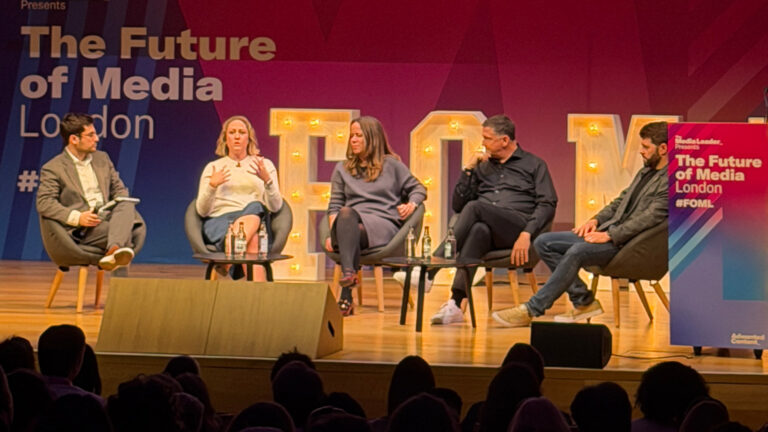

Charlie Ebdy’s “zoo to jungle” line at The Future of Media London last week was a proper zinger. He used it to describe how the decline in effectiveness is due to audiences going from being captive and force-fed advertising to, well, not being captive and force-fed advertising.
His diagnosis rings true. It is a difficult time and everything can feel like hard work. His three steps to improving effectiveness (build more distinctive assets, win somewhere rather than everywhere, plan responsively) are all smart solutions to a real problem.
I’d like to add a “yes, but”. While the media ecosystem might be a jungle now, it was never a zoo. Maybe it was a wildlife park or nature reserve. Less of a zinger but maybe more accurate.
Audiences were never captive
Pre-internet mass media was never really about captive audiences. Nobody was forced to watch TV, read newspapers or listen to the radio.
We had a smaller range of options, certainly, and they had been deliberately crafted and curated. People sought out the content they wanted and became highly engaged because they trusted the ecosystem and the quality of the experience. That gave advertisers high attention and high reach simultaneously.
Ebdy also highlighted the distraction of audiences using a second screen, simultaneously consuming “low-quality” media.
This is true, but there was always distraction. TV ads have long competed with ironing, kettles, family conversations, family arguments, knitting, more family arguments — and, for nearly two decades, second screens.
Attention has never been a given; it’s been earned. And second screens are a distraction with commercial upside, enabling viewers to research and buy what they’re seeing.
Distraction is more constant now, but audiences haven’t stopped paying attention to things worth paying attention to and the best evidence we have suggests TV is still where much of that attention is found.
Lumen’s data on the cost of attentive seconds shows TV delivering them at a fraction of the cost of most other channels. In a jungle where everyone is worried about budgets and delivering more with less, that should be important.
It also matters how TV is watched. When it is at its most TV-like (large screen, in the lounge, with other people), it is more powerful still — giving up to 6.3x improvements in ad recall (I’d say sextupling, but it sounds weird).
That’s a channel doing precisely what it was always good at.
The hierarchy might matter after all
Ebdy is clear that a shift in the channel hierarchy — with social and search now getting the lion’s share of investment, for good or ill (you choose) — isn’t responsible for falling effectiveness.
I wouldn’t rule that out so firmly.
While it might be a coincidence that years of slow growth for the UK happened as we became the most performance-reliant country on Earth, there is compelling evidence that those channels are high cost for attention and, in blended econometrics data, look to be overinvested in.
That doesn’t prove that the shift is the cause. But if the headline is that advertisers are paying more for less attention, and that they’re getting even less returns, then where the money goes might be a trail to follow.
Concentrate your budgets
Ebdy argued that brands should win somewhere rather than everywhere, because you can’t do everything well. He asked the sensible question everyone should ask of their plan: what is the high-leverage part?
It will depend on the brand, but I’ll humbly submit TV as a strong answer, for two additional reasons.
First, in a fragmented world, shared moments are even more valuable, not less. They’re the hen’s teeth of media. When so much media is depressingly consumed alone, algorithmically and in private, the things that bring people together at scale become rarer and more powerful.
Second, TV is the decision that makes other decisions better. Staying Power found that when TV is in the campaign, the impact of other media on purchase intent is nearly 39% higher. WPP’s Why the Eff would you cut TV? found an average 14% improvement across all performance channels when TV was included.
So concentrating on TV will often be a super smart move. It’s a power plant on the plan that makes everything else work harder.
That’s also likely a solution to Ebdy’s first solution of distinctive assets. Distinctive assets only work if enough people see them, with enough frequency, in a context where they will get enough notice. Building that kind of familiarity is hard to do at scale and shared, high-attention moments are a wise place to start.
This is not an argument that nothing has changed. Fragmentation, distraction and a business ecosystem that demands short-term solutions are all real challenges. The media jungle Ebdy described is real and anyone planning media as if it were still a park (or a zoo) will get eaten. He’s right that “everywhere” is a poor strategy and that brands need to be sharper about where and when they choose to win.
Whether we’re in a zoo, a park or a jungle, media and advertising have always had to earn attention. The smart money should go into making advertising worth paying attention to and putting it where high-quality attention costs least.