
Advertisers are inadvertently funding online climate disinformation. A new charter, released by the Conscious Advertising Network (CAN) and the Climate Action Against Disinformation (CAAD) coalition, supported by the United Nations’ Global Initiative on Information Integrity on Climate Change (GIIICC), hopes to give brands a practical guide on how to stop doing so.
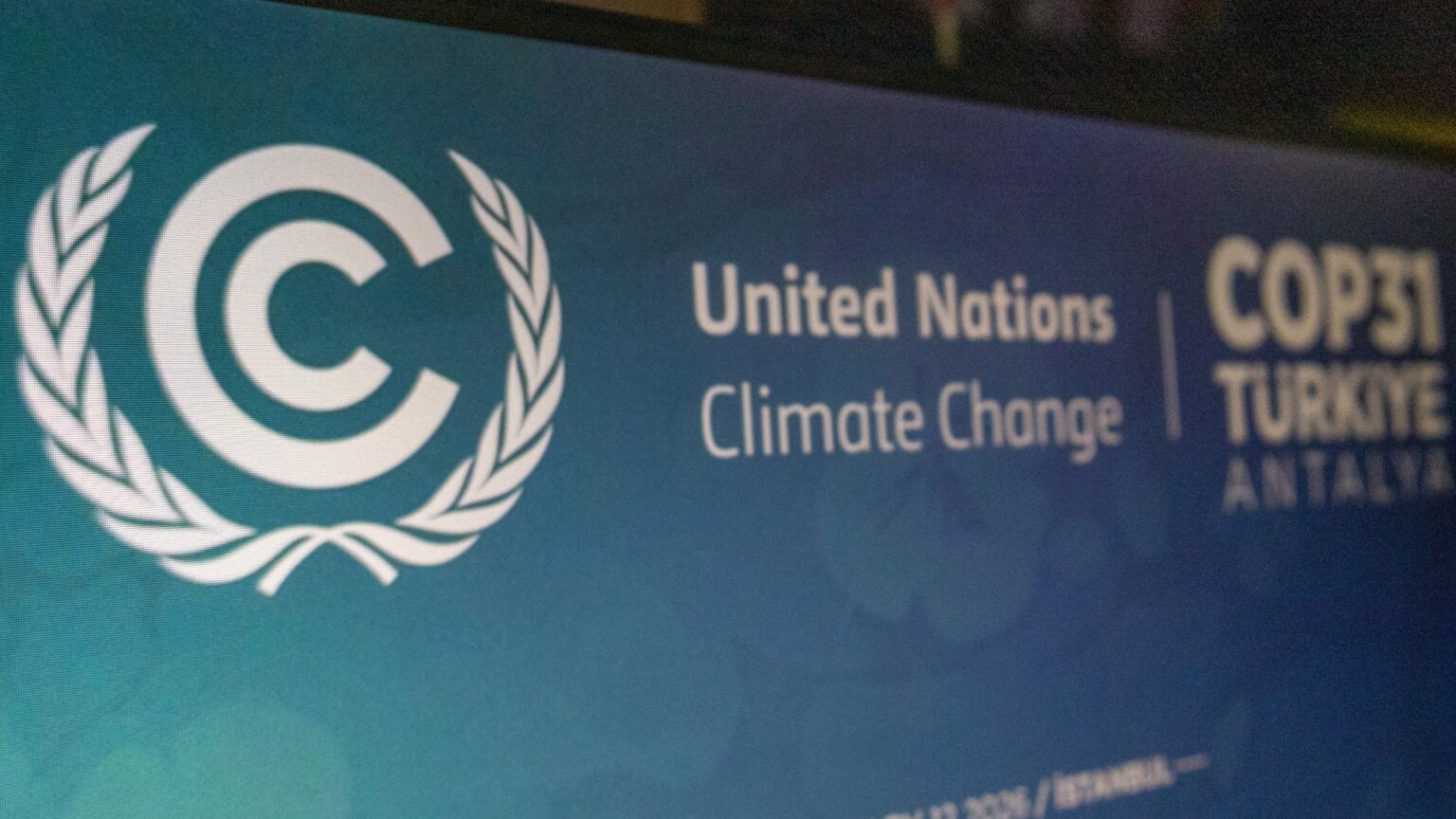
The charter was launched at Cop31 in Antalya, Türkiye this weekend. It is a direct response to the Belém Declaration on Information Integrity on Climate Change, an effort launched at last year’s Cop to “promote and support the sustainability of a diverse and resilient media ecosystem” in the face of climate change.
It concludes that the “opacity of the ad supply chain allows disinformation, scams and greenwashing to be monetised, largely out of sight of the brands paying for them”.
The charter notes that the monetisation of online disinformation has “proven enormously profitable for digital platforms, social media companies, adtech companies, data brokers and generative AI companies”, while coming at the cost of “advertisers, insurance companies, investors, consumers, people and the planet”.
Social media companies, incentivised to attract and monetise user attention, have used algorithmic feeds to “amplify voices that promote harmful mis- and disinformation, make the production and dissemination of disinformation easier and faster, and sideline expert voices in online discourse”, the charter concludes.
This has been accelerated by generative-AI technologies, which have been found unreliable at citing and summarising accurate climate information and which have disincentivised consumers from accessing reliable sources of information directly, leading to a collapse of ad-funded publisher business models.
Climate misinformation and disinformation has also “contributed to attacks” against journalists, scientists, health professionals, emergency responders and other climate activists, the charter adds, leading to a “chilling effect on journalistic freedom and the rights of others to access information”.
AI development, it continues, is also “escalating use of energy and water”. At a session on agentic AI during The Future of Media London conference this month, executives from Havas Media, the Telegraph, Salesforce and Star acknowledged that AI companies have not been transparent over the carbon cost of AI use in media.
A recent report from Brandtech Data estimated that the average generative-AI 30-second video ad produces the same amount of carbon emissions as it takes to build a laptop.
‘Not willing participants’
The charter acknowledges that brands are “generally not willing participants in the decline in information integrity”, citing a lack of transparency and accountability in the adtech supply chain as causing advertisers to not make informed decisions about ad placement.
“Brands do not know which of their advertising provides a return on their investment, what content and creators they fund, and what risks are associated with these practices in monetary, planetary and human returns,” it read.
Such risks may be commercially substantial for advertisers, as association with misinformation and fraudulent advertising can impact brand trust and perceived product quality.
Guilherme Canela de Souza Godoi, director of digital inclusion, policies and the digital transformation division at Unesco, said the advertising industry is presented with a choice: “It can help steer this ecosystem towards a framework that values information integrity or towards a model in which disinformation prevails.” He urged leaders to “take the lead in promoting a truly responsible corporate model”.
Five action areas and six concrete asks for advertisers
The charter argues that industry self-regulation has “fallen short”, while state policy frameworks have failed to keep pace with modern advertising systems.
It therefore calls for a mix of private co-regulation and statutory regulation, as long as it is “within the legality, necessity and proportionality test for free expression”.
With that in mind, the charter outlines five areas that states and advertisers can take direct action on. These are:
- Human rights safeguards
- Healthy incentives
- Supply-chain transparency
- Safeguards against greenwashing
- Accountability
It directly asks that the global advertising industry collaborate with regulators to develop accountability and transparency standards, including verified advertiser public identities, publicly accessible ad archives that disclose funders and disclosure of ties to fossil fuel actors.
The charter also asks advertisers to help build a register for use of agentic AI and labelling AI-generated ads.
To combat greenwashing, the charter recommends environmental claims in ads be checked for accuracy before going live, with penalties proportionate to a company’s reach if an ad is found to have misled consumers on sustainability claims.
The charter also recommends emissions generated by advertising-driven sales be tracked. In addition, it asks that advertisers provide explicit support for public-interest journalism and conduct due diligence of human rights across the digital supply chain.
Charlotte Scaddan, a senior advisor on information integrity at the United Nations and co-chair of the GIIICC, said the charter “shows the advertising industry how to achieve transparency while safeguarding privacy and freedom of expression and maximising profit”.
Jake Dubbins, co-founder of CAN and managing director of independent agency Media Bounty, added that the recommendations “will help global brands reduce the risk of funding climate lies” and help states measure the influence of fossil fuel advertising on delaying the necessary energy transition to renewables.
“It is long overdue for policymakers, brands and NGOs to come together and drive transparency and accountability across the advertising supply chain,” he noted.
F-List grows and so, too, the backlash
The charter is not the only major announcement related to the media industry from Cop31. On Wednesday, the Catalyzing Narratives for Climate Action coalition, convened by non-profit Creatives for Climate, brought together 18 organisations to present progress on agency accountability and restrictions on fossil fuel advertising.
According to this year’s Clean Creatives F-List, agencies have 1,321 documented fossil fuel contracts across 73 markets. It is the highest number ever recorded on the F-List and an increase of 108 since the previous year.
Nearly a quarter of the contracts (303) belong to holding companies. Omnicom led the way with 84 fossil fuel clients, followed by WPP (61), Publicis Groupe (24), Dentsu (22) and Havas (19).
On the other hand, over 1,650 agencies have now signed Clean Creatives’ pledge to refuse fossil fuel work globally. In the past year, a number of cities, including Amsterdam, Florence, Genoa and Helsinki, have taken steps to restrict fossil fuel advertising.
“Fossil fuel advertising helps normalise products that harm our health, while industry disinformation delays the action needed to protect us,” said Global Climate and Health Alliance campaign lead Shweta Narayan. “People deserve honest information about the air they breathe and the risks they face.
“Banning fossil fuel advertising is a public health measure: governments must stop giving this industry a platform to disguise its harms and obstruct a healthier future.”