According to recent forecasts from Jupiter MMXI more European households will be watching digital TV than will be using the internet by 2006. The growth take up of DTV services will be driven by several factors.
The migration of pay-satellite and cable subscribers from analogue to digital as analogue signals are switched off will be a key driver to digital growth as will an increase in free-to-air digital terrestrial TV channels from both the BBC and commercial broadcasters. These may be accessed through low-cost digital set top boxes or through digital TV sets.
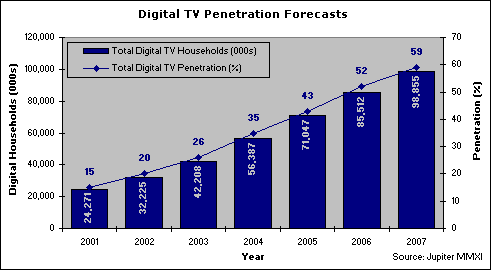
| Digital TV Penetration Forecasts | |||||||
| 2001 | 2002 | 2003 | 2004 | 2005 | 2006 | 2007 | |
| Total Digital TV Households (000s) | 24,271 | 32,225 | 42,208 | 56,387 | 71,047 | 85,512 | 98,855 |
| Total Digital TV Penetration (%) | 15 | 20 | 26 | 35 | 43 | 52 | 59 |
| Source: Jupiter MMXI, March 2002 | |||||||
A rise in the number of interactive features for the viewing audience will also boost subscriber numbers. By 2007, Jupiter forecasts that 91% of DTV households will be using interactive services such as personal video recorders (PVRs) and video on demand (VOD).
By Q2 2002, low cost set top boxes will come onto the market which will allow viewers to access all free-to-air digital channels without subscribing to a pay TV service. Jupiter MMXI believes they will have reached critical mass by 2004.
Daniel Stevenson, author of the report says “Until recently, the industry had underestimated the potential of digital terrestrial free-to-air TV. Growth of this platform will inevitably make life more difficult for cable and satellite pay TV operators. Interactive services, although at present basic, will develop rapidly and will transform the way TV is used.”