
With the silver screen and the birth of movies, first came the pictures and then, some 40 years later, came synchronised sound. For the smaller screen, podcasts have evolved the other way around. Although they have been around for 20 years, video podcasts are now attracting significant attention, but that does not mean they are rewriting the rules of podcasting.
Our Midas (Measurement of Internet Delivered Audio Services) Audio Survey for Autumn 2026 and the accompanying monthly Rajar Podcast Tracker point to something more nuanced: podcasting remains an audio-first medium, but one that is learning to use video in useful and sometimes powerful ways.
Audio remains the anchor
Listening is one of the UK’s most embedded media behaviours. Each week, 96% of adults listen to some form of audio, generating more than 1.6bn hours of consumption. Podcasts reach around a quarter (26%) of the population weekly and deliver 105m hours, with listeners spending an average of 6.9 hours a week with the format. They are still much smaller than live radio, which reaches nearly nine in 10 adults each week and delivers 1bn hours, but they are now firmly part of the wider shift towards online and on-demand audio.
What comes through in our research is that audiences are not simply choosing between listening and viewing; increasingly, they are doing both. Around a third (34%) of podcast consumers move between audio and video formats within the same week, suggesting format choice is becoming more situational than fixed.
Video adds context, not a new behaviour
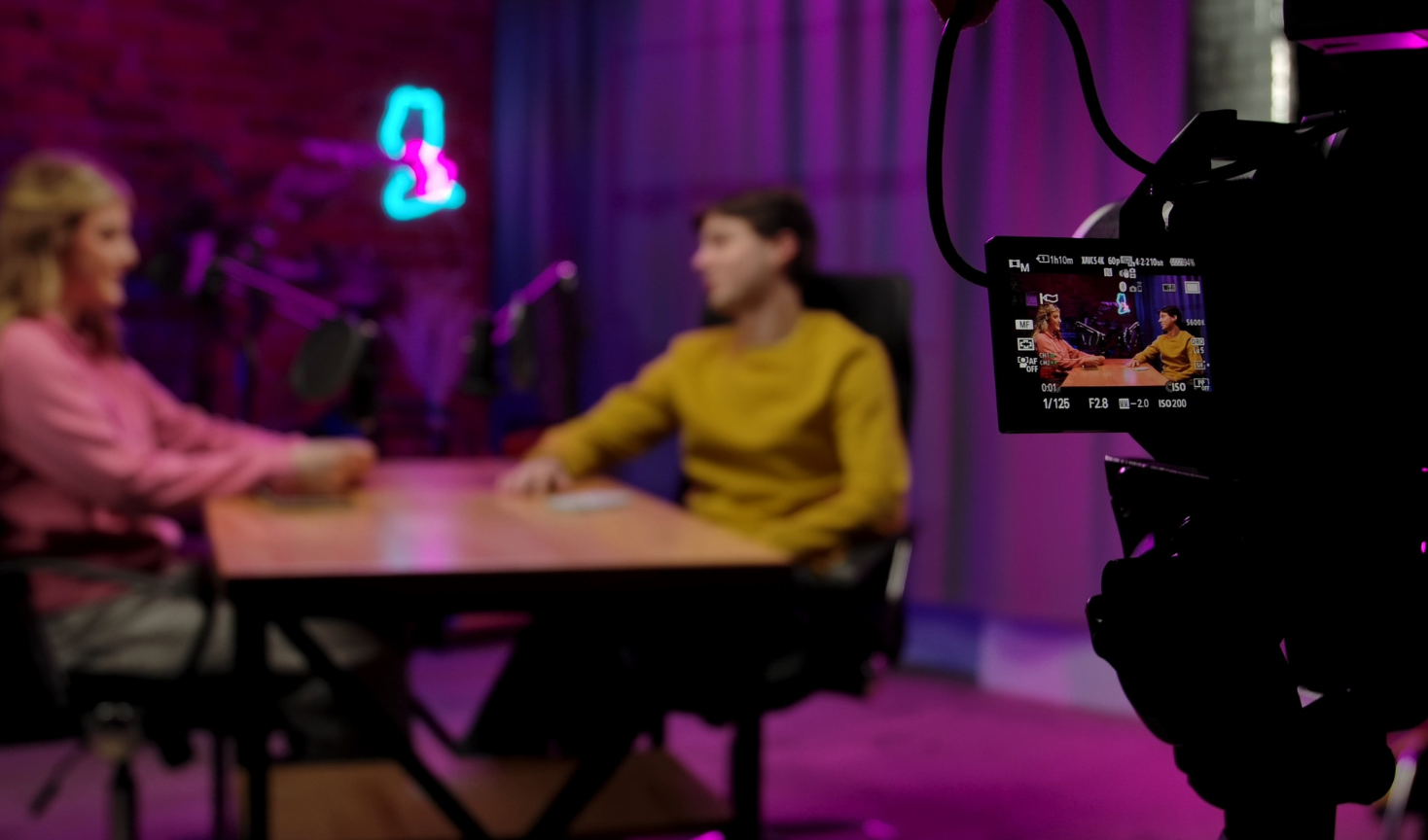
Even when people do watch, a video podcast is not necessarily an immersive experience. People may be doing chores, working, scrolling or moving around while the podcast plays. Some 35% say they listen first and glance at the screen when something catches their attention, using the visual element when it adds something; a further 43% say they split their attention fairly evenly between listening and watching. In practice, much video podcasting is better understood as audio with a visual layer, rather than television by another name.
That visual layer can still matter, particularly when it makes hosts feel more present, conversations easier to follow and moments more likely to travel on social platforms. Around half (49%) say that seeing hosts’ reactions and body language is what video brings to a podcast. Video can also help podcasts be discovered, shared and talked about, but that is an enhancement to the experience rather than a replacement for the underlying behaviour.
Why definition matters for measurement
Audience intent is important here, because most podcast users (62%) say they would still consume the same content if it were available only as audio. That should make the industry cautious about overstating the idea of a video revolution. Video may affect packaging, discovery and commercial models, but it does not automatically change the core consumer behaviour.
Younger audiences are the main pressure point, with video much closer to being the default environment for 16-24s. Discovery happens on YouTube, TikTok and social feeds, and in that world video podcasts may feel less like an optional extra and more like a route to relevance. If podcasts want to be found by younger audiences, they will likely need a clear visual presence.
For audience measurement, this distinction matters because video podcast consumption should sit within the broader podcast picture, which is often how audiences experience it. At the same time, it should not be assumed to be identical. Measurement therefore needs to capture both the continuity of listening behaviour and the additional value created by visual discovery, attention and monetisation.
The screen helps discovery, but listening drives value
Our research suggests that video is not replacing the audio podcast; it is widening its reach and visibility. The real opportunity, then, is not to turn podcasts into television, but to understand how video can amplify what already makes podcasting distinctive: intimate voices, sustained conversation and the freedom for audiences to listen on their own terms. The small screen may bring people in, but the listening is what keeps them there.