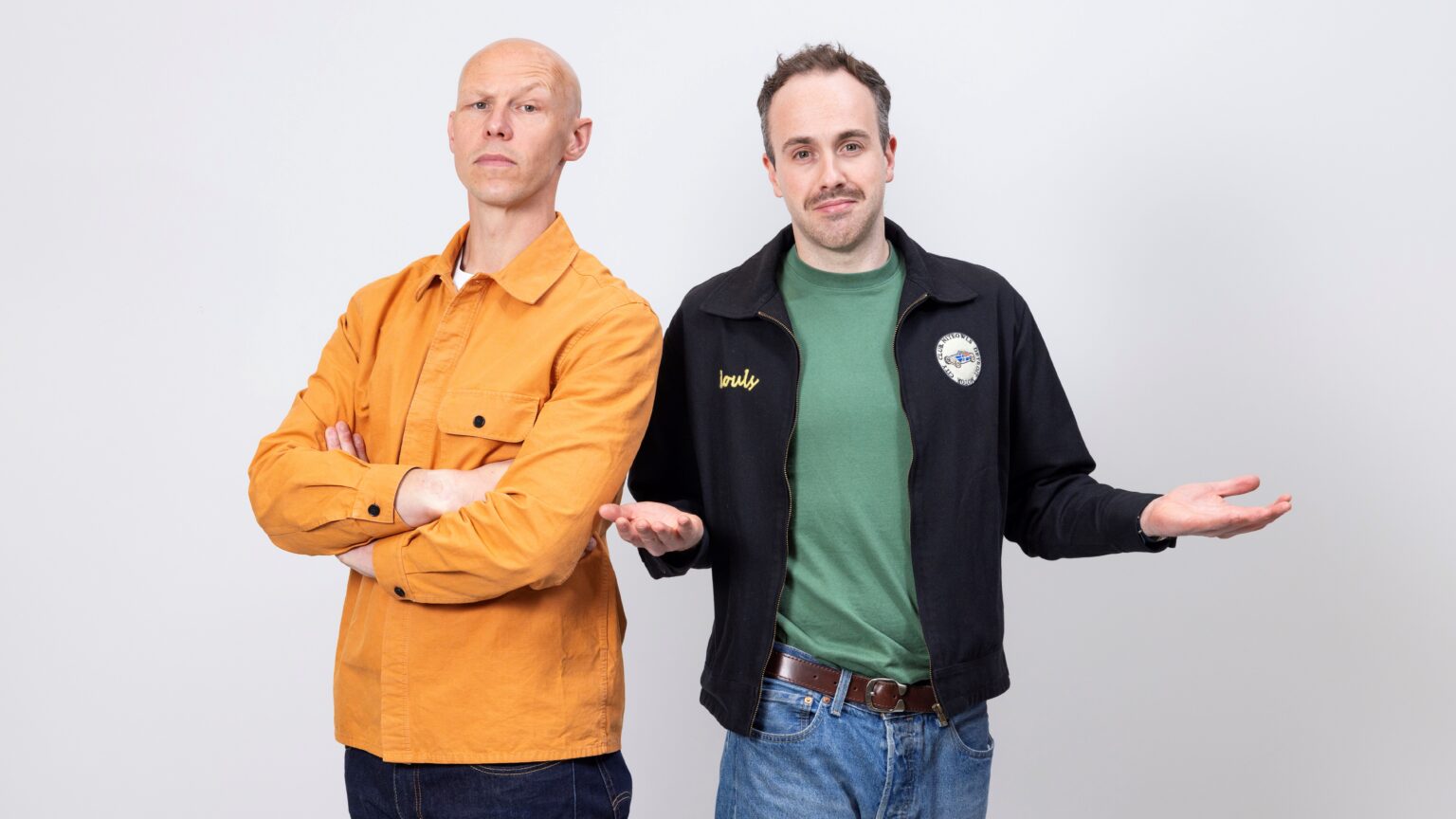

We’ve just passed the 100-episode mark of AI Haven’t a Clue, the tech podcast I host with James Chandler, chief strategy officer of the Internet Advertising Bureau UK. We cover the latest goings-on, and we’ve been joined by experts, enthusiasts and critics to hear about the technology that’s transforming the world.
Covering AI for nearly two years, and learning more than I’d ever hoped about the tech bros running the world, has been fascinating, terrifying and slightly exhausting. As a public form of therapy, I’ve jotted down some of my learnings, musings and observations on the wild world of AI.
To mark 100 episodes, we’re bringing AI Haven’t a Clue to the stage with a live show on 15 November, and we’re giving away 20 tickets to readers of The Media Leader (details below.)
I should start by saying I am no AI expert. My role on the show is to pull confused faces, ask “why” (a lot) and rant about how much I (sometimes) hate artificial intelligence. That said, through the osmosis of chatting to people far more intelligent than I am, there are a few things I’ve learnt.
No-one really has a clue what’s going on
On the show, we’ve spoken to astrophysicists, government ministers, coding geniuses and world-leading doctors. When it comes to AI, they all have one thing in common: they don’t really know what’s going on.
Most of our guests use the tech in interesting ways, or tell us about the world-changing impact it will one day have, but no-one can really explain it.
We’ve had futurologists on the show who frankly have no idea what next month might hold, let alone a decade from now. It’s not their fault. Relatively speaking, this technology has been sprung on us at lightning speed, so it’s hard enough to make sense of today, let alone the future. Even the companies leading AI development don’t really know where it’s going next. It’s unpredictable by nature, which makes for a very erratic landscape for everyone.
Hyperbole equals more zeros
Barely a week goes by without James and I covering the latest scandal about [insert big tech firm]’s newest AI agent [insert awful robot wars code name] going rogue. If a bot isn’t escaping from a test centre to hack into Australia’s national health service, there will be a whistleblower warning about AI going Terminator on humanity.
I’m not saying there isn’t a “20% chance that AI will wipe us out”, but I am saying there is a link between these stories and soaring valuations. The meaner, scarier and more dangerous the tech sounds, the more it’s worth.
Surely if the threat to our existence is genuine, we should throw AI in the skip immediately. Sam Altman and Mark “The Zuck” Zuckerberg constantly remind us of the utopian benefits AI will bring to the world, but where exactly are they, or at least when can we expect to see them? As it stands, AI is over-indexing on job cuts and environmental damage.
The world is of course changing, but maybe not at quite the rate we’re led to believe.
Creativity is changing, but not being replaced
When we started the podcast, I firmly believed AI had no place in creativity, but my view has shifted slightly.
Guests such as the entrepreneurial duo behind Seraphinne Vallora, who put the first AI model in Vogue, have shown how AI can be used as a tool to bring a creative vision to life. There’s a world of slop out there, but falling between the cracks is some genuinely interesting work.
It’s hard to argue there won’t be an impact on jobs in the creative sector. One guest, from AI agency Particle6, claimed the company isn’t trying to compete with human creatives. But ultimately, when brands choose not to do a physical shoot with a crew, or not to use a stop-motion animation studio, the sector feels it.
However, AI creativity isn’t yet at a place where it rivals what great humans can do. Most of us can spot a naff AI ad a mile off, the music charts aren’t being threatened by BeyoncAI, and when the world’s most famous AI actress, Tilly Norwood, came on our show, she glitched and started speaking Gujarati.
AI is not the end of creativity. In fact, guests have told us human creativity will become an increasingly valuable commodity in our new artificial era. However, the democratisation of content production will only continue to affect the creative sectors.
We might all live until we’re 200
Dr Dan Sodickson joined us a few weeks ago and told me we’re mere years away from AI drastically reshaping healthcare. If AI is “the new oil”, as Donald Trump put it, then health tech is liquid gold.
Sodickson said we’ll soon be sleeping in AI beds that scan, weigh and monitor us as we sleep. They can identify shifts in the body and spot the earliest signs of disease.
If this is the case, perhaps some of us will live to 200, almost certainly accompanied by our new bot friends. You might have seen the BBC’s Ann Droid, but it’s no joke. The founder of Comfort Companions joined the podcast to explain how he works with Age UK to create tailored bots that tackle loneliness among older people.
I find the human-AI relationship a cause for concern. Dr Jourdan Travers told me about the dangers young people face from “AI partners”. One of the most alarming interviews we did was about the “grief tech” sector, in which companies charge friends and relatives of the deceased to create AI models of their lost loved ones, so they can continue to communicate with them after they’ve gone. Scary.
For the past two decades, our digital data has been a valuable commodity. But if Sodickson is right, our health data is the next frontier of personal information to mine.
Reasons to be cheerful
Anyone who has heard the episodes we recorded with The Media Leader’s marvellous Jack Benjamin might feel slightly pessimistic about where the future is headed. Jack has reported on the history of OpenAI and Anthropic and, most recently, the money behind the AI boom.
It’s important to know more about the men (and sadly, they are predominantly men) who are building and funding the tech that is changing the world. Unsurprisingly, the picture Jack paints is far from pretty.
You could be forgiven for thinking all hope is lost and the tech bros have taken over, much like the Empire in Star Wars. But fear is the path to the dark side. What we need is more Leias.
The resistance has certainly begun. Listen to our episodes with Set@16 or AI Resist List and you’ll hear from people fighting back against AI toys, data centres and superintelligence.
Equally, we’ve heard from people who have found new entrepreneurial ventures in the changing tech landscape, or pumped new blood into older set-ups. In many ways, AI is forcing us to be better at what we do, and to be more creative and more human. It’s an odd thing to write, but AI is making people value people.
It’s undoubtedly a strange time, full of both fear and optimism. There’s plenty to be concerned about, but there are also reasons to be cheerful. For every story we’ve covered about humanity’s demise, there’s been one about AI cutting admin for nurses or predicting storms more accurately. Our guests have often offered a glimpse of new creative possibilities, or of a world in which we can be healthier, or perhaps less lonely.
In all honesty, it’s hard to keep up with all this change, but you can hear us give it a go wherever you get your podcasts.
Win tickets to AI Haven’t a Clue: Live from London
The first 10 readers of The Media Leader to email [email protected] will each win a pair of tickets to the live show at Upstairs at the Gatehouse in Highgate on 15 November. Doors open at 6:30pm for a 7pm start.
Expect the show’s popular segments, special guests and live listener questions. For more information, visit nowshow.ing/aihac.