Future Network was ‘pushed off course’ in 2000 in what was this morning described by chief executive Greg Ingham as a ‘bruising year’ for the company.
Future has been expanding rapidly in recent years and now operates more than 100 magazines, 45 magazine websites and employs almost 2000 people in Europe and the US.
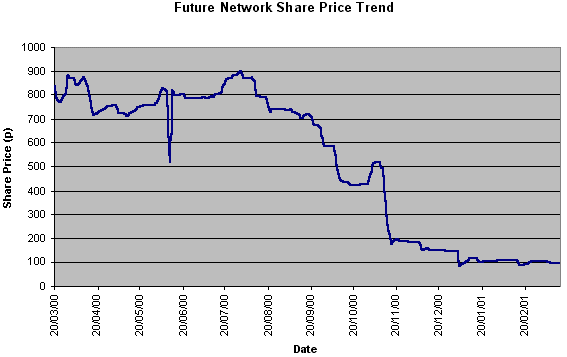
In October last year, accounting anomalies at Future’s French subsidiary emerged. This, along with a ‘soft’ computer games market (a key sector for Future’s magazines), caused the company to issue a profits warning in November. Shares tumbled dramatically. At the beginning of this year Future unveiled another warning that profits were to be lower than even the previously revised estimates (see Future Network Issues Second Profits Warning).
This all hit the company at a time of strong expansion and development, causing Future to be ‘pushed off course’ in its growth. Just last month the group announced plans to sell or close 20 of its magazines in order to reduce debt. This morning it said that these titles accounted for £18 million in revenues and operating losses of £14.7 million in 2000.
Despite these significant setbacks Future turned in a revenues increase of 28.6% to £254 million; underlying profits up 6.8% at £33.2 million and a strong performance in the US, where revenues increased by 78% to £99 million. Alongside this, though, were an EBITA fall to a loss of £2.5 million from a positive figure of £20.2 million the year before and a leap in loss after tax to £60.8 million.
Commenting on the results Ingham says: “2000 was always intended to be a peak year for investment and our spend of £35.7 million was the principal reason for the loss incurred. However, the much weaker games market, the dotcom collapse, a general tech downturn and softer advertising markets all contributed to a performance that was some way below expectations. These market conditions and the accounting problem discovered in our French business identified a need to improve our management systems and revealed that our growth plans were just too ambitious.”
Last year 34 new magazines were launched by Future and £10.4 million was spent on internet investments. This expansion has led to Future’s claim of being ‘one of the fastest-growing media companies in the world.’ A little too fast it seems. Twenty magazines forced to close and ‘sharply reduced internet investment’ are the results.
At midday today Future Network shares were down 3p at 94½p.