
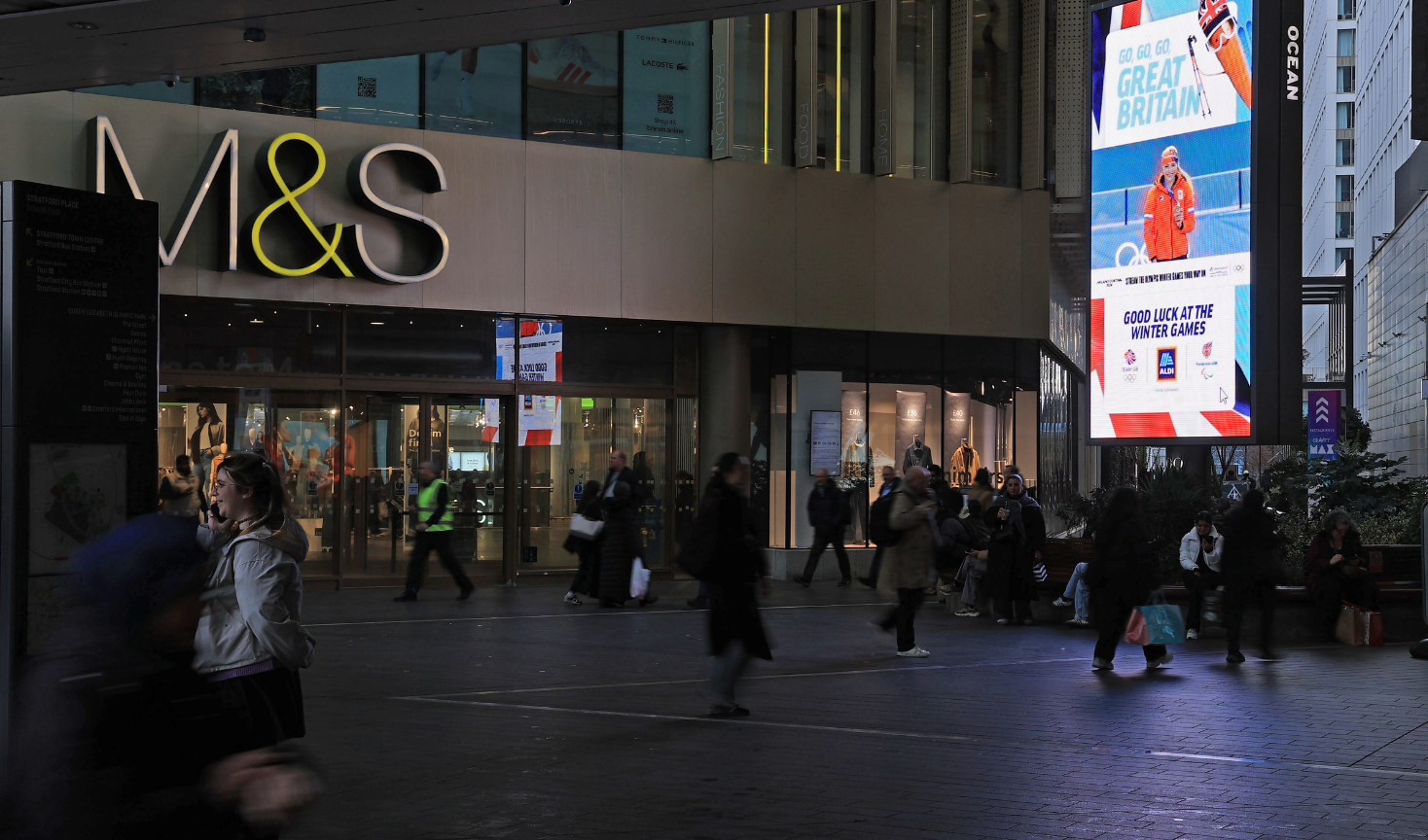

Out-of-Home (OOH) has reported its highest-ever annual revenue in 2025, despite the challenging macroeconomic factors, according to the industry trade body, Outsmart.
Revenue for year-end 2025 grew 2.6% year-on-year to £1.44bn, beating ad revenue in 2024.
Digital OOH grew 3.2%, and classic OOH was up 1.3%, with DOOH taking a 67% overall share of annual revenue.
Growth in the second half of the year was up 3.8% year-on-year and was stronger than the first half of the year (1.2% growth).
Partly behind this growth was a strong Q4, which saw 3.3% growth in overall revenues to £404.9m.
DOOH grew by 4.8% year-on-year, and classic grew by 0.3% year-on-year in Q4, marking a slowdown for classic from Q3, where growth outpaced digital.
Digital’s share in Q4 also grew to 69% up from 67% in Q3.
Justin Cochrane, chair of Outsmart, said: “Despite the wider economic headwinds, 2025 shows that brands continue to invest in Out of Home because it offers unrivalled reach and delivers trailblazing creative opportunity and effectiveness.”
The latest Advertising Association/Warc Expenditure Report upwardly revised its forecast for OOH adspend for 2025 to 3.1%, led by growth of 3.7% for digital OOH.
Dan Bunyan, partner at PwC UK, said: “OOH has continued to prove its value to brands despite the challenging macroeconomic backdrop and disruption from new AI models.
“The industry has seen positive growth in H2 2025, a good sign for 2026. Continued investment in digitisation and programmatic capabilities should underpin growth moving forward.”
The figures for this report were collated by PwC.






•
The headline matters less than the mix. Most of the incremental growth is coming from transport and 6 sheets, where digitisation has expanded supply fastest. Digital has improved accessibility and utilisation, but it also multiplies available inventory in a demand compounded medium. That shifts the real question from growth to economics. The opportunity now is to be clear where pricing power genuinely survives once capex and cost of sale are fully understood. For assets with real scarcity and location strength, that is where OOH remains structurally attractive.