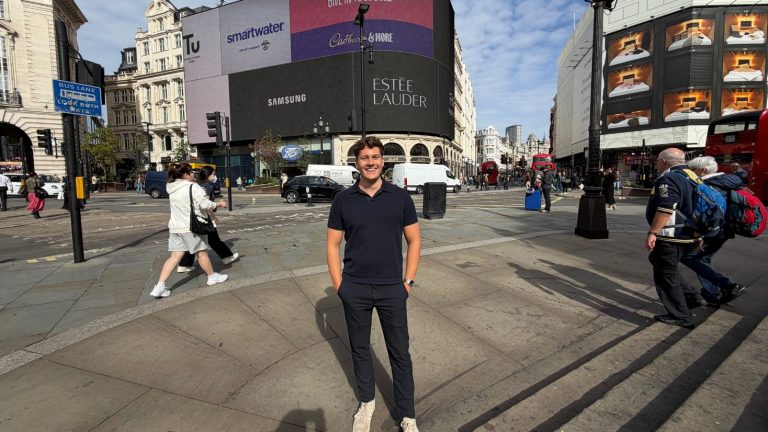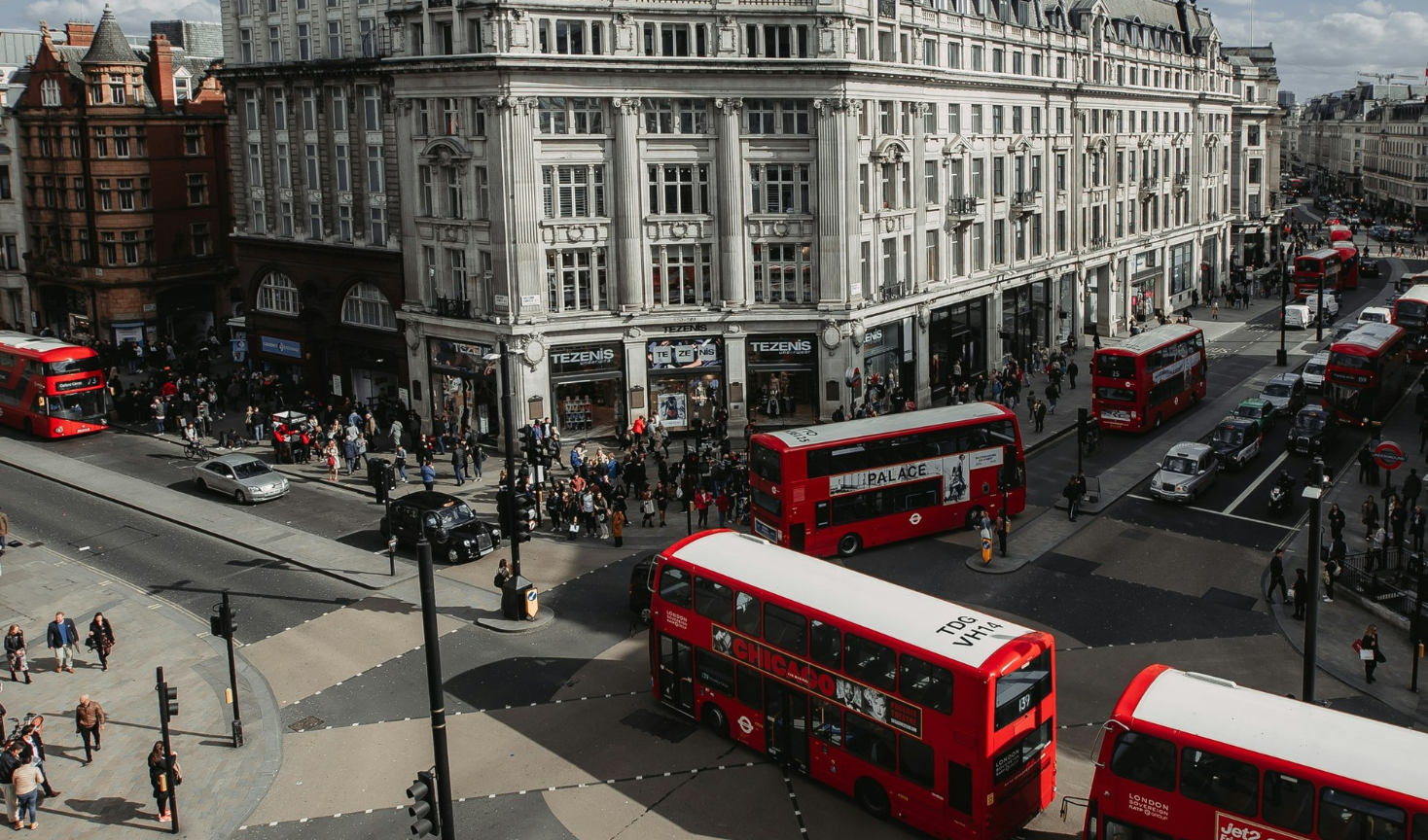

Last week, part of London’s Oxford Street went traffic-free, marking the first stage of the Mayor of London’s plans to pedestrianise the shopping destination.
The nearly one-kilometre stretch between Selfridges and IKEA is now closed to buses, cars, taxis, bicycles, scooters and pedicabs.
The popular shopping district attracts around half a million visitors every day, according to the Mayor’s Office, and generates annual spending of approximately £3.1bn. The changes come ahead of Christmas, traditionally the busiest period for retailers, while Oxford Street is also increasingly becoming an office destination following the introduction of the Elizabeth Line in 2022.
The first stage of the project introduces a temporary ‘transitional scheme’, designed to deliver some immediate improvements for visitors, while allowing public feedback to inform the final designs.
By the end of 2027, the Mayor’s Office expects more than 50 new trees, two public squares, improved signage, more than 100 new seats, dining tables and new lighting to be installed.
Mayor of London Sadiq Khan said discussions about pedestrianising Oxford Street had been taking place for decades, adding that he was “proud that we’re finally unlocked a new era for the street”.
What might this mean for OOH?
OOH advertising on Oxford Street spans several formats, from moving inventory on buses and taxis to fixed posters and digital screens. These include JCDecaux’s D6 advertising units, many of which were connected to bus shelters but will now be free-standing, and digital screens operated by Backlight. The street is also surrounded by major Underground stations, including Bond Street and Oxford Circus.
With buses and taxis no longer travelling along the pedestrianised section, the potential loss of vehicular audiences raises questions about the impact on existing advertising inventory.
However, Martin Pittendreigh, business director at OOH agency billups UK, believes the potential loss may be smaller than some in the industry expect.
He argues that removing buses and taxis could actually increase the importance of the advertising formats that remain, reducing competing visual clutter and potentially giving them greater cut-through.
Nonetheless, he cautions against assuming that increased pedestrian dwell time will automatically translate into greater attention.
“It’s easy for us in the OOH world to be solely fixated on OOH formats, but the adverts that we’re putting on the street are also battling for attention with shop fronts and other distractions,” he says.
“I think it’s important we consider it as an environment in total rather than just concentrating on: yes, buses won’t be there and taxis won’t be there, but you will still have OOH advertising.”
Pittendreigh believes the industry should establish a baseline now and measure the impact over the coming months, rather than making assumptions about whether pedestrianisation will benefit or harm the medium.
The timing does present some challenges. With the changes coming into effect ahead of Christmas, audience numbers will naturally increase during the busy retail period, while visitors will be adjusting to the new layout.
Pittendreigh says analysing the initial period will be important, but a “cleaner” picture in the new year will also be needed.
Route will be central to this analysis, he says, alongside non-industry research, including retailer reports on footfall. He also believes it will be important to get a “boots on the ground” perspective to understand how people are actually using the street.
“Is it creating an easier-flowing audience? Is it meaning that people are spending more time on Oxford Street? Will people be in a more relaxed mindset?” he asks.
He also questions whether making Oxford Street a more pleasant destination could encourage people who might previously have avoided the area to spend longer there, potentially making them more receptive to advertising.
“There are currently so many unknowns,” he adds.
New opportunities for advertisers?
Beyond audience numbers and attention, pedestrianisation could also offer new creative opportunities for advertisers.
Pittendreigh suggests that removing moving traffic could allow greater flexibility in the creative displayed on existing digital formats.
Currently, D6 screens have limitations around the amount of motion used in advertising creative because of vehicles travelling past them. Without that traffic, there could be greater scope for full-motion creative, personalisation and more dynamic messaging.
The Mayor’s plans could also create opportunities for more experiential and event-led advertising. Khan said he hopes pedestrianisation will bring “exciting new experiences to the street, from sport to fashion and cultural events”.
Retailers are already looking at how to make more of the space. John Lewis COO Naomi Simcock said retailers would need to “step up too”, pointing to the company’s multimillion-pound investment in refurbishing its flagship store.
Under Armour retail director Mathieu Guillemet also highlighted the opportunity to connect with consumers beyond traditional retail, bringing sport, community and brand experiences to life.
For advertisers, these developments could create more opportunities to connect with shoppers through activations and experiences, rather than relying solely on traditional poster and screen formats.
Nicole Lonsdale, SVP of OOH at WPP Media UK, also sees an opportunity beyond physical retail, arguing that increased dwell time could benefit online sales.
As Oxford Street becomes an “outdoor mall”, she believes visitors will be more relaxed and open to discovery.
“With 70% of mobile commerce taking place out of home, this surge in dwell time creates a powerful halo effect for online sales too,” she says.
“Brands should capitalise on this newfound attention with bolder creative solutions, from dynamic calls to action and 3D content to richer interactive experiences through QR codes or Connect technology.”
A more valuable audience?
Others in the industry are optimistic about the impact on existing OOH inventory.
Mike Follett, CEO of attention research company Lumen, believes pedestrianisation could significantly increase the value of existing poster sites.
“The pedestrianisation of Oxford Street has suddenly turned the existing poster frames into OOH gold,” he says.
“Pedestrians notice posters much more than drivers do. When you’re walking about, OOH ads are in your view for much longer than when you’re driving. It’s as if the ‘viewable time’ for ads is extended for pedestrians. And more viewable time means more chance that the ads will be noticed – and noticed for longer.”
He adds that the effect could be even greater if pedestrians no longer have to navigate around traffic.
Tim Sapsford, managing director at Posterscope, also sees pedestrianisation as a positive development for advertisers.
“It is worth remembering that it is only part of Oxford Street, not all of it. But we think the pedestrianised section will bring longer dwell time for advertisers,” he says.
JCDecaux has removed the bus shelters from the affected section, leaving freestanding advertising units which Sapsford believes will benefit from improved sightlines as a result of reduced visual clutter and the removal of traffic.
The planned introduction of additional seating and public spaces by the end of 2027 could further encourage visitors to spend longer in the area.
Whether pedestrianisation makes Oxford Street a more valuable advertising environment remains to be seen. But, as Pittendreigh argues, the industry has an opportunity to find out.