
Adspend is up, but average advertising effectiveness is down.
“It is a difficult time for our industry,” Charlie Ebdy, Omnicom Media UK’s chief strategy officer, acknowledged. “I suspect if you are dealing with clients or managing a brand, everything can feel like hard work.”
At The Future of Media London event on Tuesday, Ebdy sought to explain why advertisers appear to be paying more for less.
“Ultimately our challenge is not about tactics, it’s about the nature of the environment in which we are planning and executing advertising today, regardless of your audience,” he said.
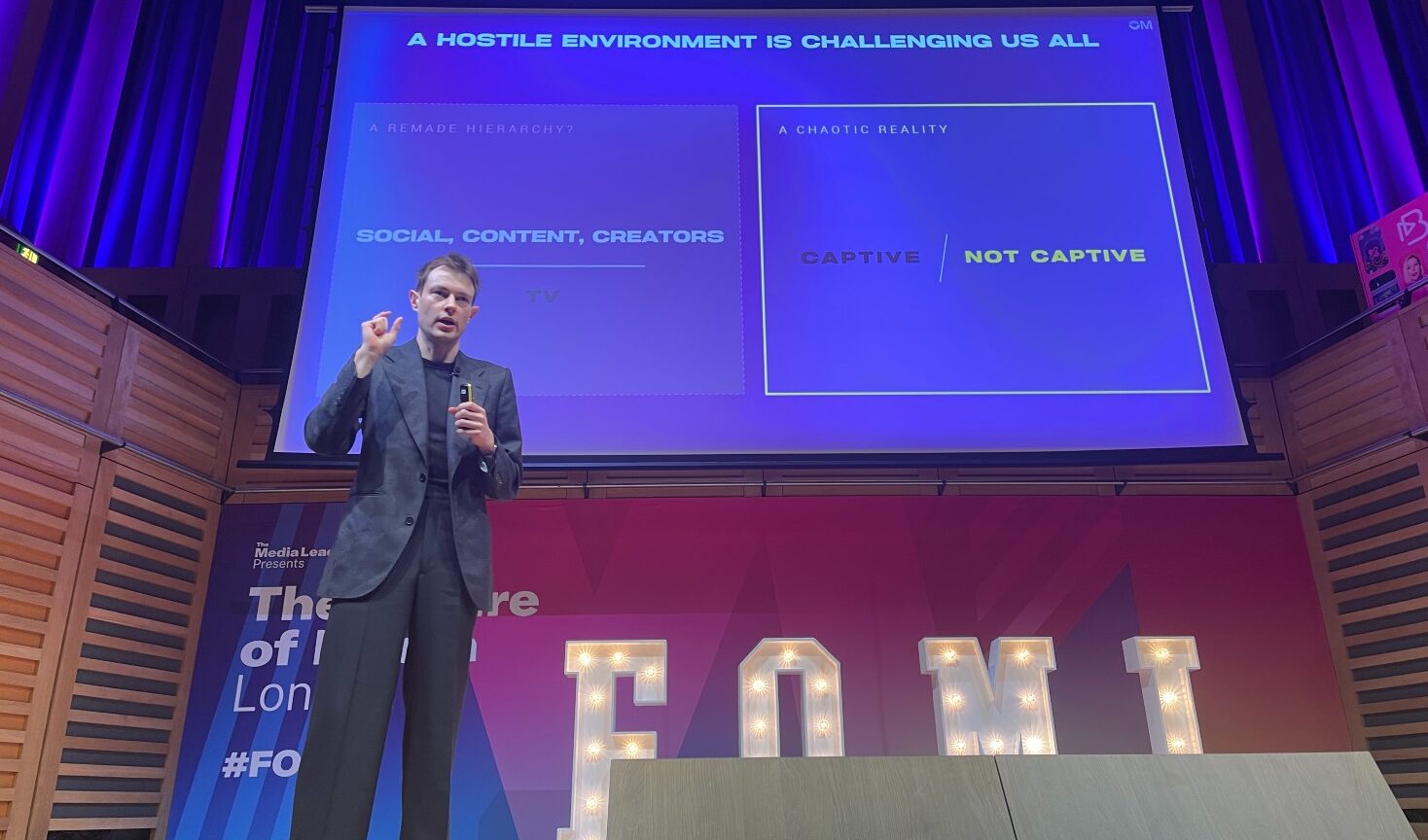
Ebdy explained that advertisers are “used to operating in an environment where channels and tactics form a neat hierarchy”. The old hierarchy placed TV at the top. The new one, in terms of how adspend is apportioned, is dominated by search and social.
But Ebdy doesn’t believe the shift in channel hierarchy is itself responsible for the decline in effectiveness. Rather, he argued, the culprit is a change in “the relationship advertising has with audiences”.
“[Audiences] used to be captive, and we could force-feed them advertising,” he said. “Now they are not captive, and we can’t.”
Ebdy characterised the change, driven in part by media fragmentation, as a move “from a zoo to a jungle”.
Great advertising, he said, used to be quicker and was more commonly watched all the way through, as media was consumed sequentially. Today, media is consumed “at the same time”, with audiences second-screening across “distracting” and “low-quality” media.
Three steps to effectiveness
Ebdy set out three steps media practitioners should take to improve effectiveness in this more distracted environment.
First, brands must accumulate recognisable assets. “You need to be better branded than you ever have been,” Ebdy said.
That doesn’t merely mean sticking logos at the start of ads, but rather “adding assets in multiple dimensions”. These might be creative assets such as logos and jingles, or less traditional marketing devices.
“If you think about all the different ways that a brand can be distinctive, I would say most of them are not about creative content at all,” Ebdy said. “They’re how you show up in retail; it might be about [brand] ambassadors you work with; it might be about the occasions you dominate.”
Secondly, Ebdy recommended that brands focus on winning “somewhere rather than everywhere”. Such advice, he acknowledged, goes against the grain of brands wanting to show up everywhere consumers spend time. But he likened that approach to “whack-a-mole”, with brands diluting their budgets and spreading themselves too thin.
“You can’t do the old stuff and the new stuff and do it [all] well,” Ebdy argued. “It’s impossible.”
Citing winners of the IPA Effectiveness Awards, he said the brands that do well concentrate their budgets on a narrower range of channels, whether traditional or non-traditional.
“The question that everyone needs to ask themselves is: what on my plan is a really high-leverage benefit? What can we execute at a world-class level that no one else in our competitive set can possibly match?”
Thirdly, Ebdy argued that brands need to take a more responsive approach to planning. Brands lauded for their effective advertising, such as Alzheimer’s Society and Currys, “waited until they had a winning idea” and only increased budget “after they already knew that it was paying off”.