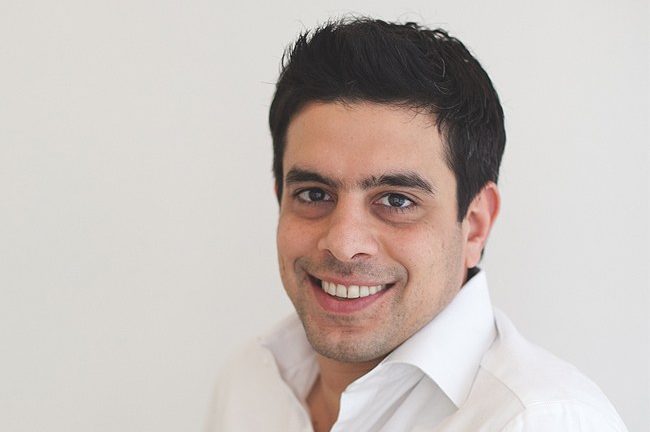

In 2011, Tom Ridges was in Paris with his now-wife, looking for somewhere good to eat. He did what most of us do and checked the reviews. What he found was chaos: Every restaurant nearby had five stars. A tiny local bakery. A global fast-food chain. All (apparently) perfect. Which raised a fairly obvious question: If everything is rated the same, how does anyone choose?
The problem wasn’t reviews. It was context. Five stars means something very different depending on who you are, who you trust, and what the people around you are doing. Why do we copy each other? Why do recommendations spread? And why do some ideas take hold in one place but not another?
This curiosity led Ridges to behavioural science and Dr Tim Drye, a specialist in how behaviour spreads through communities. Together, they took those principles and built them into the Herdify platform, which shows where word of mouth is actually happening in the real world.
Here, Ridges shares a quote from Jeff Bezos that guides his thinking, why he lets others do the hiring, and why going for a walk in the woods can give you answers to questions you weren’t even asking.

Leadership
What principles guide your leadership approach?
For me, it comes down to curiosity and execution. I’ve spent more than 20 years working in technology and data. One thing I’ve learned is that having a great idea is only the beginning of the journey.
You have to get out there, speak to customers, test your assumptions and be willing to change direction when the evidence tells you to. At Herdify, we’re challenging some quite established ways of thinking about marketing and consumer behaviour, so it’s important to stay curious and question the assumptions everyone else takes for granted.
I’m also a big believer in focus. As a founder, it’s easy to get distracted by the next exciting opportunity. But sometimes the best decision is to stop chasing new things and concentrate on what you already know can work.
How do you personally stay ahead of industry disruption?
The first thing you have to accept is you can’t know it all. I remember early in my career feeling overwhelmed by the pace of change, so separating the signal from the noise is really important. I’m naturally curious about why people behave the way they do, which helps.
I also come back to my favourite quote from Jeff Bezos:
I very frequently get the question: ‘What’s going to change in the next 10 years?’ And that is a very interesting question; it’s a very common one. I almost never get the question: ‘What’s not going to change in the next 10 years?’ And I submit to you that that second question is actually the more important of the two, because you can build a business strategy around the things that are stable in time.”
We don’t want to ignore change, but not all new tech is disruptive, and it’s important to focus on what works too. Lest we forget, Facebook rebranded over the promises of the Metaverse…
Staying ahead also means looking beyond obvious technology trends and understanding what it means for human behaviour. But sometimes staying ahead isn’t about using new technology first. It’s about understanding what stays the same, when everything around us changes.
People and Culture
How do you build and maintain a strong company culture in times of rapid change?
Culture starts with having a clear sense of what you’re trying to achieve and why it matters. When you’re building a business, there will always be uncertainty, competing priorities and new opportunities to chase. A shared mission helps you decide what deserves your attention and what doesn’t.
I think another important thing for leaders is that they help shape the culture, but they don’t control it. Some founders are proud they interviewed the first 500 people in their business, but if I had to do this, I’d fail. I’m not the only one responsible for culture, and if I can’t trust my team to hire people with a good cultural fit, then I’ve not done a good enough job of creating a good culture. If you want to measure your culture, see how well the first few hires you weren’t involved with fit into the business.
We want to change the way organisations understand word-of-mouth and offline social influence. That’s an interesting challenge because we’re asking people to think differently about something that has always existed but hasn’t always been measured. I also think it’s important to create an environment where people can learn, challenge assumptions and be honest about what isn’t working. You won’t get everything right the first time, especially when you’re doing something brand new.
Building a business where my employees feel empowered and genuinely enjoy being part of it is just as important to me as building one that’s commercially successful. It’s great to see the growth and new hires within the company. But I intentionally control the pace so it doesn’t affect the culture we’re building together. If we can do both while staying focused on our mission, we’re on the right track.
How do you handle failure, both personally and within your teams?
I think failure is an overused word in business, like this magical line between what worked and what didn’t. “Success” can only be evaluated in the moment, and some “failures” were actually late starts.
So the first thing I try to do is put it in context: most failures aren’t catastrophic, and you can learn. Indeed, in some areas you actively push for failure. If our research team isn’t creating flops, then they aren’t asking big enough questions. But if finance is continually losing money, we have a bigger issue.
That said, I always come back to the Chinese proverb about the injured son, which essentially teaches us not to overreact to good news or bad news. You never know what follows, so it’s best to keep your emotions regulated.
One lesson I’ve learned at Herdify is the importance of narrowing your target audience early enough. When you’re building something new, you’re tempted to make it relevant to as many people as possible. But trying to appeal to everyone makes it much harder to build momentum anywhere.
We also spent too much time refining our product behind the scenes before getting it in front of customers and testing demand. We learned that building something good isn’t enough; people need to understand what we’re building, believe in it and see the value. So now I put much more emphasis on action, feedback and real-world evidence. I’d rather test an idea, learn something useful and improve it than spend months trying to make it perfect before anyone sees it.
AI, Innovation and Skills
How is AI changing the way you lead and make decisions?
It’s great for collecting and sorting information. When I want to process a new idea, the research side of things is much faster. It’s also good for arguing with and anticipating pushback I might receive. That said, it’s more like working with a confident child, so I’m always mindful that what it says in an authoritative tone might not always be correct.
For me, the real value of AI isn’t making decisions for us; it’s helping us make better ones. It can process information and challenge our opinions at a speed we could never achieve alone. But leadership has never been just about data. It’s about people, relationships, trust and understanding the human impact of the choices we make.
What skills will define successful media leaders in the next decade?
Trust will become even more important. As AI-generated content becomes more convincing and more widespread, real relationships and recommendations from people we know could carry even greater weight. Leaders who understand how to earn that trust, rather than simply capture attention, will be well placed for the future.
And that requires a deeper understanding of people. Who influences who? Why do certain ideas spread through one community but not another? Why do we trust one recommendation and ignore another? These are questions that go beyond audience demographics.
Back to my quote from Bezos. While we don’t know where technology will be in 10 years, humans will make their decisions broadly the same way, so being comfortable with behavioural science will be useful. I believe leaders will need to be comfortable with uncertainty.
Technology and media habits will keep changing, and no one will have all the answers. The ability to experiment, learn quickly and adapt will be essential.
The Quick-fire Round
Which book would you make required reading for all media leaders?
Change: How Behaviour Spreads: The Science of Complex Contagions, by Damon Centola, because it explains complex contagion and how behaviour actually spreads through networks. Understanding that, and building it into how we plan marketing, could change how marketing leaders think about growth.
Which leader from TV, film, or literature inspires you most?
Tony Soprano. I love the juxtaposition of a tough mob boss who essentially kills and extorts for a living, who is learning to deal with his emotions, and it’s a good reminder that regardless of how tough-nosed you think you are, leadership is an emotional experience.
What’s your go-to source for inspiration when you need it — work or otherwise?
Walking. We’re not short of information in today’s world. We’re short of the subconscious processing time our brain needs to process it. Go for a walk in the woods, no phone, no headphones and your brain will give you answers to questions you were not even asking.
Media lunch or media breakfast meeting, and why?
Lunch. I try to avoid breakfast. It’s also less socially acceptable to order a glass of wine at 8:30 am.
Which media leader would you like to answer Leading Questions next?
Dan Brain, Co-founder of MAD//Fest.
Leading Questions is published by The Media Leader every Friday.