
Transport for London (TfL) has launched a multi-platform campaign to equip users of the network with techniques to intervene in hate crime incidents.
WPP media agency Wavemaker and creative agency VCCP London created and placed the campaign across digital out-of-home (DOOH) and out-of-home (OOH) sites on the rail and bus network.
While the target audience for the campaign is anyone who uses public transport and who could be witness to an incident of hate crime, there is a specific focus on high risk, targeted communities such as those who identify as LGBTQ+.
This activity will be visible on the network throughout 2023 and will be “dialled up at key moments” based on TfL advice on the volume, location, and mode of reported incidents.
Using this advice, Wavemaker will upweight the campaign around specific stations, modes or lines, as well as during events like Pride Month, Hate Crime Awareness Week, National Bystander Awareness Week, and Zero Discrimination Day.
Transport outdoor media was chosen as “the primary intervention touchpoint” as it is close to where incidents are most likely to happen and provides simple advice that fellow passengers can act on in the moment, should they feel safe to do so.
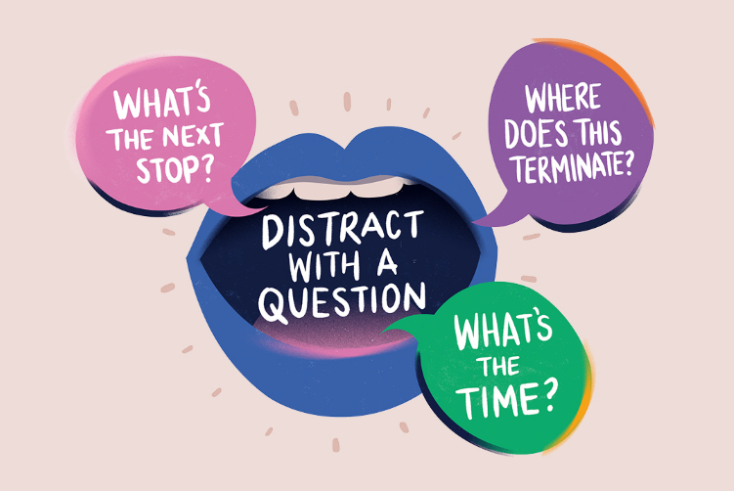
The campaign, called “TfL Stands against Hate — Bystander Intervention”, includes three posters designed by illustrator Raj Dhunna based on “a genuine knowledge gap” discovered by TfL around indirect interventions.
Behavioural research found nearly two thirds of customers (63%) said they would feel more confident in intervening in an incident if they had more information on how to help.
The posters’ messaging are based on specific behavioural asks which are more likely to diffuse a situation and engage with a victim, rather than confront a perpetrator.
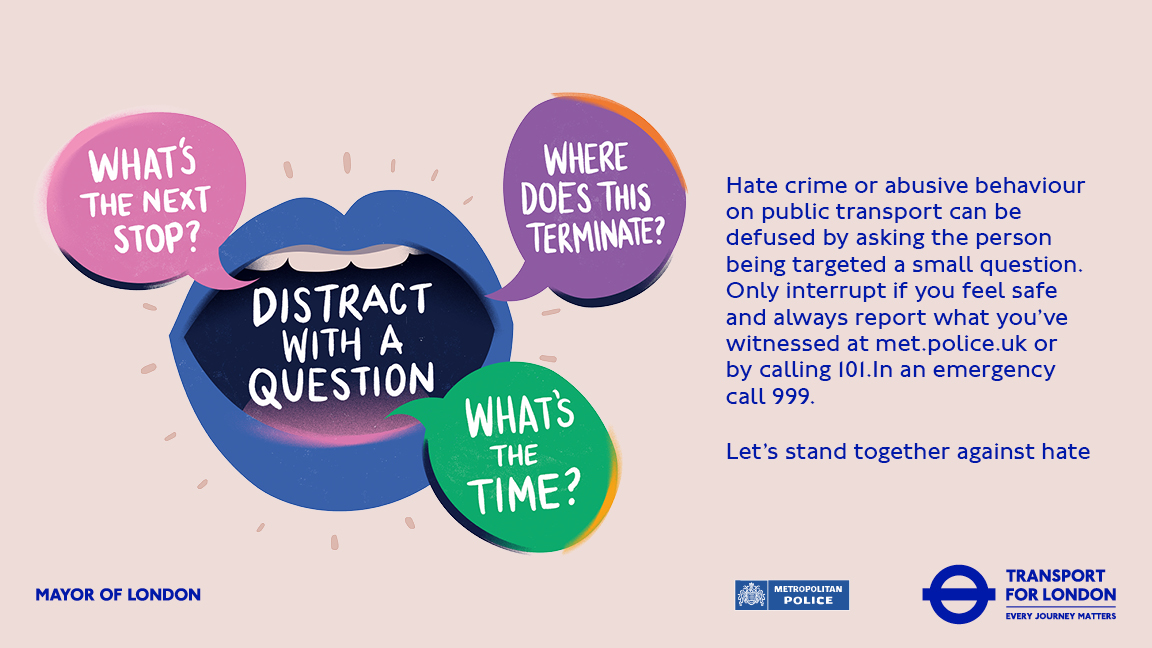
1. Distract (mouth): Ignore the offender and ask the targeted person simple, calm questions
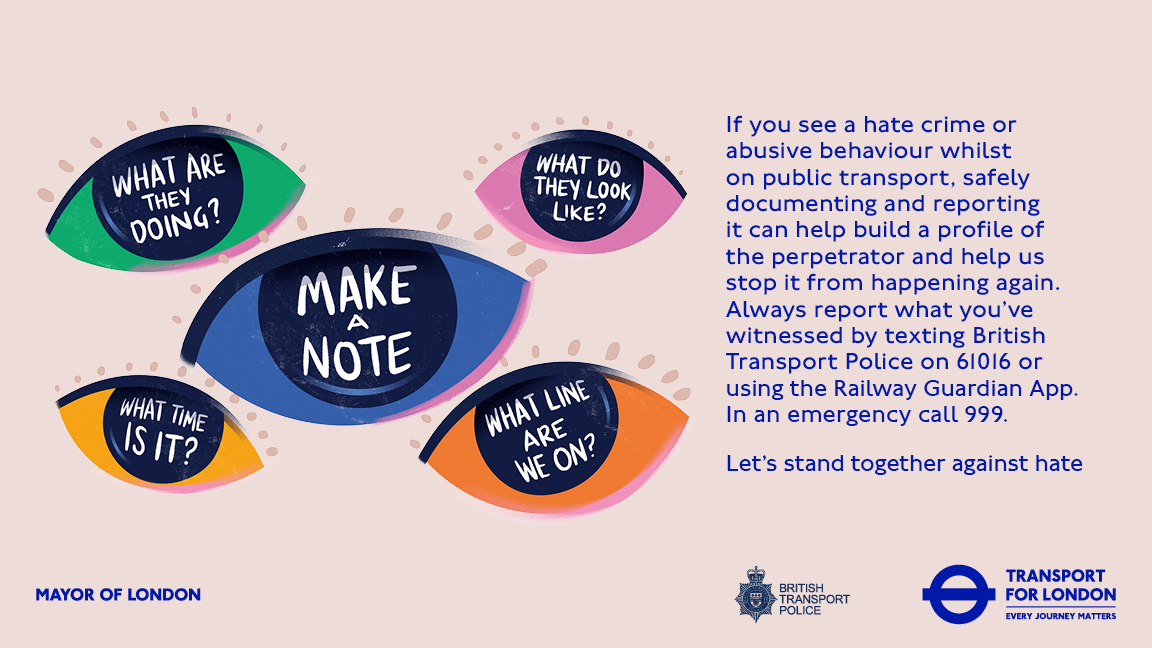
2. Document and report (eyes): Note specific details of what you’ve seen and report the incident
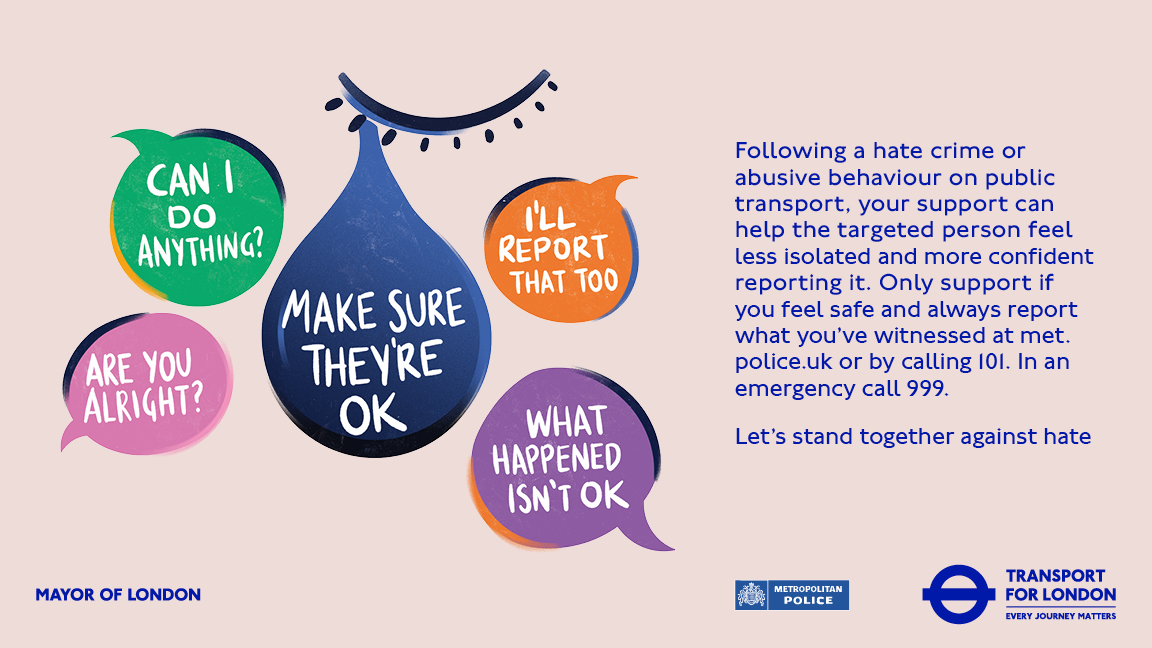
3. Support (teardrops): After the event, offer help to the targeted person
The campaign also used partnerships with Pink News, the Evening Standard and podcast publisher Acast. The Standard and Pink News partnerships included bespoke co-branded articles to raise awareness of the steps to intervene safely.
TfL ran sponsorships with Acast podcasts My Time Capsule, Growing up with Gal Dem, Pop Culture, and A Gay and a Non Gay with longer form mid roll content where the hosts discussed the topic in depth, a pre-roll intro to the partnership content, and post-roll outro.