

Disney+ is forecast to reach more than $11bn in annual advertising revenue within five years — more than Netflix and YouTube combined.
Digital TV Research forecasts that Disney+ will be the world’s single biggest streaming video platform by ad revenue ($11.4bn) in 2028, having launched a cheaper, ad-funded subscription tier in the US last December.
That would eclipse other global streaming platforms which offer advertising, such as Paramount+ ($5.4bn), and YouTube ($5bn). Netflix, which also launched a Basic With Adverts tier at the end of 2022, is forecast to reach $4.6bn in ad revenue by 2028.
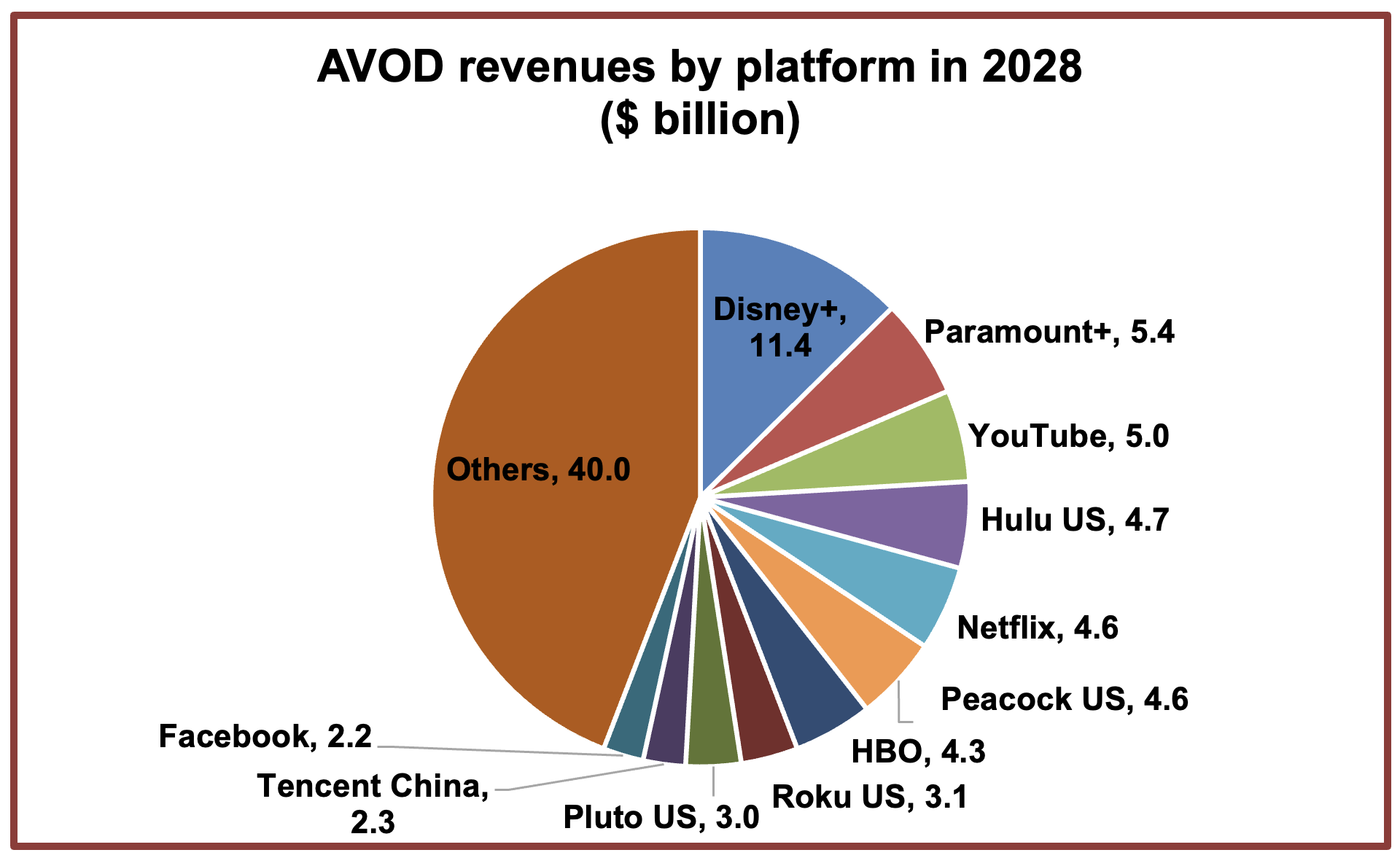
By 2028, nine platforms are forecast generate ad-funded video-on-demand (AVOD) revenues of more than $3bn (five global, three from the US and one from China).
“Disney+ will be the AVOD winner… [and] is expected to follow its US example by converting its existing subscribers to the hybrid AVOD-SVOD tier, with SVOD-only subscribers having to choose to pay more,” Simon Murray, principal analyst at Digital TV Research, said.
Global AVOD revenues for TV series and movies will reach $91 billion in 2028, up from $41 billion in 2022. The US will contribute 41% to the 2028 total; adding $20 billion between 2022 and 2028.
By 2028, nine platforms will generate AVOD revenues in excess of $3 billion, including five global, three from the US and one from China. The market will remain fragmented.