



Married At First Sight: Exploiting human vulnerability and emotions for entertainment isn’t worth the risk
Opinion
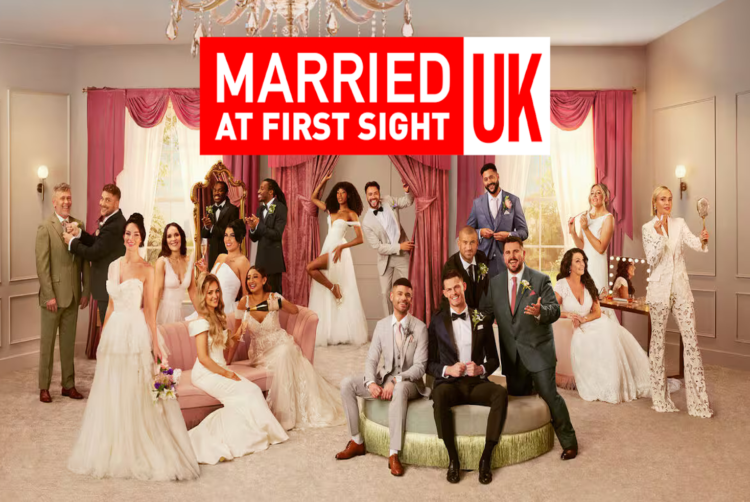
Channel 4 is rocked by a Panorama investigation into Married At First Sight UK. Matt Brittin, take note – beware the darker side to high-risk show formats.
If the new director general of the BBC, Matt Brittin, needed any further warnings about the dangers of running broadcasting organisations and how the roof can fall in at any moment, he need look no further than the work of Panorama, a programme he is now responsible for.
It’s not Brittin’s roof that is falling in – but that of Channel 4. The point is, it can happen to anyone, without warning, at any time.
Monday night’s edition of Panorama, The Dark Side of Married At First Sight UK, carried the allegations that three women had either been abused or raped on the popular dating reality TV show.
It is a series that Channel 4’s new chief executive, Priya Dogra, who only took over in March, had nothing to do with commissioning or supervising.
But she must now carry the can and decide what should happen next to one of the channel’s most successful shows, with audiences sometimes exceeding 3m. Already, the impact has been considerable.
All 10 previous series of Married At First Sight UK have been pulled from the channel’s streaming service, and it is difficult to see how the next series, which has already been shot, can now possibly be broadcast.
Holiday group Tui has “paused” its sponsorship, although that is almost certainly an interim word that could be quickly followed by its cancellation.
The Department of Culture, Media, and Sport has called for a full investigation and warned that there should be consequences if criminal activity or wrongdoing is found.
Channel 4 has already announced an external inquiry by law firm Clyde & Co into what happened at the series made by CPL, an independent production company that also makes programmes such as Stranded On Honeymoon Island for the BBC
We hope there won’t be any worries for Brittin there.
CPL, formally Celador, says its welfare systems are “gold standard.”
Personal confession. I am a Married At First Sight virgin, having never watched a single episode, largely because of distaste based on the false assumption that the marriages were for real.
However, although neither legal nor permanent, they deliberately display all the trappings and emotions of a “marriage,” such as white dresses and Rolls-Royce arrivals, followed by “honeymoons” in the Maldives, where presumably Tui came in.
On return, the happy couples move into a block of flats, complete with a double bed, and no alternative sleeping arrangements are provided unless they are specifically requested.
Intimacy, at the very least, is manifestly expected, as are discussions and revelations about that intimacy.
What could possibly go wrong?
Virtually impossible to offer total safeguarding
As with many such situations, it is not always clear who did what to whom, or when precisely matters were first drawn to the attention of the programme makers or later Channel 4.
There are accusations and protestations of innocence, and none of the women has so far gone to the police. One went on living with the man she complained about for six weeks after her role in the programme ended.
However, the issue was best summed up by Baroness Kennedy, who chairs the Creativity Industries Independent Standards Authority, on the Panorama programme.
Baroness Kennedy said that the standards for welfare and safeguarding on Married At First Sight UK fell well below what should have been expected.
She went further and said she would prefer such programmes were not broadcast on the grounds that the very premise of the programme makes it virtually impossible to offer total safeguarding.
God knows what Cilla Black would have made of it, although who knows whether her Blind Date contestants were able to give slip to their chaperones when they went off together on their holiday trip.
It is undoubtedly true that over the years, television has coarsened and deliberately pushed matters, particularly involving intimacy and powerful emotions, to their limits for entertainment.
Of course, all contestants in such programmes are volunteers and undergo psychological vetting. But that does not mean that they are able to cope with the consequences of what they are seeking, a moment of fame or the chance to build up a lucrative number of followers online. Vetting in such circumstances is at the very least an imperfect science.
You could argue that even wanting to appear on such programmes is powerful evidence that they are in some way already unhinged.
Then, away from such contestants, there are the allegations of bullying and inappropriate behaviour on programmes as different as Strictly Come Dancing or Master Chef, where intimacies rarely get beyond an intense relationship with leeks and pork chops.
The good news is that both behind and in front of the camera, bullying and inappropriate behaviour are being taken more seriously, and women – and it is usually women who are the object in these dark dramas- are increasingly likely to come forward and speak out.
But what if the heart of the problem is embedded deeply in the DNA of the programme, as is the case with Married At First Sight?
In a different context, there is a similar problem with GB News. Hunting down individual breaches of impartiality rules misses the point. The channel’s very existence as the broadcast wing of Reform UK presents as a continuous breach of impartiality. That’s the point.
What will happen now with Married At First Sight UK?
No definitive decision can be taken by Channel 4 until the external inquiry report has been received, a report which should obviously be published.
Even now, educated guesses can be made.
Married At First Sight UK will never be seen again.
The police will inevitably be involved, though prosecutions, let alone convictions, will be difficult to achieve given the tangled web of testimony so far.
Ofcom is highly likely to become involved in the safeguarding and welfare issues.
Just maybe now that it has belatedly awoken from its slumbers to look seriously at the threat to stable democracy posed by Reform UK TV, it might also act on Married At First Sight UK.
The best hope is for much more than any of that. It is those programmes that stand accused of enabling coercive behaviour, physical abuse and perhaps even rape that should be no more.
Panorama may have helped to set a high-water mark for programmes exploiting human vulnerability and emotions for entertainment, whether the marriages are real or not.
 Raymond Snoddy is a media consultant, national newspaper columnist and former presenter of NewsWatch on BBC News. He writes for The Media Leader on Wednesdays — bookmark his column here.