



Women earn 83p for every £1 earned by men in UK’s largest agencies, according to study
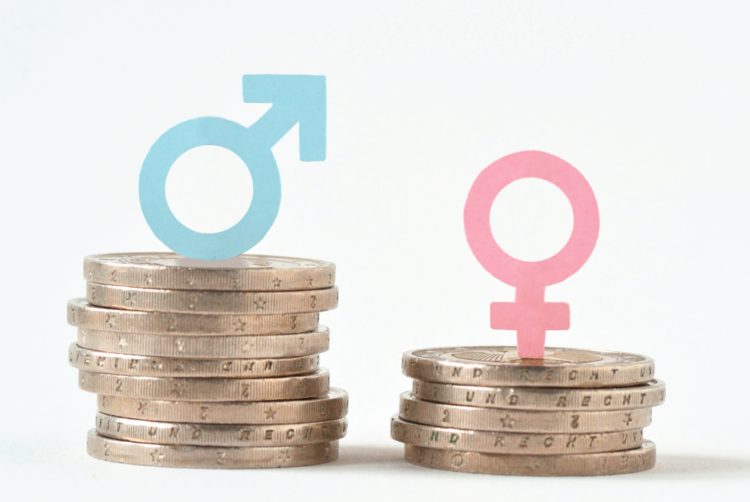
Across 74 large UK agencies, the mean hourly pay for women is 17% lower than for men, equivalent to women earning 83p for every £1 a man earns, according to analysis by Agency by Agency.
The agency intelligence provider, in collaboration with consultant Lynda Harvey, compiled a report titled “83p in the pound: Gender pay gaps across the UK’s largest agencies,” and found women occupy 57% of the lowest-paid jobs in large agencies and just 39% of the highest-paid jobs, speaking to entrenched barriers to equality and progress.
The study covers agencies with more than 250 employees, which account for just 0.3% of all active UK agencies but constitute 20% of the sector’s total workforce.
More than half (56%) of these agencies reported a median gender pay gap higher than the UK-wide median of 12.8% (Office for National Statistics).
Notably, productivity analysis revealed women-led agencies generate an average gross-value-added (GVA) per head of £91,000 compared with £86,000 in male-led agencies.
This disparity can also be seen within bonus payments; despite the proportion of men and women receiving bonuses, the mean bonus for women is 26% lower than for men, with women receiving 74p in bonus pay for every £1 men receive.
Agency by Agency underlined how these gaps relate to role distribution, with women, on average, more likely to hold a majority of roles in the lowest pay quarter across large agencies, while men account for 61% of top-paying positions.
More fair, but not enough
The report shows 19.4% of UK agencies are women-led, and 30.7% of agency directors are women.
Notably, the data show that smaller agencies are more likely to be led by women, with higher headcounts correlating with lower representation of women in leadership roles.
However, in the largest 250+ employee brand reviewed, there was more equal representation.
Despite this anomaly, the study highlights this as a key structural driver of the pay gap and of women’s underrepresentation in higher-paid roles.
Commenting on the findings, Harvey said: “The biggest misconception I hear from agency leaders is that a gender pay gap can’t exist if you have equal pay policies or transparent pay bands.
“Equal pay for equal work is a legal requirement – but the gender pay gap is about the bigger picture of who is in which roles, who gets promoted, and how opportunities are distributed.”
“When you compare to national averages, the agency sector’s gender pay gap stands out for all the wrong reasons.
“Among all UK employees, the median gender pay gap is 12.8%, but in this analysis the agency sector’s mean gap is 17%.
“Whichever way you look at it, the sector is lagging behind the national picture.”
Harvey also highlighted the commercial benefits of having a balanced workforce and giving women leadership opportunities.
“For me, the business case for closing the gender pay gap is impossible to ignore,” she said.
“Agencies with women in leadership are not just more representative, they are more productive.
“The best results come from balance, where different perspectives and experiences are valued, and everyone has a seat at the table.”
A sector-wide problem
Agency by Agency argues that the gender pay gap in large agencies reflects structural issues that impede sectoral and wider economic progress.
For the 20% of the agency workforce employed by these large agencies, lower hourly pay and bonus levels result in significant loss of lifetime earnings, less financial security and limited career progression.
The analysis highlights the key role the sector is set to play in the UK’s Industrial Strategy and the potential risks of excluding women’s talent at senior levels.
Co-founder of Agency by Agency, Paul Scraton, said: “The fact that women-led agencies are, on average, more productive should be a wake-up call.
This is an equality issue; it’s also a growth and performance issue for the whole sector.”
To support agency leaders, Harvey has launched a free agency gender health check that offers insights and benchmarks individual agencies’ performance on gender equality against sector and UK averages, and highlights areas for improvement.
The report combines Agency by Agency’s mapping of 25,000+ UK agencies with government gender pay gap submissions from agencies employing over 250 people.