



Five things I’ve discovered after a year of talking weekly about AI
Opinion
The IAB UK’s chief strategy officer reflects on 54 episodes of his AI Haven’t a Clue podcast, revealing the chaotic, overhyped, occasionally creepy and very, very funny world of AI.
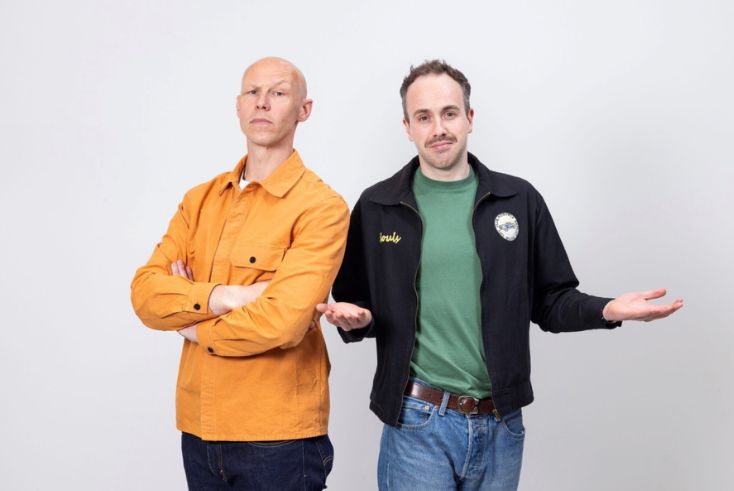
Just over a year ago, George and I launched AI Haven’t a Clue, a weekly podcast with a very simple premise: one AI optimist, one AI sceptic and an attempt each week to make sense of the most overwhelming, most consequential, fastest-moving industry ever.
Fifty-four episodes later, I’ve realised two things:
First, AI is much, much weirder than I thought.
Second, the overwhelming majority of our listeners just want help making sense of what this technology actually means for their jobs, creativity, relationships and lives.
So, naturally, here are the five things I’ve discovered after a year of talking about AI every single week.
Normal people are asking much better questions than the AI industry
If you spend too much time around AI people, you start hearing conversations that sound like they were generated by AI.
Everybody’s talking about AGI timelines, tokens and existential risk while normal humans are asking us things like: should I let an AI note-taker into my Zoom call or should I bin my child’s spenny eleven-plus tutor and pay for an AI one instead?
Our listener questions have kept us guessing (and on our toes). We’ve had questions about election deepfakes, the rise in AI job titles, where the UK sits versus China and the US in the AI wars and examples of the most non-obvious uses of AI.
The AI industry often behaves as though everyone’s desperate to hear about benchmark scores and Nvidia chips – as AI Girl Gang founder Dr Lauren Ingram perfectly articulated on last week’s episode: AI is just a big d*ck competition.
The AI news cycle is dizzying and gets more frenetic every single week
Our attempt to cover AI news has swung from the seriously serious (the Pentagon’s plan to become an AI-first military) to the seriously silly (man proposes to ChatGPT).
In between, there’s been Taco Bell’s AI drive-thru disaster, Google co-founder Sergey Brin claiming AI models respond better to threats than kindness and whether AI-enabled smart glasses are the future (me) or just glorified Bluetooth headsets (George).
We’ve compared Sam Altman’s salary to the average UK headteacher’s, debated the most AI-proof degree you can study and remain undecided on how you’re actually supposed to pronounce Nvidia.
We’ve covered the cost-saving & efficiency stories, the hallucinations, the muddy copyright fights, the ‘man gets scammed by AI Jennifer Aniston’ headlines, the will-they / won’t-they flirtation LLMs have with running ads and the fact that AI doesn’t even have a decent emoji yet.
The guests have changed my mind more than the tech has
Over the past year, we’ve interviewed founders, authors, strategists, journalists, stand-up comedians and AI creators. We spoke to anonymous guerrilla artist Elias Morrow, future-of-work expert Christine Armstrong, the UK Space Agency, two UK AI ministers, YouTube creator Matt Reconstructs History and even Pussycat Doll Kimberley Wyatt in the sumptuous surroundings of the Carlton Cannes.
Unsurprisingly, the most brilliant conversations have been the least technical (George doesn’t really do ‘technical’ btw)
Talking to Gayanne Potter, a Scottish voiceover artist whose voice had been stolen by AI and used to make announcements on train platforms without her permission, brought a heavy dose of reality to the hype around voice cloning. She talked at length about the reputational damage and anxiety it caused her by effectively nibbling away at her livelihood right under her nose.
Some conversations have been incredibly uplifting. We spoke to the founders of Seraphinne Vallora, the AI marketing agency behind Vogue’s first-ever AI-generated model, just a week after it happened.
Two young women changing the game in fashion: an area you might not automatically peg as being known for its tech trailblazing and bravery. They were in the middle of doing the TV media rounds and having to explain everything they do in 30-second snippets. We got to sit down with them for the best part of an hour and really get under the skin of how they think about body image, creativity and ethics.
AI creativity tools are moving at an incredible speed
Some of the ‘big things’ we’ve covered have at times felt like glimpses into where media and entertainment are heading.
Suno is making people rethink music creation overnight (and helped us create an AIHAC Christmas song). ElevenLabs is making AI voices unnervingly realistic. Sesame is pushing conversational AI into territory that feels very human indeed.
And then there’s Claysplained, an AI-generated claymation-style content brand explaining political scandals and cultural moments through a strange mix of nostalgia and machine learning. They’re a bunch of creatives who work in film & TV who have decided they’d rather be early AI learners than late AI complainers.
Lots of the discussions in media and advertising are still focused on efficiency – faster editing, better targeting, automated summaries, but now AI is starting to create entirely new aesthetics and formats. Some brilliant, some horrifying. Some a bit of both (see: AI Fruit Love Island)
Nobody actually knows where this ends
A year ago, you could still convince yourself that somebody responsible was steering all this. Now it feels more like a technological equivalent of a stag do with an unlimited bar tab.
Even the main characters feel impossible to pin down. Sam Altman can come across like the next Steve Jobs one week, then end up in catty social media warfare with Elon Musk the next.
AI itself has the same energy. Sometimes it feels genuinely transformational, almost magical. Sometimes it can’t even tell you how many ‘r’s there are in the word ‘strawberry’.
And honestly, that mix of brilliance and nonsense is probably the most accurate way to think about AI right now.
AI is capable of extraordinary things. It’s also chaotic, overhyped, occasionally creepy and very, very funny.
Which is probably why talking about it every week has never got boring.
 James Chandler is chief strategy officer at IAB UK and co-host of the AI podcast AI Haven’t a Clue. Read his regular column for The Media Leader every month.