



The role of the advertiser in de-escalating the attention arms race
Opinion
An analogue renaissance is coming, and it’s time to come together to apply some ‘less scroll, more soul’ boundaries, writes the founder of ScrollAware.
Attention is the new oil, and just as finite. With over 14bn hours per day now spent scrolling, there is no denying that it has been comprehensively hijacked and exploited by a handful of technology giants in little over a decade.
With the recent court verdict in the US finding Meta and YouTube culpable for addictive design and the UK Government’s consultation on the possibility of a social media ban for under-16s, waves of digital defiance are growing, with the spotlight increasingly swinging toward the advertiser.
As the CEO of ‘ScrollAware’, I’ve held hundreds of conversations with business leaders over the last year and know that internal conflict is growing. Whilst it’s understandable that many business leaders feel powerless in the face of such seismic changes in content consumption and daily habits, it’s time for the advertising industry to show some spine (beyond anonymous memos).
This is no longer a niche issue, but a public health disaster. And if the moral case isn’t compelling enough, the bottom-line impact should be.
For productivity’s sake
Anyone with a significant employee base is suffering. Distraction and content addiction have been proven to dramatically impact output, with staff more burnt out, overwhelmed, and distracted than ever before.
Workers check their phones about 150 times a day. The average employee spends two hours and six minutes on non-work screen activity during the workday, and research shows that it can take up to 23 minutes to return to a task after a single interruption. That’s a 20-25% loss of productive time, even before a deeper exploration of the impact of focus is done. This has been estimated to cost $1trillion per year in the US.
For CSR’s sake and to mitigate risk
Governments, educators, parents and employees are all asking, “Who is accountable?” The absence of leadership creates regulatory, reputational and trust risks for everyone in the ecosystem.
‘Digital Balance’ is likely to become the next big CSR agenda. And not just for ethical reasons, but to rebuild trust in a rapidly changing world with increasing heat on this conversation.
Businesses that want to earn long-term trust, reduce reputational risk and future-proof their brand for the AI era need to get ahead of incoming regulation, just as they had to with food labelling, financial regulation and climate-related regulation. And not just say they care, but show it.
To tackle criminality and fraud within the system
We all know it, but who’s doing anything about it?
The digital advertising system is beyond leaky; it’s rotten. Back in 2016, the WFA warned that ad fraud could exceed $50bn by 2025, making it the second-largest criminal income stream after drug trafficking.
Marketers lost $84bn in 2023 alone, roughly 22% of all online ad spend, with projections rising to $170bn if current trends continue.
Nearly half of all internet traffic is now bot-driven, with “bad bots” accounting for around a third of global web activity. Advertisers are paying human prices for non-human audiences.
Programmatic advertising compounds the problem. The ANA found 15% of spend was wasted on invalid or low-quality inventory, while other studies suggest more than half of impressions are fraudulent or non-human. And even when ads do reach real people, just 9% attract a single second of attention (Lumen Research).
And then there’s the revelations about 10% of Meta’s revenue coming from scam or illegal advertising – not just unpoliced, but actively rewarded by higher pricing.
The industry’s response has been, at best, muted. At worst, it suggests a quiet acceptance that fraud, waste and criminality are now simply part of the cost of doing business. Too complex, too profitable, or too inconvenient to seriously confront.
Branding and marketing opportunity
If the above isn’t compelling enough, as the consumer zeitgeist shifts, there’s huge brand-value and money to be made in championing community and customers’ embodied real-lives, especially for those brands whose products and services are designed to be enjoyed in the real world: pubs, books, adventure, travel, sport, fashion. ‘More Soul’ brands, as we term them at ScrollAware.
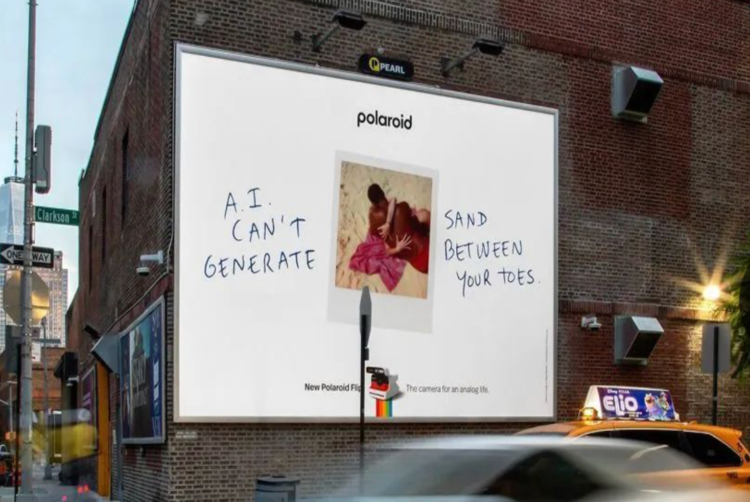
The bravest are already tapping in: Heineken with its Social off Social campaign; Polaroid with a poster campaign evoking the joy of analogue (‘AI can’t generate sand between your toes’); Nike ‘Run Clubs’ popping up in cities around the globe.
The growing consumer hunger can be seen in the popularity of related best-selling books, unplugged events, and digital detox products, as well as increasing innovation in safer technology for children. Over 100m consumers have downloaded social app-blocking software in the last couple of years. In January, Gary Vee pronounced that 2026 would be the year of unplugging.
Consumer brands have real power to influence culture. We wear them as identities. We align with their values and form tribes around them. And Gen Z – the advertisers’ favourite demographic – may prove to be the power one in the movement to reclaim our brains. Already over 50% have expressed support for a social media ban for under 16s, regretful of childhoods lost to scroll.
An analogue renaissance is coming, and it’s time to come together to apply some ‘less scroll, more soul’ boundaries.
Brands need to take a seat at the table and explore what responsibility looks like. Perhaps supporting staff with better digital balance habits, providing daily nudges to apply brakes and boundaries, promoting no-scroll zones in public spaces, or even demonetising addictive behaviours, in a world where CSR budgets are increasingly allocated to local volunteering, grassroots investment and the better provision of in-world antidotes. Insert your ideas here. All are welcome
We all need to start enabling our customers to invest in their own memories, rather than spend their lives in others’. There may not be any quick and easy answers, but the conversation needs to be convened.
Is it time for your business to take a seat at the table?
 Jess Butcher MBE is the CEO and founder of social enterprise, ScrollAware.