



Here is the news, if you have the stamina for it?
Opinion
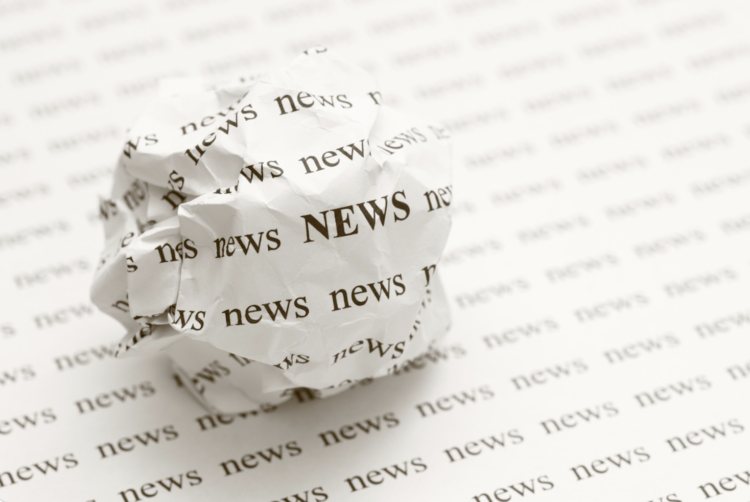
Two in five of us feel worn out by the sheer volume of news and try to avoid coverage at least part of the time. Even Trump seems fatiqued by it all, writes Ray Snoddy.
A major crisis has been stalking the media in plain sight, and it is clearly accelerating without any real understanding of either its cause or a possible cure.
It affects equally those who create the news, report it faithfully, or feel forced to consume it out of an increasingly despairing belief that they have a public duty to keep up.
The tipping point has finally been reached. There is now simply too many news stories for any news organisation, or rational human being, to reasonably cope with.
Part of the responsibility for the news wheel turning faster and faster and spinning almost out of control, curiously, lies with three old men in a hurry.
They are the septuagenarians Vladimir Putin, aged 73, Israeli Prime Minister Benjamin Netanyahu, aged 76 and Donald Trump, who turns 80 later this month.
It was Putin who kicked the whole process off, first with the modest undercover takeover of Crimea before stepping up a gear by invading Ukraine in February 2022.
Then along comes Trump with his promise to solve the Ukraine crisis within three days before turning into a perpetual motion machine on Truth Social, sometimes sending out as many as 50 posts in a single night.
Trump alone needs teams of journalists working 24-hours a day just to keep up with the latest ever-changing Trump positions on the world.
But that was only the start. Trump, presumably prodded into action by Netanyahu, decided on another, dramatic intervention in the news cycle with the ill-advised attack on Iran.
A new story was off and running, and one that in the hierarchy of news, started inevitably to eclipse the suffering of the Ukrainian people.
Now all the attention was on the impact of the closing of the Straits of Hormuz and the never-ending story of peace agreements that were never agreed and ceasefires that were never honoured.
Not content with apparently persuading Trump to realise his life’s dream of trying to destroy Iran, the Israeli Prime Minister unleashes another storm-burst of news by invading the sovereign neighbouring state of Lebanon – naturally during a ceasefire.
This in turn, obviously, because by definition it’s ‘new’ and therefore ‘news’, kicks the continuing suffering of the people of Gaza further down the pyramid of reporting.
While the destruction in Lebanon continues, Channel 4 News is one of the few programmes highlighting the fact that 2m people in Gaza are being pushed by the Israel Defence Forces into a smaller and smaller space.
Too much for a news junkie like Trump
It’s almost as if the ever-increasing speed of news has finally become even too much for Donald Trump. This week, he threw up his hands in horror and said that peace talks with Iran were “very boring” and that he “couldn’t care less “ if they appeared to be on the point of collapse.
He earlier lost interest in a peace deal in Ukraine because Kyiv was not interested in settling with Russia – or as most people would say, surrendering.
Obviously there’s too much bad news even for a news junkie like Trump.
As the Reuters Institute found out in a survey of 100,000 people in 48 countries, too much news is proving too much for at least 40% of people.
They feel worn out by the sheer volume of news and try to avoid coverage at least part of the time. In the UK, 46% of respondents said they sometimes or often avoid the news.
While the combined news output of Putin, Trump and Netanyahu is truly prodigious, that’s not even the half of it. Sub-plots of some of the main stories, such as the Russian invasion of Ukraine, weave in and out of the headlines, sometimes barely noticed.
The Irish Times noticed that a Russian-owned alumina plant in Ireland has been quietly supplying more than 90% of all EU alumina exports to the Russian war machine in what appears to be a blatant breach of sanctions against Russia.
Yes, Ireland has a tradition of neutrality, but neutral in the face of those who daily launch missiles at the civilian population of Kyiv?
And then The Sunday Telegraph noticed that as many as 14,000 Russians have been granted visas to visit Ireland. UK officials fear this could be offering an easy back door into Britain for Russian spies.
More news, more worries
And that’s even before we get to the fact that a deadly strain of Ebola has made it out of Africa and has turned up in Brazil, or the fact that the latest supercharged El Niño, when combined with climate change, could lead to food shortages and higher prices next year.
More news if you have the stamina for it.
Professor Sir John Curtice, the politics guru from Strathclyde University, piles into the news agenda with his latest analysis of the state of Nigel Farage’s Reform UK.
Sir Curtice insists that Reform is more than just a protest party but a solid group of socially conservative voters who are not going to go away.
The party may never get above 30% in the polls, but in the current fragmented party system it could be enough to win in a first-past-the-post election.
Reform leader Rupert Lowe, who has the support of Elon Musk, who thinks Lowe should be the next British Prime Minister, might take a bite out of Reform’s right flank.
Which is why Farage, who has been making the news by studiously avoiding all journalists interested in why he accepted £5m from a Thai-based billionaire, suddenly breaks cover.
In a pre-recorded statement with no journalists present, Farage cynically claimed that the fatal stabbing of Henry Nowak showed “that the rights and privileges of white people matter less than ethnic minorities.”
Not enough news yet?
How about stirring in Lord Peter Mandelson, the fate of Prime Minister Sir Keir Starmer, the Makerfield by-election and whether Andy Burnham can defeat the Reform candidate and become Prime Minister elect.
If such a thing happens that will launch a whole new raft of never ending stories about whether a mere former mayor of Manchester can mix it on the world stage with the likes of Putin, Trump and Netanyahu.
There will never ever be any respite.
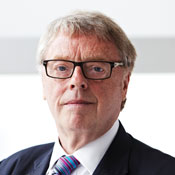 Raymond Snoddy is a media consultant, national newspaper columnist and former presenter of NewsWatch on BBC News. He writes for The Media Leader on Wednesdays — bookmark his column here.