



Media never stops innovating. But the fundamentals still do the heavy lifting
Opinion – Media Essentials
In the first of a Media Essentials series aimed at marketers early in their careers, the head of planning at WPP Media’s Wavemaker introduces core principles of media and marketing science as a manual for growth.
Media moves fast. For anyone learning their craft in our industry today, it can feel like the ground is constantly shifting.
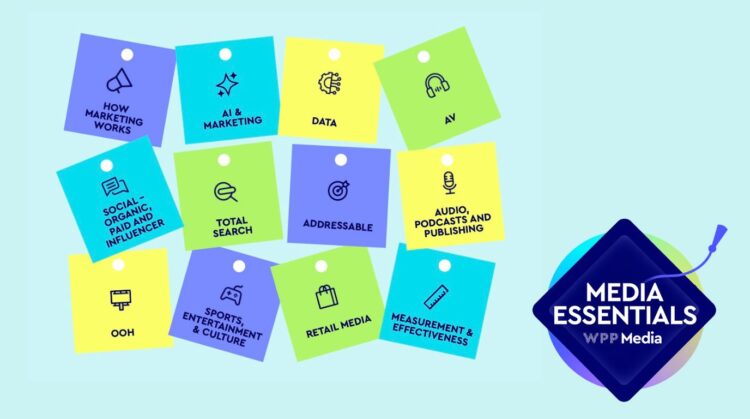
That’s exactly why great media fundamentals matter more than ever. Through our Media Essentials programme – which we run with clients to help teams cut through complexity and make better decisions with confidence – we’re seeing a renewed focus on the core principles of media and marketing science as a manual for growth.
This article kicks off a series aimed at marketers early in their careers. It draws on the core principles we see repeatedly prove their value in practice – especially when things feel uncertain.
When media gets more complicated, clarity matters more
Today, we’re planning across an ever-expanding set of touchpoints, formats, platforms and creator ecosystems – all against a backdrop of economic volatility and shifting consumer behaviour.
But here’s the quietly contrarian truth: even as media fragments, the core principles of growth remain consistent. And the job is still the job: increase the likelihood of people choosing your brand, now and in the future.
More noise. Same responsibility
Volatility – social, political, economic – is now a constant. Meanwhile, media choice – content, platforms, consumption – has exploded. But this combination doesn’t mean that understanding media effectiveness has been turned upside down, either.
There hasn’t been a sudden paradigm shift, in which historically strong channels stop working, and new ones magically replace them. To win in a complex context, we must understand what’s not changing, helping to inform more robust decision-making at the heart of good planning. Working to these established principles does not constrain creativity but instead creates the conditions for it.
Marketing works in two speeds
Short‑term activation drives immediate effects; longer‑term brand building affects future behaviour. Most marketers know this. What’s less clear is how these effects unfold over time.
A campaign can deliver immediate impact, with weeks of carryover, and create long-term influence that lingers for a year or more. These long-term gains compound and affect immediate results, so optimising solely to short‑term metrics may produce sales today but erode brand power over time.
It isn’t about choosing between now and next. It’s about managing both at once.
Budgeting for growth: start with structure, not instinct
When senior leaders ask, “How much should we spend?” the most honest answer is “It depends.” Unfortunately, that’s not especially helpful in a boardroom.
Excess Share of Voice (ESOV) offers a pragmatic starting point. When share of voice exceeds share of market, brands create the conditions for growth. It isn’t magic, and it isn’t category‑blind – but it’s far more robust than gut feel.
The real value comes when ESOV is used as a business case tool, calibrated to category dynamics, brand maturity and ambition – not as a post‑hoc justification for a number that was already decided.
The 60/40 split isn’t really about 60/40
The famous brand‑building versus activation split often gets treated like a rulebook. It’s more useful when used as an empirically informed guide.
When short‑term ROI becomes the sole priority – especially under sales pressure – long-term brand enrichment is often the first thing sacrificed. The precise mix will vary by category and lifecycle stage, but the leadership discipline stays the same: protect investment that builds memory and mental availability.
Those are the assets that keep brands resilient when performance marketing becomes more expensive, less efficient or both.
Reach isn’t “waste”. It’s your future customer base
Growth rarely comes from extracting more value from the same small group of loyal buyers. In most categories, it comes from light buyers and people who don’t buy you yet.
It’s why we still see broad-reach AV investment outperform in building future demand, whether that’s new-to-market brands using TV to quickly establish mental availability, or established brands using it to maintain salience beyond their existing buyer base.
Take car brand Jaecoo, for example, that used strategic TV investment to build awareness, trust, credibility, and commercial impact as a new-to-TV advertiser. It saw 240% growth in brand awareness, +4% market share – the fastest growth in history for an auto brand- and became the number-one-selling car in January 2026.
That’s why effective reach should be treated as a growth strategy. We’ve spent years training ourselves to talk about broadcast “wastage” as if it were a valueless by-product, when many of the “wasted” people we reach today are tomorrow’s category entrants.
The real question isn’t whether to reach broadly – it’s whether you’re reaching the right audience with a message that’s memorable enough to matter later.
ROI is useful. It can also be misleading
Plans that maximise ROI often look very different from plans that maximise growth or profit.
ROI is easiest to improve by spending less, more efficiently. That can feel responsible, but it can also shrink total returns. This isn’t an argument against accountability – it’s an argument for clarity.
Leaders need to be explicit about what success looks like. Sometimes accepting a lower ROI is the sensible route to higher total payback.
Emotion still does most of the work
If you want the shortest explanation of why great creative still matters, it’s this: most decisions are made through fast, intuitive thinking rather than rational calculation.
Emotion creates shortcuts in crowded, real‑world environments. That’s why emotionally resonant campaigns, often rooted in human truths, tend to outperform purely rational persuasion.
As personalisation tools multiply, there’s a temptation to layer on complexity faster than audiences can absorb it. The challenge isn’t finding one message forever – it’s maintaining a clear red thread and managing cognitive load.
Build ecosystems, not checklists
Paid, owned and earned work best when they work together. Seeing a campaign across different contexts still creates multiplier effects – but only if channels are funded enough to do a proper job.
Spreading budget too thin doesn’t create synergy. It creates noise.
The next frontier isn’t just attention – it’s receptivity. Not whether someone sees an ad, but whether they’re open to being influenced in that moment. That shift from buying attention to earning influence is one of the most important evolutions in planning today.
In uncertain times, fundamentals become strategy
When conditions tighten, brands often ask whether to cut spend. Evidence suggests those that maintain investment through downturns can emerge stronger – partly because competitors fall silent and media becomes more affordable.
The bigger risk is disappearing from the channels that reliably build memory and reach light buyers. Once a brand slips from mental availability, the climb back is rarely quick.
Know the rules well enough to break them properly
Marketing effectiveness isn’t a host of restrictive rules – it’s a set of guardrails.
Brands that win understand the fundamentals deeply enough to know when to take informed decisions, not to conform to them. This knowledge helps them make bolder creative choices, commit to strategic changes to their media mix, and protect brand investment when pressure peaks.
The media landscape will keep changing. AI experts will keep suggesting everything has changed. And media trends will come and go. But the principles remain stubbornly consistent: balance short- and long-term, budget for growth, not comfort, reach beyond today’s buyers, keep messaging emotionally clear, and fund the ecosystem properly.
In an industry obsessed with what’s new, the real advantage is doing the basics unusually well.
 Andy Collins is head of planning at WPP Media’s Wavemaker