



The rise of the news creators
Cannes Lions 2026: Special report
During Cannes Lions this week, Arif Durrani has been tracking the trend of creators in news media.
The rise of the individual news creator is one of the defining media trends at Cannes Lions this week, as the gap between traditional journalists and personality-led creators continues to shrink.
The festival itself has been accommodating creators for the last decade, with more than 250 reported to attend this year and enjoy a dedicated new zone on the seafront. The Creator Beach features podcast studios, editing suites for Firefly AI demos, and structured networking areas.
However, while creators are better known for working directly with brands in the consumer and lifestyle space, they are starting to make their mark in traditional news media.
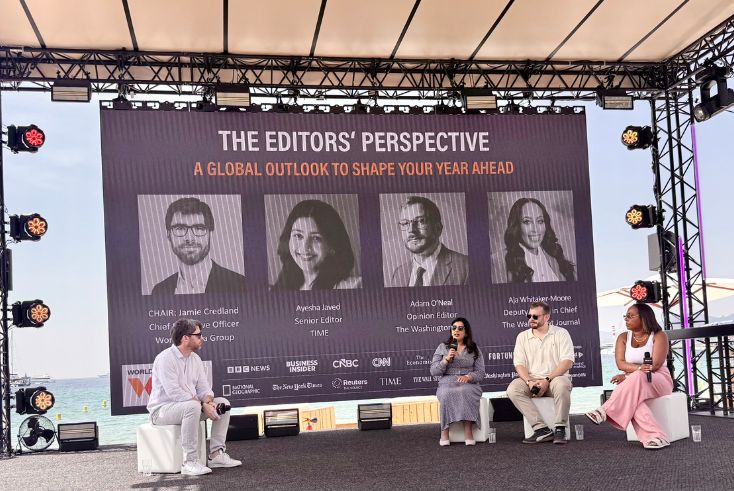
Speaking on an RTL panel hosted by the World Media Group’s CEO, Jamie Credland, the impact of a growing number of social media-savvy individuals with significant followings was recognised by traditional news publishers.
Adam O’Neal, opinions editor at The Washington Post, notes that the production and consumption of news and opinion have changed rapidly since he started his career writing anonymously, “without a byline”, for the Wall Street Journal and The Economist.
“The voice of the institution was my colleagues and me together working on this collective product. And that’s changed, right?” he says. “Partly because people trust institutions less.”
He adds: “There are still millions of Americans who open up a big newspaper and trust it, but there are fewer than there used to be. And many of those people, they haven’t given up on media, they’re just going to individual creators — people who build social followings, who they feel they have a personal connection to.”
O’Neal revealed that the Opinion section of the Post has begun engaging with these news creators. One notable success story involved the news brand working with someone who had studied urban design and accrued hundreds of thousands of followers on social media. The section worked with him to create Op Ed features and videos that met the Post’s editorial standards.
“It’s been a great success,” says O’Neal. “We’ve been able to reach a new audience that never would have been coming to a regular newspaper like ours.”
It was a sentiment echoed by Hannah Blake, managing director of New Media at Mail Metro Media, speaking on a separate Press Gazette news panel.
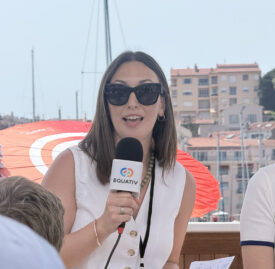
Blake revealed DMG’s Creator Media teams now include 30 dedicated news creators, actively producing original content across the Daily Mail‘s expanding portfolio of social and video channels
“These people were born on these platforms. They’re young and they ‘create’ all the time within those platforms. So, they’re videographers, they’re editors, they’re presenters, they engage with their community. But a lot of them are trained journalists as well. They’ve trained in news, so they bring that credibility.”
Blake adds: “Sometimes stories that we break first on social media draw in our original formats, then make a front page on the paper. So, there is a collaboration.”
The misinformation test
Back at the RTL discussion, a note of caution came from Aja Whitaker-Moore, deputy editor-in-chief at the Wall Street Journal. She recalls the confusion in the immediate aftermath of this year’s White House Correspondents’ Dinner in April, when a gunman attempted to access the venue.
“There were a lot of creators on site, and there were a lot of journalists on site, and there was a lot of misinformation that happened after that event,” she says. “I think when journalists take their training to a platform… they are doing it responsibly. They are doing it with training and editorial standards in mind that a creator just doesn’t have, because that’s not what they were meant to do.
“There is a way to tell a story, and there’s a way to train a journalist to meet people where they are on a platform in a creative way. But, they’re still delivering journalism… journalists still need to put journalism – truth, facts – at the centre of what is being represented.”
The correspondent as creator
Also in Cannes this week was BBC presenter Adam Fleming, a key part of the team pioneering the BBC’s daily news podcast Newscast.
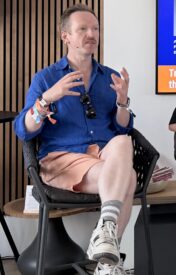
He says: “It’s so interesting in Cannes to hear everyone talking about the influence of the creators. And then I thought back to when I was the BBC’s Brussels correspondent in 2017, covering the Brexit negotiations. I became a trusted expert in the negotiations, like, every paragraph or sub-paragraph.
“In my reports and my podcasting, I incorporated my daily life in the job as part of the story, and people really liked hearing what I was up to: How we got the stories, and even in hearing about those times when I was stumped, because I didn’t understand what was really going on.
“Now I realise that that was me being a creator. I even had the prop of the binders, with all the negotiation documents printed off, highlighted, and the notes on them that became, yeah, a bit of a trademark. And OK, we call that a creator now, but in 2017, it was just called ‘correspondent’.”
However, while embracing the growing diversity of voices and ability to add colour to broadcasts, Fleming, who has been with the broadcaster for more than 20 years, remains clear-eyed about the value of operating within the constraints of a trusted media organisation, with strict guardrails around impartiality.
“Some of my colleagues have recently left the BBC, launched their own podcasts, and they said things like, ‘Oh, at last I’m free to speak my mind. It’s really freeing that I don’t have to be impartial anymore. And I can give my opinion.
“I personally like impartiality and being objective, because it helps me do my job every day, and it helps me to navigate a world that is full of opinions. I don’t find impartiality a straitjacket at all. I find it’s a really useful tool to process a crazy world. And lots of people say to me, the thing they appreciate about the work that I do is that it is impartial.”
A global trend
The Reuters Institute was among the first to track the trend and coin the term “news creators” in its annual Digital News Report. Now in its 15th year, the 2026 edition, published this month, is based on almost 100,000 interviews with online news consumers and spans 48 markets.
At its launch, Nic Newman, co-author and senior research associate, said there was “obviously a bit of an overlap,” noting that many of the best-known news creators are former journalists, including Piers Morgan, Megyn Kelly and Tucker Carlson.
Newman noted two other types of news creators: the hybrid figures, who have their own platforms and work as freelancers at traditional media, and the younger creators, who behave like journalists in many ways and produce explanatory journalism.
The report highlights reasons for optimism for newsrooms, with most news creators used as supplementary to traditional media, and only 3% being the sole source of news.
However, Newman also notes in an interview with RISJ director Mitali Mukherjee: “People think that creators are more entertaining, they are easier to understand, more accessible, more relatable than traditional media, but less trustworthy and less impartial. But if you ask people who actually use creators and, remember, that’s about a quarter on average across our countries, creators score more highly on all of these attributes than mainstream media, including trust, including impartiality.”
Arif Durrani is the global content director at Reuters Plus Studio. He is also a media consultant and freelance writer