



The great Pride reappearing act?
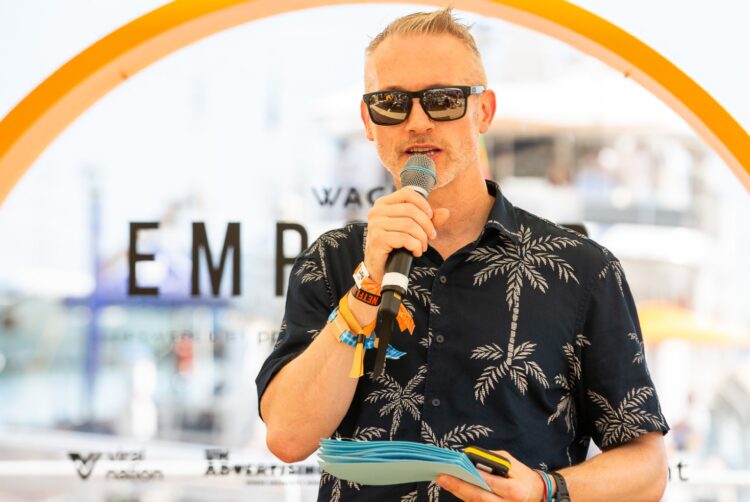
Opinion | Cannes Lions 2026
As the rainbow flags flutter back into prominence in Cannes, could this be the moment the industry turns returning visibility into lasting support, asks Outvertising’s CEO, Chris Dunne.
I’ll say it quietly in case I jinx it, but it looked to me that Pride made something of a comeback in Cannes this year.
After the great Pride disappearing act of 2025, it felt like LGBTQIA+ celebration was back in view along the Croisette and in the various fringe festival nooks and crannies.
Cognitiv’s popular Pride party outgrew its yacht to a full blown beach extravaganza; Supernova held its second Cannes Pride Summit; Empower Café carved out space for an Outvertising takeover; Grindr’s bus activation caused joyful and naughty waves across town all week; Google put Pride front and centre of their YouTube party once again; and Canva debuted a colour-drenched Pride party of their own, complete with ball pool and a special appearance from the actual Teletubbies. Iconic.
And okay yes, nothing to speak of in the main Festival programme, and what there was leant more into parties than deep and meaningful conversations. But simple queer visibility should not be dismissed as meritless. It matters still, because — as you’re probably aware — when it comes to queer rights and acceptance, we’re living in quite a different space than we were ten or even five years ago.
Tiptoeing, just in case
If you’ve already watched Russell T Davies’ Tip Toe on Channel 4 (if you haven’t, I’d urge you to), you might remember the show-stopping speech from Melba (played by Paul Rhys) that deftly sums up the experience of being queer in 2026:
I’m as out and proud as anything. But the last couple of years, I’m a lot more careful… I used to walk into a room and go: ‘Ta-da!’
Now I tiptoe. Just in case.
It’s hard to watch for a lot of queer people because it’s the reality of where we are right now.
People in the LGBTQIA+ community are scared. Trans+ people, especially, are being asked to live through a level of scrutiny and hostility that no community should have to endure.
The shrinking and self-editing that Melba describes are some of the cruellest consequences of the moment we’re living through.
There are so many calculations we’re all doing now: the little moment before you speak, before you correct someone, or before you hold a partner’s hand. Before you challenge a joke, before you put something queer into a brief, before you simply say the word trans and brace for impact.
That is what hostility does. It attack rights, but also it attacks ease. It attacks joy, the freedom to move through the world without constantly checking the temperature of the room.
From celebration to silence: the great Pride disappearing act
It’s important to recognise this growing fear, but recognising it is not the same as accepting that fear should set the terms. And acknowledging that people are tiptoeing does not mean accepting a world where they have to.
In Essex, libraries being told not to promote Pride shows us how quickly visibility can be treated as dangerous. But in Lambeth, Pride events taking place in libraries and civic spaces remind us that public institutions can make a different choice.
In Durham, when Pride funding was cut, the miners and trade unions stepped in. An attempt to make Pride smaller helped make the solidarity around it bigger.
And in Hungary, after Pride was banned, after people were told they could not gather freely under fear of arrest, we have seen another turn: the ban repealed, Pride allowed again, and resistance refusing to disappear.
Green shoots
Pride re-emerging in Cannes is worth recognising because it’s one of the places where the ad industry decides what’s important and what it wants to take seriously.
And in an era of growing anti-LGBTQIA+ sentiment, our industry and the work we put out into the world has a role to play in re-establishing queer lives as something to be accepted and celebrated.
We work in an industry that knows how to make things visible. We know how to make things feel normal, desirable, joyful, popular, and safe.
We know how to build memory and create familiarity. We know how to put stories in places people were not expecting to find them.
That is why positive stories have such power; the ones we get to create, that can showcase LGBTQIA+ people authentically and positively and centrally and matter-of-factly.
It counts when brands make space for queer stories, when agencies protect queer creativity from being watered down, when media owners give queer stories reach, when leaders fund the work, back the people doing it, and don’t vanish the moment there is pushback.
Our industry can play its part in stemming the tide of anti-LGBTQIA+ sentiment. We have the necessary tools at our disposal: visibility, storytelling, investment, influence and reach.
The question now is whether we’ll all commit to using them.

Chris Dunne is CEO of not-for-profit LGBTQIA+ advocacy group Outvertising and head of marketing at TV industry trade body Thinkbox.