



What will the UK commercial television landscape look like in 12 months?
Opinion
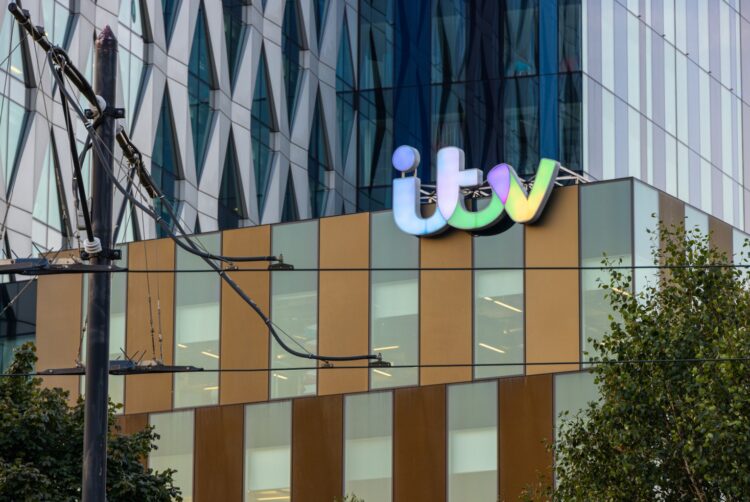
Is the planned split and the sale of the ITV broadcast and streaming business inevitable and a good thing? Ray Snoddy looks at the details.
It wasn’t long after the formal incorporation of ITV Studios as a subsidiary of ITV in 2009 that the siren voices began.
ITV, the broadcaster, was the main business, and ITV Studios, the programme maker, was little more than a distraction, holding back the overall business’s value.
Split the business. Keep the broadcaster and sell the studios went the advice.
Mercifully, such voices were not heeded, and, as we all know now, it is ITV that has come under unbelievable competitive pressure from the rise of international streaming services, while ITV Studios has gone from strength to strength.
Everybody, particularly the streamers, needs original content
As ITV chief executive Dane Carolyn McCall told The Sunday Times at the weekend, the ITV Studios production business, which produces more than 7,000 hours of programming a year, is her “jewel in the crown.”
Old hands will have a stab of nostalgia at the mere mention of the phrase and remember The Jewel In The Crown, the 1984 drama about the last days of the British Raj, one of the finest dramas ITV – or in this case Granada Television – ever made.
It all sounds a bit like ‘The Last Days of ITV’, and in a very real sense it is, although the familiar name will stagger on in the world of live television for years.
But in the world of the free market there is no arguing against the relative values involved.
The American-owned Sky is taking over all the broadcasting remnants of what was once a complex 15-company system for £1.2bn up front, with the price rising to £1.6bn if advertising revenue targets are met.
By way of contrast, Dame Carolyn believes the value of ITV Studios, steadily built up through astute acquisitions of multiple production houses over the years, is worth north of £3bn.
It was worth the wait for the ITV executives who held on until now, but is the planned split and the sale of the ITV broadcast and streaming business inevitable and a good thing?
The conventional wisdom, shared by the likes of former ITV chairman Sir Peter Bazalgette, is that a sale of the ITV broadcast business is both inevitable and a necessary coming in from the cold and into the arms of a much larger international group.
That is probably right, although there are obviously implications.
There is an inevitable concentration in the UK advertising market. The combined broadcaster will control 44% of the UK commercial television advertising market.
Both ITV and Channel 5 will now be American-owned, and while Sky owners, the multinational conglomerate Comcast, and the giant Paramount Skydance Corporation, which owns Channel 5, are perfectly respectable legal entities, there is always a worry.
The niceties of the traditions of British public service broadcasting will hardly be at the forefront of their minds.
An isolated remnant
Equally inevitably, Channel 4 will look like an increasingly isolated remnant. It will have to draw on every ounce of its creativity and distinctiveness to stand out and survive, and that’s before considering the status of ITN, makers of ITV News, the multi-award-winning Channel 4 News and the news for Channel 5.
Given the levels of concentration involved and the impact on other players in the market, a reference to the Competition and Markets Authority seems inevitable, although the process could be torturous.
Will Lisa Nandy still be the culture secretary at the end of this month? Probably not. As a fellow Manchester area MP alongside incoming Prime Minister Andy Burnham, a promotion is likely and the soap opera that has been the story of the DCMS in recent years will start all over again.
How about Sir Chris Bryant for culture secretary rather than someone with no feel for the subject matter?
If you look at the UK television market through a narrow geographical lens, a case for blocking the deal on competition grounds could be made.
The competition authorities have made asses of themselves in the past by applying such narrow criteria and are unlikely to repeat such a mistake.
The odds are that when viewed against the international nature of the modern television market, the deal will go through.
The conditions, and the firmness of those conditions, will be what matters.
Rupert Murdoch has admitted a tendency to tell regulators anything they want to hear and then to be forgetful about what he had agreed.
There is no evidence that either Comcast or Paramount Skydance are likely to behave like that, but the undertakings must be carved in stone.
As part of the deal, Sky has said that all ITV’s public service broadcasting commitments will be maintained in full. This must be made a legal condition of approval, with no time limit attached, and be something that the communications regulator Ofcom can monitor.
Likewise, although Sky is taking an indirect 20% stake in ITN, there is a commitment that ITV News and Sky News must remain distinct editorial voices.
This, too, must be monitorable, even though there is inevitable subjectivity about exactly what constitutes a distinctive editorial voice.
A year is a long time in deal-making and politics
Some aspects of the sale are obviously beneficial to ITV Studios, such as the £2.1bn five-year programme-making deal, although what happens when the five years are up? Will some of the programmes involved fall by the wayside?
The deal is also sweetened by the transfer of Sky’s Love Productions, the maker of The Great British Bake Off, to ITV Studios.
Unusually, viewers might actually get something out of the corporate manoeuvres. Sky is promising to put more live sport on ITV, presumably using ITV as a barker channel for its subscription sports business.
It could be at least a year before the Sky-ITV deal is finally cleared, and a year is definitely a long time in politics. We might have yet another Prime Minister by then.
As for ITV Studios, it will be a publicly quoted company on the London Stock Exchange, and if there is any hint that the programme-making business is undervalued, it could be subject to a takeover.
It is not impossible that American investors could end up owning every last crumb of British commercial broadcasting – except of course for that final survivor, Channel 4.
 Raymond Snoddy is a media consultant, national newspaper columnist and former presenter of NewsWatch on BBC News. He writes for The Media Leader on Wednesdays — bookmark his column here.