



The scoop that stopped FIFA’s secret World Cup selloff
Opinion
Martyn Ziegler’s exclusive, one of the most significant sports exclusives ever, has put an end to what many saw as an attempt to sell off the soul of football. Ray Snoddy explains.
We have hit a marvellous purple patch in investigative journalism in recent weeks, with stories that might never have been revealed, or might have been revealed only after it was too late to do much about the scandals involved.
Anna Isaac of The Guardian and Gabriel Pogrund of The Sunday Times have holed Nigel Farage and his Reform UK party below the waterline with their reporting on the Great Leader’s financial shenanigans.
To the list of honour we must now add the name of Martyn Ziegler, chief sports correspondent of The Times.
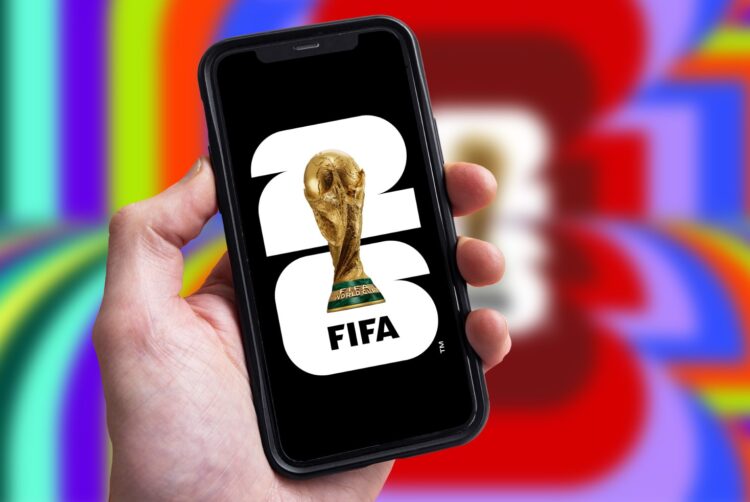
A week ago, under an exclusive tag in print, almost too small to read, Ziegler revealed that Gianni Infantino, president of FIFA, the international football organisation, was planning to sell stakes in the World Cup to investors through a private subsidiary in a scheme that could have personally earned him millions.
Ziegler added that each of FIFA’s 211 member associations would be given a stake of about £15m, with Infantino planning to run the organisation after his final presidential term was due to expire in 2031.
Until Ziegler got to work, he was due to be re-elected unopposed for another four-year term.
Infantino raised many eyebrows at the FIFA World Cup. First, by presenting President Donald Trump with “a peace medal,” and then by suspending the red card issued to American striker Folarin Balogun, seemingly at Trump’s request.
Hydration breaks when TV ads could be shown, and the surrounding showbiz entertainments for the final added to the sense of increasing commercialisation.
Exposing the Infantino plot
But all of that pales into insignificance compared with the secret Infantino plot to essentially sell off the FIFA World Cup to a group including Josh Kushner, the younger brother of Trump’s son-in-law Jared Kushner.
The rest is history. As a result of the scandal being revealed prematurely, Infantino was forced to pull the plan, which had not been discussed with any of the game’s main players.
Now the only question remaining is whether Infantino is forced out immediately or loses when he stands for re-election as FIFA president next year.
The plan would, of course, have come out eventually, but not before support had been lined up in advance, principally among the smaller footballing nations, who all have one vote and might have been impressed by the size of the unexpected payday.
The Ziegler exclusive, one of the most significant sports exclusives ever, short-circuited all of that and put an end to what many saw as an attempt to sell off the soul of football.
Without the revelations, it is possible that Infantino and fellow plotters might just have got away with it.
Now, just as the idea of a European Super League died a death in the face of opposition from fans and most European football clubs, it is inconceivable that such a scheme can be revived in the foreseeable future.
In a way, both stunts represented a clash between an ultra-commercial American sports culture and the European tradition.
Obviously, there will always be a sprinkle of greedy Europeans, such as Infantino, the once poverty-stricken Swiss-Italian, prepared to cross the cultural barrier in search of wealth.
The sample is perhaps too small to be totally reliable, but Isaac, Pogrund and Ziegler demonstrate at least two characteristics in common.
All three are newspaper journalists embedded in newspaper newsrooms. None of them is a taxi-rank reporter. They all have specialist knowledge, expertise and, above all, contacts.
All three have made a difference.
Dropping the baton in Glasgow
By way of contrast, coverage of the stripped-down Commonwealth Games in Glasgow has suffered from a lack of serious scrutiny, and here again money was involved in a controversial way.
Despite some criticism of ticket prices, the games could be called a success as an athletic event, given that the organisers had little time to plan after the Australian state of Victoria pulled out, citing the cost of staging.
But here’s the rub. If you wanted to watch the games live, it was a decided advantage to speak Welsh or Gaelic. English speakers not so lucky.
The games were carried live on BBC Alba, the Scottish Gaelic service, and S4C offered live options in Welsh.
The organisers sold the main live rights in the UK to TNT Sports and HBO Max, which meant that for most people the Scottish games barely existed in terms of visibility beyond the highlights.
Channel 5 was able to show the opening, peaking at only 800,000 viewers, with 50,000 watching on TNT. When Glasgow last hosted the Games in 2014, nine million watched the opening ceremony on the BBC.
For the first time in 72 years, there was no live BBC English-language coverage of the Commonwealth Games on either TV or radio.
It is believed that the cash-strapped BBC, fresh from the cost of comprehensive World Cup coverage, bid only around £2m for the rights. The TNT estimate was closer to £5m.
Naturally, the Daily Mail accused the Corporation of “dropping the baton” even though the BBC was outbid by a subscription broadcaster.
Live rights to the Commonwealth Games are for some reason not a “listed” event protected by the Government for broadcast on terrestrial television. They sit only on the Group B list, which means anyone can bid for the live rights and only highlights have to be made available for public service broadcasters.
Apart from the cost and the resulting lack of reach, the Daily Record said that many viewers found the TNT coverage “borderline unwatchable”.
The organisers of the Glasgow games had the right to sell the broadcast rights to the highest bidders, but it was an extremely stupid move. With sport, visibility and presence are everything, and unless you are dealing with major sports such as Premier League football, lack of visibility leads to an acceleration, in this case, of a decline that perhaps had already set in.
The Glasgow Games suggested to The Daily Telegraph that perhaps the Commonwealth Games were now past their sell-by date.
Perhaps The Telegraph is right; if not, it will become totally irrelevant in four years’ time if there is no live coverage of the games from Ahmedabad, India’s first UNESCO World Heritage City.
 Raymond Snoddy is a media consultant, national newspaper columnist and former presenter of NewsWatch on BBC News. He writes for The Media Leader on Wednesdays — bookmark his column here.