



HFSS promo ban doubles down interest on omnichannel advertising
Opinion
Regulations on HFSS in-store promotions have prompted brands to develop media strategies that align messaging with each channel’s rules. The numbers show it’s working, writes James Dunaj.
January’s introduction of tighter regulations on advertising of foods and beverages rated as High in Fat, Salt, or Sugar (HFSS) was widely reported. However, perhaps what wasn’t clear at the time was that the new rules would actually make advertising more important than ever for the industry.
That’s because the measures didn’t only ban advertising of HFSS products online and on TV (before a 9 pm watershed). They also ended the days of in-store volume discounting, such as “three for two,” and banned the tradition of securing prime retail spots at the end of a Gondola or next to the till. These were effective routes to boost sales, and without them, the food and beverage industry has had to take a closer look at advertising.
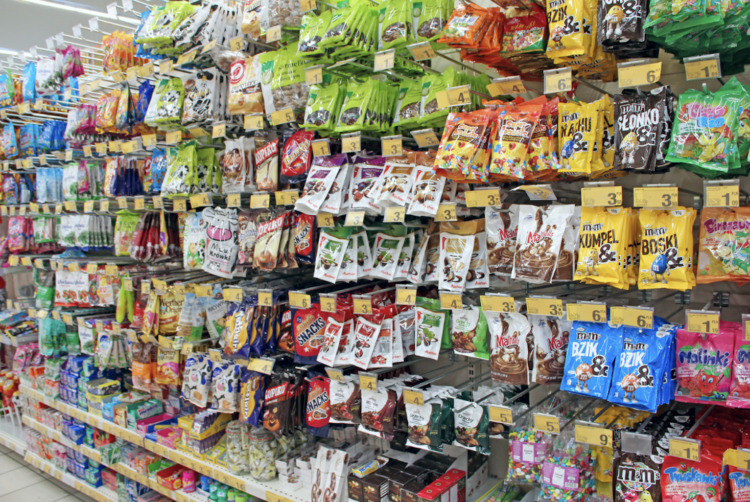
Trouble is, it’s always been hard to know whether it works for them. Snacks and confectionery have always been an impulse purchase. Many shoppers don’t intend to grab a snack when they enter a store but instead make a decision off the cuff as they pass along the snack aisle or, previously, join the queue to pay for groceries or petrol.
As such, it’s always been a problematic sector. Did sales rise of their own accord, would revenue have increased anyway, or did an advert really influence a shopper to make a purchase they often didn’t pre-plan?
Answering that question is now more important than ever before, in the absence of in-store promotional activity. It’s also a question companies are having to reframe, against a backdrop of tighter regulation.
Birth of hybrid media strategies
Food and beverage companies have always run a combination of brand and product-led adverts, but now messaging must be adjusted by channel.
Where product advertising is banned (online and TV before 9 pm), we’re seeing two developments. Companies are either running brand ads, where no product is shown, or running an advert featuring a low-sugar or ‘zero’ variant in their range that is not subject to HFSS rules. Where the new regulations do not apply to OOH and radio, we’re seeing a mix of brand ads and ads for HFSS products.
It’s worth remembering that the CAP Code still forbids HFSS advertising when one in four or more of the audience is likely to be under 16 (such as outdoor sites near schools) and that some outdoor networks have banned HFSS ads altogether, including TfL and several councils.
The result is a hybrid mix of compliant advertising to keep a brand front of mind while also maintaining the option of advertising a full range of products. So, the question of whether advertising works on impulse purchases has been slightly reframed as whether this new hybrid mix-and-match can be seen to raise sales.
Data shows omnichannel’s a winner
Taking a scientific approach requires that sales levels for each variant within a range be measured separately in distinct test cells.
You need three separate areas to run just one channel (online, radio and outdoor) and one omnichannel cell where all four run together. Arguably, the most crucial part is to have an area where no advertising takes place. This is the equivalent of a control site in science. It allows measurement of sales where no advertising has taken place so you can tell for sure that a campaign has had an impact.
When we did this for a well-known high street confectionery brand, we made several major discoveries.
The first step was measuring uplifts in the outdoor, online video, and radio cells at 1%, 1.6%, and 2.1%, respectively, compared to the area with no activity.
More importantly, working with advertising partner Blis, we found that omnichannel advertising delivered a far more impressive 3.5% rise. Interestingly, this was the only tactic that led to a positive ROI, with a £1.25 revenue lift for every £1 of budget.
Omnichannel is clearly the winning strategy, and when we looked at the data with a fine-tooth comb, we could discern each channel’s contribution to the combined success.
OOH sales rose early in the campaign, while online video kicked in a little later and lasted throughout the activity period. Interestingly, radio’s impact was noticed towards the end of the campaign, and it was the only channel where we saw a sustained increase in sales in the couple of weeks after activity ceased.
Halo effect
One of the most important results we saw was an average 2% rise in sales across the entire range where the omnichannel campaign ran.
Sales in products that were not advertised rose because people were prompted to make a purchase after seeing an advert. However, if they didn’t like the featured product or were exposed to more generic brand advertising, they bought their preferred variant, regardless of whether it had been advertised.
So, using a scientific approach to examine sales across different areas, or cells, we’ve shown that an omnichannel advertising strategy boosts sales, even for products that aren’t featured in a campaign.
This is just one study, and more work will need to be done to replicate the results in other categories, but it does give food and beverage brands grounds for optimism.
In the absence of in-store promotions, they can rest assured that omnichannel ad campaigns offer an alternative route to driving incremental sales.
 James Dunaj is the partner success director at Circana