



Why does the media still want to punish Meghan Markle?
Opinion
The tragic death of Professor Jadon Arday underlines the human cost of manufactured outrage, yet our national bloodsport continues with neither reflection nor remorse, writes Nicola Kemp.
‘Has Meghan Markle’s return to acting been cancelled?’
Meghan Markle had yet to step on UK soil, and the Daily Mail was already declaring her acting career was cancelled. The irony is that the right-wing press that loves to bemoan ‘woke’ cancel culture fans the flames of the very culture it claims to abhor.
For the newspaper industry, the return of Meghan Markle to the UK marks another chapter in her decade-long hounding. Relentlessly scrutinising women is a national blood sport which shows no signs of abating.
In 2016, a Mail Online headline read: ‘Harry’s girl is (almost) straight outta Compton: Gang-scarred home of her mother revealed – so will he be dropping by for tea?’ Racialised stereotyping which underlines the painful truth that bias runs rife in UK media.
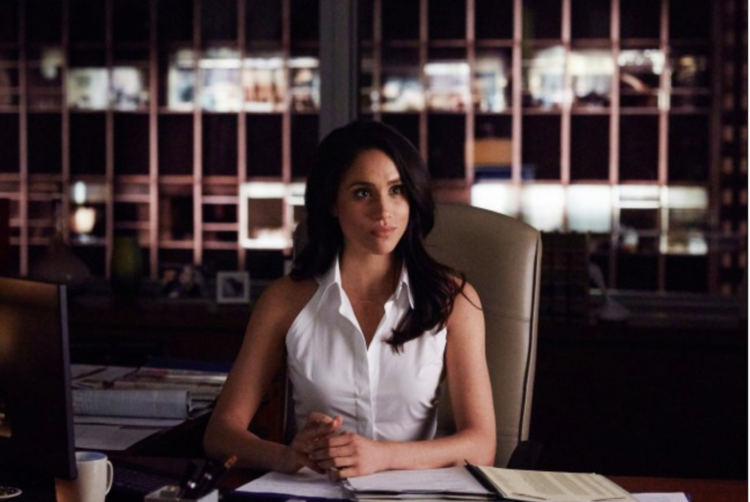
The Sun splashed a cover story the same year declaring: ‘Harry girl’s on Pornhub’. A headline that obscured the fact that what was actually posted were clips of intimate scenes from Suits, the series Markle acted in (pictured), without her knowledge or consent (The Sun was forced to issue an apology in February the following year).
The ferocity and scrutiny Markle has faced are well documented. During her pregnancy, the Daily Mail famously asked: ‘Why can’t Meghan Markle keep her hands off her bump?’ Yet the bigger question- why does the media want to punish this woman for simply existing? is completely ignored. Sidestepped by an industry in thrall to the reach of the ‘sidebar of shame’.
Arguably a decade into the relentlessly negative, misogynistic and racist media coverage of Markle, we have become so accustomed to it that we no longer question it. Let alone consider the human cost of such furious scrutiny?
The accountability void
The media industry is remarkably good at normalising hate, while preaching the power of trust. A truth which goes some way in explaining the accountability vacuum that accompanied the tragic death of Professor Jason Arday.
UK Fact Check Politics cited 249 articles about Arday, with The Times and The Sunday Times alone publishing around 44. The sheer scale of the coverage is beyond debate.
A paid social campaign accompanied The Times headline: ‘I was Jason Arday’s student. He was late to class and spouted nonsense.’ An article which was written anonymously by a former student.
With the exception of the tireless Conscious Advertising Network, the industry-wide silence to this pile-on was palpable. Without genuine reflection, this cycle of biased scrutiny will continue without shame or accountability.
Yet what message are we giving to diverse talent if we don’t recognise the fundamental truth that the media industry is holding black men and women to a completely different set of standards?
Just a cursory glance at the headlines surrounding Meghan Markle or Misan Harriman, Chair of the Board of the Southbank Centre, shows the scale of the issue we collectively refuse to address.
Silence is complicit
It is 2026, but the witch-hunt is alive and well in sections of the British media. For an industry which sells itself to advertisers on the basis of trust, the truth that racist stereotyping abounds in British media is impossible to ignore.
Writing in The Voice Online, Rudi Minto de Wijs explains: “For Black public figures in particular, there is a long history of being cast as uniquely dangerous the moment they begin articulating their thoughts and perspectives in debates on complex and difficult subjects that affect the whole of society.”
He continues:
The artist becomes ‘divisive’. The writer becomes ‘aggressive’. The activist becomes ‘extreme’. The goal is not merely to challenge what they say, but to frame their very presence as a threat.”
Fragments of fact, framed in bias and hatred, have a real-world cost. Even a cursory look at the comments section under the endless ‘news’ surrounding Meghan Markle underlines the real-world harm of racial stereotypes.
A media ecosystem that routinely dehumanises people, or makes the very right to exist a topic for debate, not only erodes consumer trust but also disconnects word and deed.
The Spectator’s Toby Young wrote that ‘Professor Arday is the gift that keeps on giving’ because he saw him not as a person first, but as a proof point in his argument. A stereotype all too quickly turns into a national shorthand that his humanity no longer mattered.
Breaking the cycle
If we want to break this cycle, we must recognise the debate itself can become poison. That ‘free speech’ should never be a smoke screen for rampant racism. We have to question the velocity of the scrutiny and the scale of the coverage disproportionately faced by black leaders.
What message are we sending to the next generation of leaders if we choose to ignore this racism in plain sight?
A website set up by Arday’s former students features stories and comments on how he supported and nurtured many of them. A supportive voice note. A cheeky KFC. The red thread in many of the comments is the time he took to learn their names and hear their stories. The consistent effort he poured into ensuring his students were seen and heard contrasts with our collective desire to look the other way.
Their stories are a powerful reminder of the simple act of making the space to really understand each other. Rather than rushing to endlessly, publicly judge someone we have never even met.
If we can’t find the words to confront racism. If we refuse to collectively name it, we will not move forward as an industry. The cycle continues. The witch-hunts won’t stop because we chose not to look.
 Nicola Kemp has spent over two decades writing about diversity, equality and inclusion in media. She is now editorial director at Creativebrief and writes for The Media Leader each month.