



Amol Rajan’s next chapter was written by broadcast media
Opinion
Brands looking to replicate Amol Rajan’s approach need to build and maintain a robust backbone of fame and shared meaning. Perhaps via curated, shared, familiar and routine media, says David Wilding.
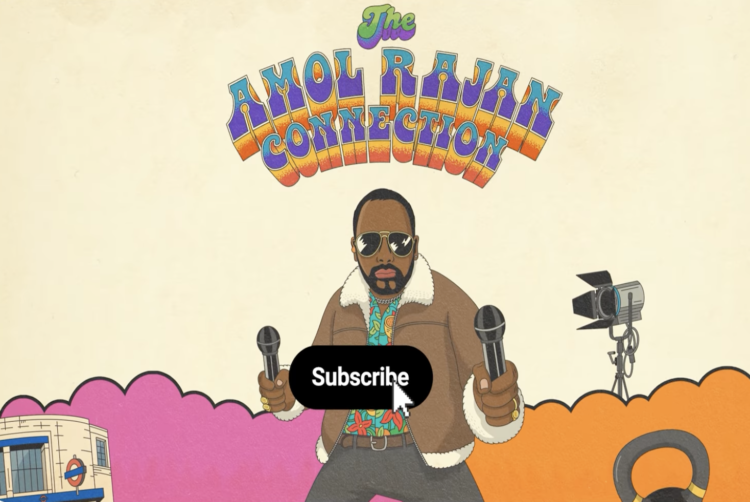
Former media editor of BBC News, Amol Rajan has left the BBC to go all-in as a creator. I can highly recommend a visit to the Amol Rajan Connection (ARC) to see what he’s building.
I’m confident ARC will be a huge success. Rajan is an exceptionally talented and informed journalist and, just as importantly, he’s a gifted, authentic and highly likeable communicator, natural and comfortable in the world of long-form video, podcasts, social media clips and audience interaction.
Significantly, ARC has set out to build a direct, owned relationship with its audience from the get-go. Rajan is working with Club Class Media (founded by former Goalhanger chief commercial officer Conrad Withey) on ARC’s distribution and monetisation strategy.
As Withey highlighted in a LinkedIn post last week, Rajan hasn’t just launched a podcast or a YouTube channel but rather a “movement, anchored in a club”.
The choice of the words “collective” and “club” are no accident. ARC is meticulously planned, beautifully designed and created with monetisation in mind (membership tiers – named after cocktails – are available before any content has been released, and there’s even a merch section on the website for members to buy branded products).
As media strategists, we could interpret Rajan’s decision to migrate his personal brand away from broadcast media and decide it is yet more evidence of a fundamental shift in how we consume media and towards YouTube and ‘social video’.
Rajan (and Holly Willoughby earlier this summer) are simply following the inevitable path given shifts in consumption and, by extension, brands should be doing the same, if they’re not already doing it.
But it might not surprise you to read that I think this would be a dangerous conclusion.
That’s because, alongside his talent, experience and authenticity, Rajan has another huge thing in his favour when it comes to making ARC a success – people already know who he is and they like what he represents.
YouGov puts his fame rating at 41% (for perspective, YouTube sensations Sidemen are at 28%), and this figure is likely to rise significantly this October when Rajan is a contestant on what is likely to be the biggest TV show of the year – Celebrity Traitors on BBC1 and iPlayer.
Rajan’s fame and shared meaning come from his career as a journalist and presenter of long-standing media brands. The Independent, BBC Media correspondent, presenter of University Challenge (first broadcast in 1962!), presenter of the Today Programme (first broadcast in 1957!)
His profile and audience have been created in media that is curated, familiar and designed predominantly for “leaned-back” and routine consumption.
That doesn’t sound particularly sexy, does it? But the truth is that – as Rajan’s career proves – showing up consistently in curated, leaned-back, shared, familiar and routine media consumption is a brilliantly effective way to create fame and shared meaning.
Which sounds a bit like, well, TV & radio.
Bill Bernbach famously said that “It is fashionable to talk about changing man. A communicator must be concerned with unchanging man”.
As media planners, we need to be better at talking about unchanging media
You know that person in the meeting who tells you that “nobody watches telly anymore” and young people in particular never watch it? Show them the seemingly gobsmacking IPA Touchpoints data that shows that more 15–24-year-olds watch Linear TV in an average week (4.5m) than watch short clips on TikTok or YouTube (3.9m).
While we’re at it, we should be challenging the idea that telly is expensive to buy (50% of TV campaigns in the UK have a budget of less than £250k) and that it doesn’t pay back immediately (the three-month ROI of linear TV is higher than paid social and online video – without even factoring in longer term effects).
Creator-led media provides a brilliant opportunity for brands to find the perfect partner to help them build their own communities and clubs.
Cancer Research UK was a critical founding partner of The Rest is Science; VOY helped to fund Holly Willoughby Together into existence, and I feel like I talk about how Dish from Waitrose has created something truly unique and valuable for the brand and for a section of their audience every day.
But brands looking to replicate this approach need to establish and maintain a robust backbone of fame and shared meaning too. Perhaps via curated, leaned-back, shared, familiar and routine media.
Given the choice of building a community and building broad fame, brands should choose “both, please”.
Rajan’s new career direction is proof of that, not a challenge to it. Media is changing and unchanging simultaneously.
 David Wilding is EVP strategy at WPP Media and writes a monthly column for The Media Leader.