



It’s not how big your data is, it’s what you do with it
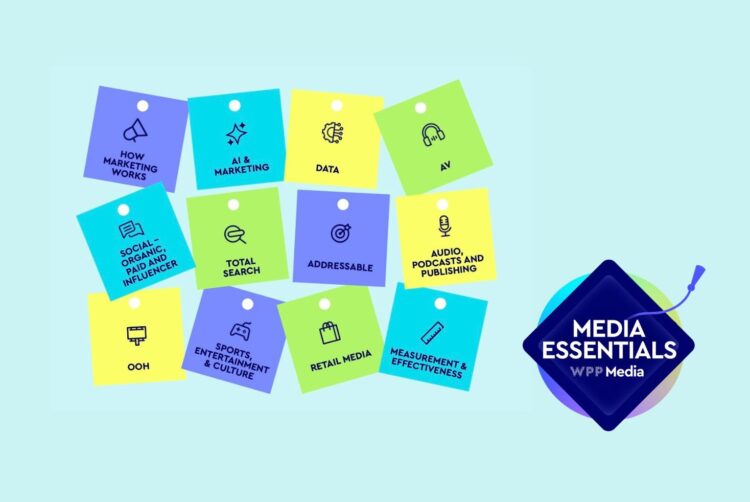
Opinion – Media Essentials
In the latest in a Media Essentials series for marketers early in their careers, WPP offers a practical overview of how to turn data from a vast resource into a clear driver of growth.
Data has become one of the defining forces in modern marketing. As media journeys become more fragmented, consumer expectations rise, and performance pressure intensifies, data is no longer a specialist discipline operating at the edges of planning. It is central to how marketers understand audiences, shape investment, improve relevance and measure effectiveness.
Through our Media Essentials programme – which we run with clients to help teams cut through complexity and make better decisions with confidence – we’re seeing a renewed focus on the core principles of media and marketing science as a manual for growth.
This article continues a 12-part series for marketers early in their careers, drawing on the core principles we repeatedly see prove their value in practice, especially when things feel uncertain. Here is a practical overview of how to turn data from a vast resource into a clear driver of growth.
More signals and more complexity, but more opportunity
Today’s marketers can reach people across streaming, social, retail media, digital OOH, audio and an expanding range of addressable environments. This is clearly an opportunity, but it also makes the job harder.
Consumer journeys are no longer linear, which means that audiences now leave signals in many different places. The value of data is that, when used well, it brings that complexity into focus, showing who matters, where growth may come from, and how communications can work harder across the funnel.
One of the most common marketing mistakes is starting with the tools before defining the task. We jump too quickly to activation questions before clarifying the business challenge we are trying to solve.
Are we trying to acquire new customers, re-engage lapsed ones, improve efficiency, increase relevance or better understand future growth? Once that is clear, data becomes far more powerful. It stops being something to collect and starts becoming something to apply.
That starts with understanding that not all data does the same job.
First-party data (data collected directly from a brand’s own customers or audience) is often the most valuable because it is closest to real customer behaviour, but it is rarely sufficient on its own. It may be highly accurate, yet limited in scale.
Second-party data (shared by another business that has collected it directly) and third-party data (collected and packaged for use by many companies) can help enrich that view.
A strong data strategy is therefore not just about ownership or volume, but about intelligently connecting diverse sources to create a fuller picture while balancing reach, cost, accuracy, and risk.
This is where privacy becomes central to effectiveness. As consumers become more aware of how their data is used, marketers face a more demanding environment.
Expectations around privacy, transparency and responsible use are rising, while regulatory and platform changes have made traditional identity-based targeting more constrained. That can sound like a limitation, but in reality it is pushing the industry to build value from consented data, model audiences responsibly, and use privacy-safe collaboration to create insight without compromising trust.
Good data strategy starts with better judgement and measurement
The bigger shift is that good data strategy is about judgement, and the real value comes when marketers use data to make practical choices on who to prioritise, where to focus, what message to deliver, how often to show it and how success should be measured.
Sometimes that means excluding existing customers to avoid waste. In others, it may mean identifying lookalikes, building propensity models or using geography and context to sharpen investment. What matters is not the sophistication of the language around the approach, but whether the approach genuinely improves outcomes.
That is where measurement comes in. If data is used to improve marketing, that improvement has to show up in results. Too often, brands focus heavily on activation and too lightly on measurement. But understanding whether a data-led strategy has delivered value – in media performance, business outcomes or both – is what turns experimentation into capability.
Test-and-learn frameworks, campaign tracking, modelling and broader effectiveness measurement all help marketers understand what is working, what should change, and where future value lies.
As identifiers, channels and technologies continue to evolve, the brands that win will be those that create a richer, more connected understanding of their customers by accessing and connecting diverse signals from their own data, partners and platforms in ways that are privacy-safe, scalable and actionable.
That is the promise of approaches such as clean rooms, AI-powered modelling and WPP’s Open Intelligence ecosystem, enabling stronger intelligence layers that help marketers understand more and act with greater confidence.
In a fragmented world, intelligence is an advantage
The media landscape will only become more complex. More channels, more signals, more expectations and more pressure to prove value. In that environment, data remains a critical asset, but competitive advantage comes from turning that data into intelligence marketers can use with confidence.
The real opportunity isn’t chasing every new signal, but asking better questions, applying data more deliberately and building strategies that are not only smarter, but more accountable and more human.

 Genevieve Brown is VP of data strategy and Alan Morrissey is the data strategy partner at WPP Media.