



When content is infinite, human connection becomes scarce
Opinion
Just as Bowie’s protagonist questions whether something better exists, a more rewarding route is to focus on what people increasingly feel is missing in life, writes Chris Herbert-Lo.
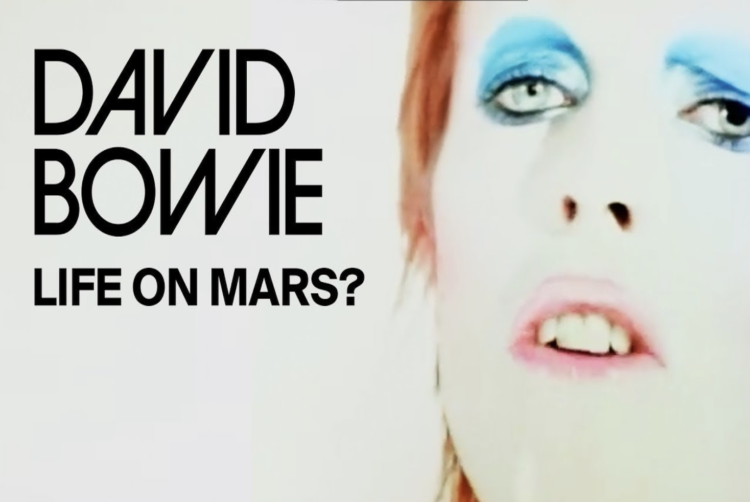
David Bowie’s Life on Mars? is the story of a girl alienated by a mass culture that feels increasingly strange and unreal.
The image of a person sitting in front of a screen, watching an endless parade of spectacular things while wondering if there’s something that’s actually real happening elsewhere, is more relevant now than when Bowie wrote it in 1971. Because young people now have way more screens to contend with.
And she’s hooked to the silver screen
The silver screen has become the black mirror, where young people are fed more video than ever because it’s ridiculously easy to create, distribute and consume.
The IPA’s Making Sense 8 describes consumption among younger audiences as “shards of short-form video that can be swiped past at will.” Video consumed within a personalised, algorithmic space aligns with the report’s headline finding of a 10% increase in solitary media over the last decade.
British adults now spend more than two-and-a-half hours a day consuming media alone; for young people, the numbers are even higher.
Whether media is contributing to culture or merely reflecting it, the IPA’s report came just eight days after a report from the Institute for Public Policy Research which found young people in England are now “dramatically more isolated from one another, with one in 20 now reporting that they have no close friends at all, up from one in 100 in 2014.”
But the film is a saddening bore, for she’s lived it 10 times or more
At the start of the year, Mintel’s ‘Anti-Algorithm’ trend for 2026 pointed to a growing fatigue with feeds; many felt it had all begun to feel a bit samey.
In the last month, the7stars released its latest Cultural Codes. One of the eight codes explaining culture among youth audiences – ‘Social Reclaimers’ – identifies a desire to escape digital channels which young people increasingly view as bad for their health.
Some 62% of adults say they hate how much time they spend with their phone; a third of 18-34s say improving their mental health is the main driver of a digital detox.
Even the phrase digital detox tells us something. People never seem to talk about detoxing from being out of the home, radio, or spending time with mates. So, while social video is up in many metrics, signs suggest people aren’t getting as much from it.
It’s the freakiest show
Into a world of “shards of short-form video” and Social Reclaimers, we’re now seeing social video content with one eye on an audience of machines.
YouTube is one of the most prominent sources of AI citation, a fact John Lewis hasn’t missed. Its new vodcast is being launched with an audience of machines (at least partly) in mind.
Gaming LLMs is an interesting and seemingly worthwhile task, given they’re increasingly used to advise on purchase decisions, and buying directly on their advice will become easier and faster. (In John Lewis’s case, the business benefits from its brand strength, as research from Charlie Oscar found nearly two-thirds of LLM visibility comes from long-term brand equity).
But if we are to enter an era of content created by machines, to be consumed by machines, the concern is that people become even more of a second thought in contexts where they’re already feeling underserved.
Is there life on Mars?
Just as Bowie’s protagonist questions if there is something better out there, a more rewarding route forward for both advertisers and audiences is probably to focus on the things people increasingly feel are missing in life.
That might be investing in content which is noticeably more engaging and rewarding for the viewer. Take the dedication and craft behind ITV’s recent ’70 Up’ series. 63 years following the reality of people’s lives, edited into beautiful stories of everyday life.
Or the solution may be for a brand to address the importance of social connection to its product.
Heineken’s Cannes-winning ‘The Pub That Refused to Die’ saved valuable spaces where communities are formed, and its beer is drunk. It’s the latest in a string of Heineken campaigns which champion togetherness.
Or the answer could be to become an integral part of a moment of connection. Just as Adidas seamlessly played a part in Oasis’ Live 25 world tour, placing itself as another dimension of fan identity.
All add greater value than simply another piece of content. Providing something people aren’t already inundated with, something they’re more likely to talk about. Not only may it be better for people’s health, but it’s also more likely to get noticed.
 Chris Herbert-Lo is head of strategy at the7stars. Read his new monthly column for The Media Leader on the first Tuesday of each month.