



The rest are podcasting
Opinion
Andy Burnham’s comments on The Rest Is Politics mark the maturity of a relatively new medium, now amounting to a Fifth Estate of the realm, increasingly distinct from conventional media, and increasingly powerful.
There is no question that Prime Minister Andy Burnham’s recent comments on political interference by Russia in the 2016 Referendum, and his statement that Brexit had done more harm than good to UK growth, were the big political story of the week.
The usual suspects analysed and denounced them in equal measure.
Some will feel they amount to little more than commonplaces, but there is no doubt about their significance, despite subsequent backtracking.
Burnham became the first PM, after a decade of prevarication at best by his predecessors, to come out plainly and admit there was interference.
On the EU, the PM went further than Sir Keir Starmer was ever prepared to go, presumably out of fear of upsetting Labour’s Red Wall Brexit voters in the North of England.
From the media point of view, what was said was markedly less interesting than where it was said.
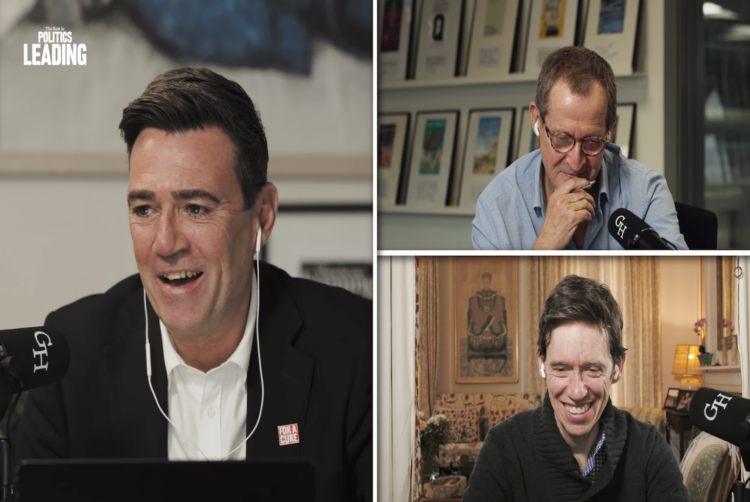
The venue was not Parliament, the studios of the BBC, ITV, Channel 4 or even Sky but a podcast – albeit it is a rather illustrious podcast – The Rest Is Politics, hosted by political aficionados, Alastair Campbell and Rory Stewart.
Their podcast has been running for four years and, like many podcasts, has been noted more for calm analysis and explanation than big scoops followed up everywhere else.
In a way it marks the coming to maturity of a relatively new medium now amounting to a Fifth Estate of the realm, increasingly distinct from conventional media, and increasingly powerful.
The numbers are impressive. More than 50% of the UK population listens to or watches a podcast at least once a month, while no less than 4.5m podcasts from all over the world are available to UK media consumers.
They also represent major opportunities for communicators who have been let go by conventional media outlets, or who want to escape the constraints of large corporate organisations.
As such, they represent a two-pronged threat to the established media: the loss of talent they may have nurtured over the years, combined with the ratings challenge they offer.
Will we ever see the likes of John Simpson again, who this week is marking the 60th anniversary of the day he joined the BBC, or Sir David Attenborough, still making programmes for the Corporation at the age of 100?
Amol Rajan served only five years as a senior presenter on Radio 4’s Today programme, in many people’s eyes a very desirable perch, before legging it to set up his own production company in search of freedom and money, with inevitably a podcast or two to follow.
Even those who already combine a podcast with a newspaper column, such as, until recently, The Guardian’s Marina Hyde, are off to build their own platform for “written and video content” in a joint venture with production company Goalhanger,
And Substack is always a welcoming port in a storm for any journalist whose contract hasn’t been renewed.
Not everyone can be an influencer
The greater opportunities, choice and freedom for journalists in days when properly paid staff jobs are at a premium is a hugely welcome development.
The only caveat is that there can never be endless audiences and associated wonga out there for everyone. For most, fame can only be exploited when it has first been created, and it can prove ephemeral.
Not everyone can be an influencer, and in a slightly different context, as Sir James Goldsmith once said: “When a man marries his mistress he creates a vacancy”.
What of real influencers such as Campbell and Stewart, who served their time respectively as newspaper political editor/political and politician?
It was almost certainly their combined experience and reputation that brought Andy Burnham to their microphones – with considerable impact.
The first admission by a British PM that Russia interfered in the Brexit campaign has naturally been denounced by the Daily Mail and called “lies” by former Prime Minister Boris Johnson and Reform UK leader Nigel Farage.
Leaving aside the fact that the PM did not claim any effect on the outcome, many will prefer to trust the judgement and honesty of Sir Richard Moore, the former head of MI6.
Sir Richard told another BBC escapee, Andrew Marr, on LBC that he was “very confident” of Russia’s interference in Brexit.
If so, it would further vindicate Carole Cadwalladr, the former Guardian and Observer investigative reporter, who revealed the state of Russian interference in Brexit and other aspects of British politics years ago.
As Cadwalladr wrote in 2018:
Polite reminder. Trump & Brexit are not 2 different things. They are the same thing. Same companies. Same data. Same Facebook. Same Russians. Same Cambridge Analytica….”
This week Cadwalladr was more than a little miffed to see The Observer trumpeting about its triumphs in uncovering the scandal eight years ago. There were indeed exclusive splashes, but it was unfortunate that the paper seemed to forget the reporter mainly responsible, Carole Cadwalladr, along with Peter Jukes, who broke the stories.
Many will remember that Cadwalladr acted as an unofficial spokesperson for Guardian journalists who opposed the sale of The Observer to James Harding’s media vehicle Tortoise.
She was the only journalist not offered a contract with Tortoise when the sale went through.
To make matters worse, Andrew Neil described Cadwalladr as “a mad cat lady.”
Funny how there has been a massive drop in bots hostile to the West after Ukrainian rockets destroyed a number of Russian data centres over the past few days.
The controversy could easily be resolved by the Government fully publishing all material relating to Russian interference in British politics.
As for the second arm of The Rest Is Politics scoop- the UK’s future relationship with Europe – the right-wing press will now take the gloves off.
Ross Clark in The Sun yesterday was already claiming that while Andy Burnham had always argued that the cost of living was his priority, his number one job was now reversing Brexit.
For Clark and all the other old media Brexiteers, it’s not only about the economy; it’s also “about the demographics, stupid.”
In rough and ready numbers, around 600,000 people die in the UK every year- 6m since the referendum. And older people voted disproportionately for Brexit.
On the other side of the fence, research shows that those too young to vote in 2016 but can vote now are 90% in favour of the UK rejoining the EU.
The numbers will tell in the end – in Downing Street, and even with the Daily Express, the Daily Mail and The Daily Telegraph.
Maybe it’s time to set up a new podcast on the subject.
 Raymond Snoddy is a media consultant, national newspaper columnist and former presenter of NewsWatch on BBC News. He writes for The Media Leader on Wednesdays — bookmark his column here.