



Creators: Advertisings secret weapon, or achilles heel?

Opinion | The Future of Brands: Creator Economy Week in Focus
Creators do not need to be an uncertain investment. The route to treating them like a serious media channel isn’t revolutionary or difficult, but it remains surprisingly rare, writes WPP Media’s VP of commercial paid social.
The battle for creator adoption is won.
The impact of creators has been repeatedly proven by the foremost marketing authorities, and it has punched well above its weight.
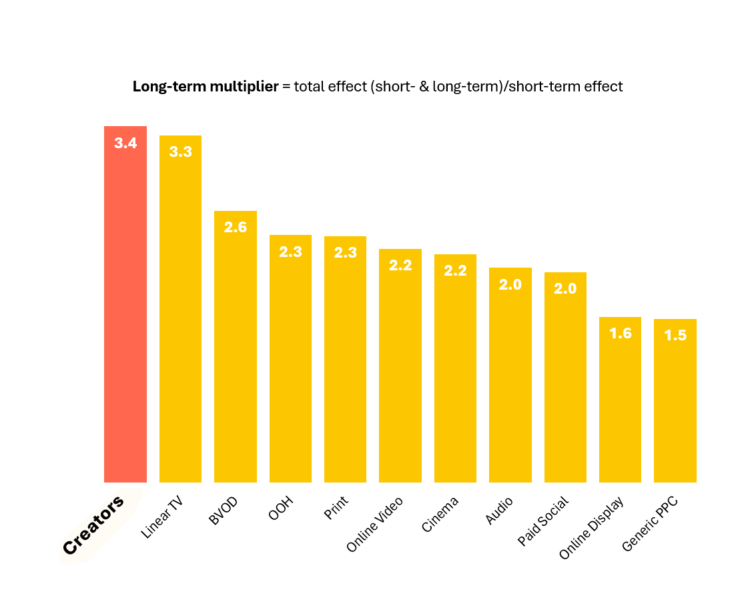
Adland has publicly professed its love and support, committing billions in global spend.
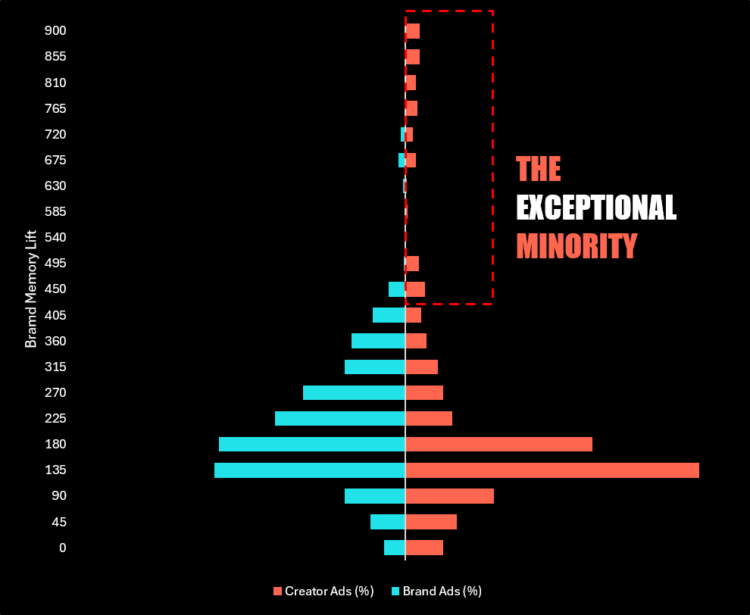
The battle for creator effectiveness, however, is far from won. Hiding beneath the headlines is a more uncomfortable truth: many creator campaigns underperform. Approximately two-thirds, in fact.
An exceptional minority are propping up the macro success story, masking an underperforming majority.
It’s easy to see how we got here.
Marketing has always been susceptible to herd mentality; once consensus forms, it’s amplified. Creator marketing was anointed the saviour of digital marketing, and brands dived right in.
The problem? Most knew they should be doing it, but hadn’t yet figured out how.
Without clear direction, and under internal and external pressure to quickly justify and quantify a new (ish) channel, the industry defaulted to the most convenient, quickest answer to justify its investments: engagement.
Engagement is comfortable, familiar, and logical – to a point. You can view it in real time and easily optimise for it. But it is still incomplete. It is a short-term metric being used as a proxy for long-term brand building.
Engagement can guide advertisers down the wrong path and may also artificially inflate market prices. Brands risk buying outcomes that have little relationship with long-term brand impact, which are typically validated, shared, and celebrated on the seller side.
It’s a double gut-punch hitting effectiveness and efficiency. Without a course correction, enthusiasm for creator investment risks running ahead of its effectiveness.
We need to replace uncertainty with evidence
The Creator Effectiveness Playbook, a recent study from WPP, System1, and TikTok, analysed $70.5m spend, 1,200 ads, and 24bn impressions across eight markets. It represents an important step towards codifying creator marketing, providing brands with a rigorous, data-backed blueprint for how to use creators to build long-term brand equity.
The most crucial finding? There is no significant relationship between engagement and brand memory lift. It’s a strong indication that the scoreboard is wrong.
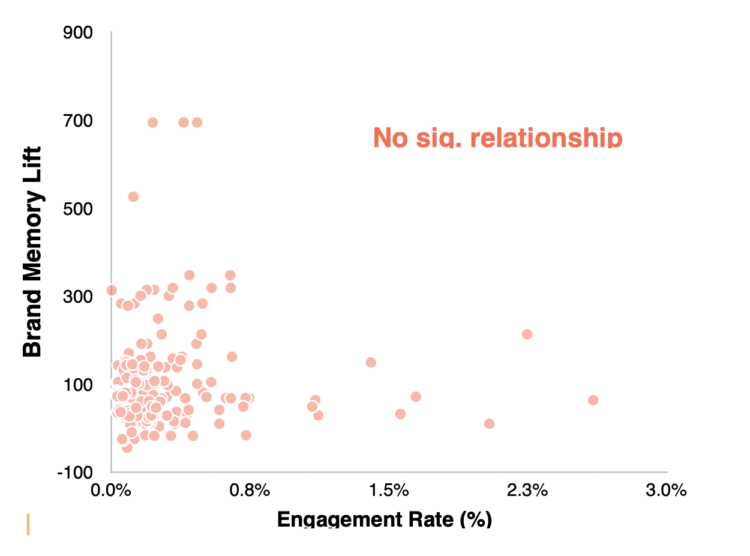
This shouldn’t be a surprise. Meta and Nielsen reached a similar conclusion 10 years ago, yet the industry kept buying likes and comments.
The question is whether the industry is now ready to act on it.
“If not engagements, what actually drives success?”
Creative quality.
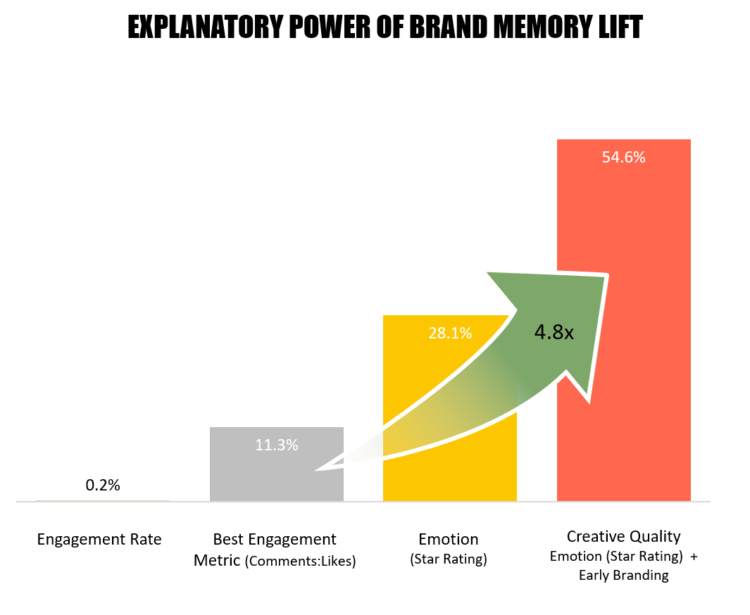
Creative quality comprises two key levers: emotion and early branding, measured by System1’s Star Rating and Fast Fluency metrics. Make people feel something, and make it clear who is talking.
The research shows this approach is 5x stronger at predicting brand memory lift than even the best engagement metrics.
The paid imperative
The playbook guides how to make great creative, highlighting the emotional creative features of showmanship and the distinctive brand assets that drive outsized returns. It offers a blueprint to ensure creative is fit for purpose, and that purpose is effective brand building.
But great creative is only half the battle. The current approach to media strategy is also flawed.
The research purposefully focused on paid creator ads, because relying on organic virality alone is an unreliable media strategy. Without paid media amplification, even the most phenomenal creator creative remains a gamble.
To grow, brands must build lasting memories. To build memories, you must reach people. And to achieve reliable reach at scale, brands generally need paid support.
When buyers enter the market, they consider only two to three brands on average and are 10x more likely to choose one they already know and favour.
Brands should not leave that level of influence entirely to organic algorithms.
Great creator content must be backed with guaranteed paid reach to prime future buyers long before they purchase.
Move from real-time panic to pre-testing
A tension arises from the need for paid media support: how can marketers be confident in the success of creator campaigns before adding budget, especially without the engagement safety blanket?
The answer is pre-testing. Pre-testing is a familiar concept and cost for traditional media channels, but it remains surprisingly uncommon in creator marketing.
If the swing in potential brand impact is up to 500%, allocating a fraction of budget to pre-test creator content for brand memory lift and talent fit isn’t just logical; it is increasingly hard to argue against.
Marketers often fear moving away from real-time metrics because they worry about looking uncertain to leadership.
But, as Ian Whittaker recently noted:
Most CFOs are more comfortable with uncertainty. No serious finance executive believes every important business decision can be perfectly measured in real time.”
CFOs want risk mitigation, long-term revenue and profit. Engagement metrics alone won’t achieve any of those.
Showing a thoughtful approach to creative, guided by robust insight and backed by positive pre-testing, should steady hands.
Creators do not need to be an uncertain investment, and they should no longer be treated as an “emerging” or “new” channel.
The route to treating them like a serious media channel isn’t revolutionary or difficult, but it remains surprisingly rare:
- Stop buying likes: Measure success by brand memory lift, not double-taps.
- Pre-test for creative quality: Ensure emotional resonance and early branding before deploying capital.
- Guarantee reach: Back your best creator assets with paid amplification to prime future buyers at scale.
The opportunity now is to treat creator marketing with the same rigour as any other serious media investment.
 Josh Gornell is the VP of commercial paid social at WPP Media