



Cannes reflections: Judging Cannes Lions Entertainment for Sport
Opinion | Cannes Lions 2026
A jury member for the Cannes Lions Entertainment for Sport category reflects on three trends to emerge from this year’s entries.
One of the reasons I love sport is because of how undeniably human it is. It’s raw, emotional, tribal, imperfect. And it’s exactly why this year’s Cannes Lions Entertainment for Sport category felt like it was about so much more than the game itself.
After spending time on the jury this year, alongside a global and deeply inspiring group of fellow jurors, three things really stood out for me.
1. AI wasn’t everything; in fact, it barely featured
I mentioned it at the top, and I’ll probably mention it again: sport is fundamentally human. Whether it’s played on the pitch or expressed through creative work, that humanity came through clearly in what we saw.
The most resonant work leaned into that, making us feel, laugh and recognise ourselves in the stories being told. It preserved the emotional core of sport, rather than trying to optimise it away.
Yes, AI was present. But importantly, it was never the star.
It showed up where it added value. For example, enhancing craft as in Doritos’ Triangle Theory, or powering smarter systems like Wisła Kraków’s Lucky Fan Index. But it didn’t dominate the narrative. It supported it.
And that felt significant.
In a year where AI could easily have overwhelmed the conversation, sport reminded us that technology works best when it amplifies humanity, not when it replaces it.
2. The best ideas had a clear role for the brand, and a clear point
The work that stood out most was work that felt inevitable.
Ideas where the brand wasn’t just present, but essential. Where the partnership made sense beyond surface-level sponsorship. Where the outcome could only have existed because of that specific brand, in that specific space.
The strongest entries created genuine value exchanges. Between brand and fan and between brand and sport. The idea wasn’t just triggered by a sponsorship – it was justified by it.
The product played a real role. The audience actually wanted it. And the creative landed because of that authenticity. Campaigns like CeraVe with NBA & Kevin Durant, Tiger Beer with Curfew Hostels and Gatorade’s Fragmental Medal– these weren’t ideas you could easily swap another logo into. They were built from the brand outward.
Smart, but never forced.
3. The most powerful work didn’t chase the high; it lived in the struggle
It’s easy to celebrate a win.
The trophy, the moment and the visible success are the places brands often pay a premium to be. And naturally, they’re where a lot of creative gravitates.
But anyone who has ever truly loved sport, or experienced winning, knows that’s not where the real story is built. It’s formed in the moments when things aren’t going to plan.
In the loyalty that doesn’t waver when results do. In that uncomfortable, complicated, deeply human space of losing and in the figuring out what comes next.
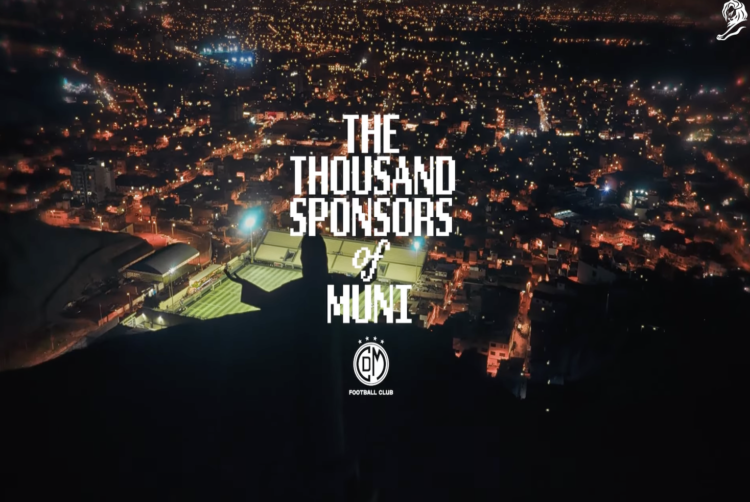
Much like our Grand Prix winner, The Thousand Sponsors of Muni, that’s where the most powerful work this year lived.
Again and again, we were drawn to ideas that explored struggle, resilience, reinvention and belief. Not just the victory lap, but the climb. Not the highlight reel, but the grind behind it.
Because that’s where sport reflects life most honestly.
Final thought for the year ahead
Judging this year’s Entertainment Lions for Sport reinforced something I’ve always believed:
Sport isn’t powerful because of the moments when everything goes right. It’s powerful because of how we show up when it doesn’t.
That’s what fans do. That’s what athletes do. And at its best, that’s what creative work does too.
As our jury president put it in her closing remarks: “the hustle is the whole point”.
And that’s what I’m taking forward this year, leaning into the lows, doing the work and staying close to the process. So that when the highs do come, we’re not trying to buy our way in; we’re already there.
 Lucy Basden-Smith is the MD of Fuse