



Cannes reflections: OOH at Cannes – nothing or everything?
Opinion | Cannes Lions 2026
OOH was everywhere at Cannes Lions, but also almost invisible. Talon’s global CEO Sue Frogley argues that the sector needs to shout louder about its capabilities.
By now, Cannes Lions has generated no shortage of hot takes. The industry has spent the past couple of weeks dissecting the biggest themes, debating the winners and offering predictions about what comes next.
For me looking back, what has stayed with me is something much simpler.
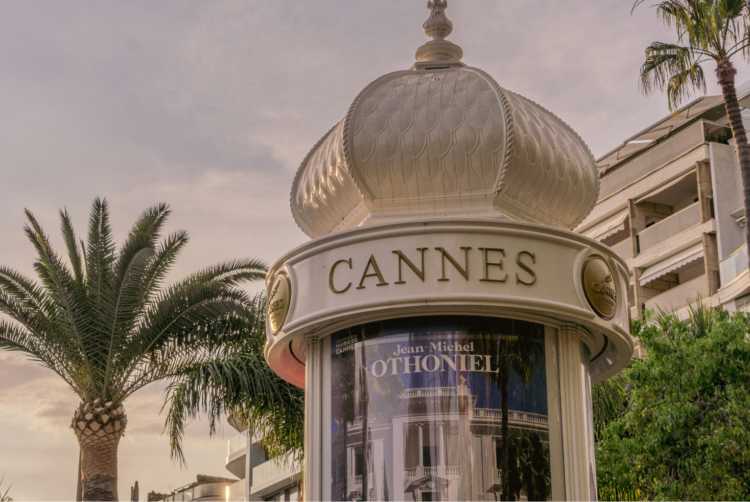
The moment you arrive in Cannes, OOH is impossible to ignore. From huge posters towering above the streets, digital screens lighting up every corner to beach, hotel and port takeovers – even a standout drone show. The festival is quite literally wrapped in OOH.
It is everywhere. And yet, at the same time, OOH remains one of Cannes’ least visible stories.
While the tech giants dominate the Croisette, and the headlines, with increasingly lavish activations, the channel that provides so much of the festival’s physical presence often fades into the background. OOH was everywhere at Cannes, woven into the fabric of the festival, yet at the same time, almost invisible.
It’s a contradiction that says a lot about where our industry is today.
For a festival built on creativity, OOH had plenty to celebrate. Among my favourite examples was Mercado Livre’s Grand Prix winning campaign, which transformed an entire football stadium into a giant QR code that people could actually scan to unlock discounts. It was bold, simple and brilliantly effective – proof that OOH can still create the kind of shared cultural moments that capture attention at scale.
Other standouts included British Airways’ Reflections, which brilliantly showed the fleeting, universal emotion of looking out of a plane window, using real-world backdrops from London to Lagos and adapting creative to changing seasons and weather.
IKEA’s Brighton store launch campaign took on a more playful approach, pairing its iconic products with the inevitability of seagull “mess” to celebrate seaside living with humour and charm.
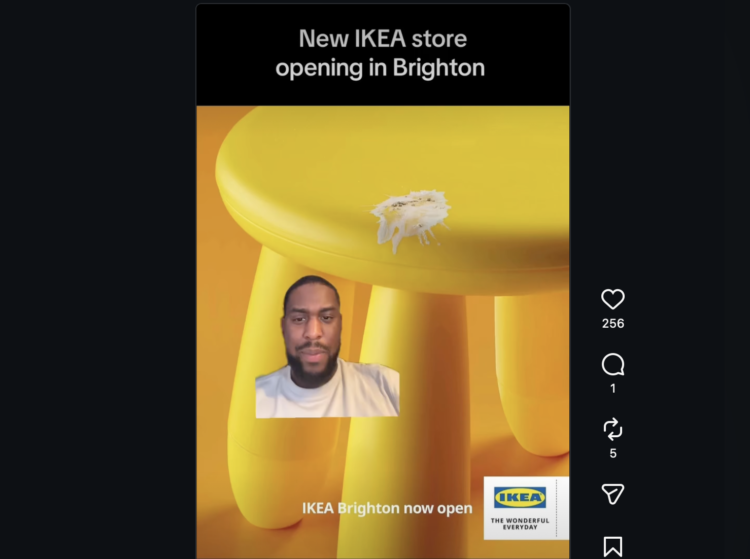
Different ideas, different objectives, but all demonstrating the flexibility and creativity that continues to make OOH such a powerful medium.
I’ve been in OOH for just over two years now, and one thing that always stands out is this: everyone loves posters. Cannes is living proof. Brands instinctively turn to OOH to create presence, signal scale and anchor a campaign in the real world. Even Taylor Swift has embraced the medium, using it to tease new album drops and, most recently, to confirm her nuptials. But despite that universal belief, the medium remains underweight in media investment.
Why?
A comment from James McEwan at Billups stuck with me:
We’re not short on capability; we’re short on volume. We don’t shout loudly enough about what OOH can really do.”
Cannes reinforced that through both the conversations I had and the work on display.
In one discussion about airport advertising, I was asked whether OOH could tailor messaging to different passenger journeys, for example, showing one creative to travellers arriving from Singapore and another to those from New York. Two years ago, I might have hesitated. Now the answer is obvious: OOH can already do that.
Today, OOH is shaped by location, movement, data and context. In retail, that might mean responding to proximity or promotions. In cities, tapping into cultural moments or live events. In airports, messaging can flex by arrival and departure points, flight data, time of day and audience mindset.
That conversation stayed with me, not because it was really about airports, but because it revealed something bigger. If we are still being asked whether OOH can do these things, then as a medium we haven’t yet made our capabilities impossible to miss.
And that brings me back to Cannes, because the festival shows both sides of the story at once. On one hand, OOH is loved, trusted and ever-present. It’s the medium brands turn to when they want to create fame, presence and shared cultural moments. On the other, it is still too often understood only at a surface level – big, visible and broadcast – rather than precise, responsive and sophisticated.
The challenge facing OOH isn’t a capability gap. It’s a perception gap.
We as OOH specialists have a responsibility; we can’t assume the wider industry understands what the channel can deliver today. We need to make use cases clearer, show rather than tell, and connect capability directly to outcomes across the full brand funnel.
The fundamentals that make OOH so powerful aren’t the problem; they’re the strength. Its ability to exist in real environments where people move, meet, shop and travel. Its public nature and the power to create shared moments at scale are exactly why Cannes looks the way it does. What’s changed is how intelligently it can now be planned, measured and activated.
I left Cannes feeling both challenged and optimistic. Optimistic because it’s clear that brands still believe in the power of OOH. Challenged because that belief isn’t translating into the level of investment the medium warrants. There is still a clear need for better articulation and education around what modern OOH can deliver.
So did Cannes teach me anything or nothing? In reality, both. Nothing new about why OOH matters; that was everywhere. Everything about what we, as an industry, still need to do to make sure its full value is properly understood.
Perhaps that is the simplest takeaway of all. OOH is already more capable, intelligent and responsive than many realise. Our job now is to make that impossible to miss.
 Sue Frogley is Talon’s global CEO