



From murals to interactive screens: Why OOH works when people get involved
Week in focus: The Future of OOH
The best OOH briefs should stretch beyond visibility. Reach will always matter, but stronger work asks: What will people remember after they have walked past? What will they tell someone else? What action might they take next?
When people talk about creative OOH, they often talk about how it looks. The mural, the special build, the huge digital screen, the big public moment. But the better question is what that creativity actually does. Does it make people stop? Does it help them remember the brand? Does it give them something worth sharing?
While most ads are designed to be seen, the ones that really stand out today are the ones people want to share. There’s a big difference between the two, and that difference determines whether your OOH campaign leaves a lasting impression or is forgotten as soon as it’s over.
So what does it actually take for OOH creativity to drive impact beyond the space it lives in?
When craft earns attention, it goes further
OOH has a natural strength here because it appears in public and delivers mass reach. But the strongest OOH ads start with a simple human question: why would someone stop for this?
We consume OOH while on the move and often take in messages subliminally without realising it. But every so often, something breaks that rhythm, like a special build people stop to photograph, a screen that makes a crowd look up, or a mural that makes a familiar street feel different for a moment.
Google’s recent Arsenal mural worked well because it was built to feel genuinely of the moment. When Arsenal secured the Premier League title, Sol Campbell and street artist Northbanksy headed to a fan mural next to Holloway Road station and changed the wording from ‘Make it Happen’ to ‘Made it Happen.’ A simple, perfectly timed creative switch that felt like the neighbourhood’s own response to a historic night. 2.2m views followed within a week, with organic coverage that no media plan could have delivered.
PlayStation’s Ghost of Yotei campaign applied the same thinking to a special build. The campaign aimed to reach beyond those who saw it in person and secured millions of views online. But that reach came from the strength of the physical execution. The special build gave people something real to react to, which meant the online content carried the energy of the offline moment.
That is why craft matters. People share things because they give them something to say. Maybe the work feels beautiful, funny, perfectly timed or rooted in a place they care about. Maybe it makes them feel part of a bigger cultural moment. When done well, a mural feels less like a message placed in a media space and more like something that belongs where it appears.
Memory is where creative OOH becomes effective
The danger with talking about shareability is that it can quickly become a conversation about views, reposts and earned media. Those numbers matter, especially when they extend a campaign’s value beyond its original location. But the real value lies beneath: attention, memory, and action.
Earned reach is not just a vanity metric when it comes from an idea people actively choose to share. It extends the value of the original media investment, creates additional brand encounters and can help turn a physical activation into wider cultural conversation.
Experiential OOH is effective in this context because it creates memories rather than impressions. From small, thoughtful interactions to larger-scale experiences, the strongest work gives people a reason to stop, engage and talk about what they’ve seen.
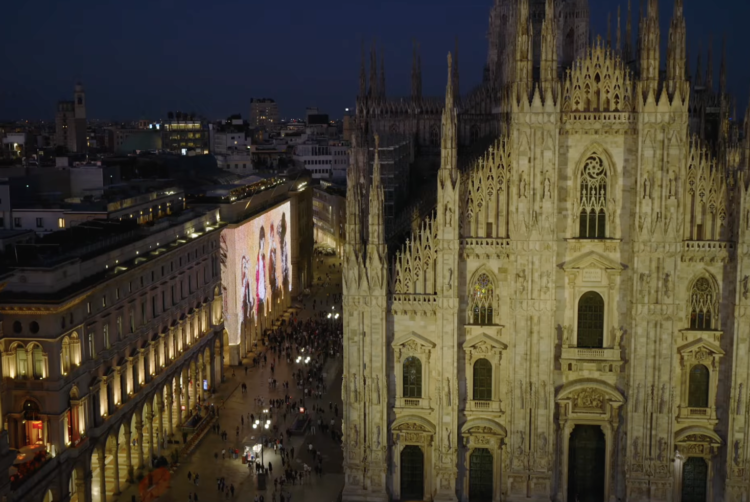
One recent example is Universal Pictures’ promotion of Michael Jackson’s biopic through a first-of-its-kind architectural activation that transformed Milan’s iconic Rinascente into a dazzling canvas for storytelling (pictured).
Choreographed illumination patterns traced the artist’s legendary career arc, stopping high-footfall crowds in their tracks and delivering massive cultural impact. The world-first campaign completely fulfilled Universal’s ambition to drive immense excitement and captivated over 200K in-person visits during launch week, which exploded online with over 4m social media views, ultimately supporting a triumphant box office opening.
That is why the best OOH brief should stretch beyond visibility. Reach will always matter, but stronger work asks what people will remember after they have walked past. What will they tell someone else? What action might they take next?
How physical presence turns attention into trust
When a brand brings its promise to life in the real world, the idea becomes tangible. People can see it, film it, stand near it and watch others react to it. That physical presence makes the creative feel less like a claim and more like proof.
That credibility is what turns attention into something more valuable. People are more likely to talk about, recommend or share work that feels authentic, relevant and real. And when they do, the campaign earns a life beyond the original site. That is how creativity moves from making public spaces more interesting to driving real impact for brands.
 Nicole Lonsdale is the chief client officer at WPP Media OOH