



How effective is the effectiveness debate?
Opinion
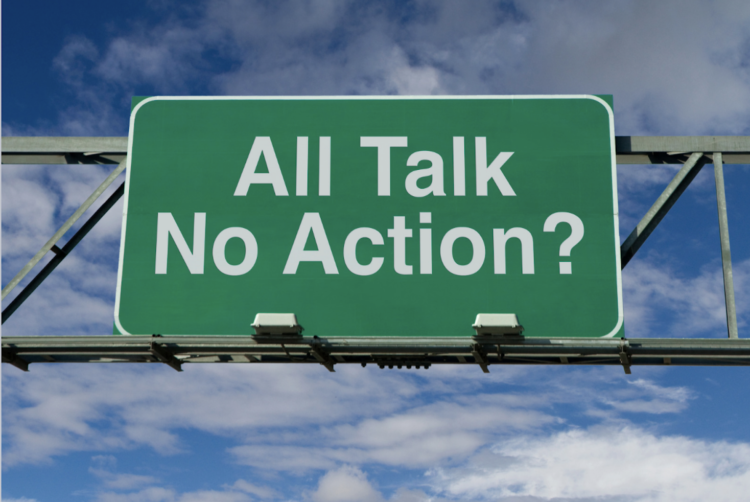
Kimberly-Clark’s Christof Baer from the ISBA Media Leaders group discusses how to turn talk into action and progress effectiveness.
We all live in an uncertain economic environment, which is making businesses and their customers more cautious in buying. Couple that with huge technological changes underway and structural changes in the industry, such as mergers/demergers and organisational restructuring, and no wonder ‘effectiveness’ remains a perennial topic for advertisers, agencies and media owners alike.
Yet, since I started in marketing and media nearly 30 years ago, the effectiveness debate hasn’t moved on substantially.
It feels like Groundhog Day. I still hear the same challenges amongst peers year after year. Brand vs. Performance. Marketing Mix Modelling vs. Brand Equity. “Upper funnel” vs. “Lower funnel”. CFO vs. CMO. I am tired and frustrated, and it’s time to change from debate to delivery.
The measurement conundrum
Given the pressure on media budgets and the need to meet quarterly and annual shareholder targets, effectiveness has long been one way for media leaders to defend, if not grow, investment.
When CFOs face pressures on the top or bottom line, marketing practitioners must be able to justify and explain the impact of advertising on business outcomes – or risk a cut.
Luckily, with decades of sophisticated research and statistical methods, and more data than ever, this should be a breeze, shouldn’t it?
The long and short of it
It seems that Marketing Mix Modelling (MMM) is the core tool most advertisers use to understand, optimise and justify advertising investment.
MMM has many benefits. When done right, I have experienced that MMM becomes an actionable tool that allows teams to forecast and model changes in the media mix, run pilots and AB testing across channels or creative, and identify sufficiency and saturation levels, points of marginal returns and more.
However, typically, MMM explains only short-term effects (three to six months to a year) and not long-term brand effects. It is, by its nature, backwards-looking and lagging. In the wrong hands, MMM could lead to hyper-obsession with short-term ROI at the cost of long-term brand health, eroding effectiveness over time.
When it comes to long-term equity, marketers also use well-established tools. Whether it is brand trackers or standardised Brand Equity models from market research players, these tools can help practitioners detect trends and dynamics that are missed when focusing solely on monthly business outcomes or short-term ROI from MMM.
But then those long-term studies have their limits as well, thus requiring broader judgment to inform marketing changes that address any opportunities and risks identified.
“Brand” and “Performance”
One starting point is to broaden the discussion of effectiveness beyond a single ROI figure.
Identifying several levers for growth could open practical ways to improve business outcomes through advertising and media effectiveness: What are the short- and long-term effects of a particular media touchpoint or campaign, or of the overall brand? What are the factors beyond media effects that explain sales shifts? What is the media impact not just on sales, but on brand equity and customer acquisition?
Creative Effectiveness: What is the effectiveness of a piece of creative, and the long-term cumulative impact of creative ideas and content? How suitable and effective is the creative for the media channel? How can testing and behavioural science help?
Investment: What is the optimum investment? What are we optimising for – short-term profit, volume/ sales growth, or long-term growth?
The opportunity is to consider those levers holistically. How do they interact, and how could we achieve a multiplier effect by improving not just one but several levers?
How can we get this Brand Flywheel going? To go beyond one KPI and one measurement approach alone and acknowledge what we are all trying to do is to triangulate towards true customer behaviours exposed to advertising.
A starting point is this: Can we move from ‘how much budget do we need and can we afford’ to ‘how could we accelerate growth by the multiplier effect of investment x media effectiveness x creative effectiveness?’ And what does this mean in terms of how we collaborate within our organisation, and with agencies and media owners?
Breaking down siloes
One could argue that the effectiveness debate is, at its heart, organisational and behavioural rather than data and tools alone. With all the long- and short-term tools at hand, this still requires finesse and collaboration to drive business decisions that shift the needle.
One way to move the debate on is the democratisation and education of wider functions, and in particular Finance, on the value and impact of advertising.
Too often, a change in CFO or ownership changes the attitude towards advertising. But it is easy to bemoan this. The truth is that we all in marketing have to step forward and take accountability. Why aren’t there more businesses holding marketing 101 training or advertising for finance, for example?
The industry and organisations also need to take their obligation to be inclusive and develop talent.
Too often, we recruit and train narrowly. We label individuals and teams as “performance” and “brand”, thus setting up siloes that ignore the interconnected nature of advertising effects. We set them up with singular, siloed KPIs that build in conflicts that harm brand growth.
So how could we move on from debate to delivery?
Coming together to identify the right “North Star” that matters to the whole business, across marketing teams, finance, procurement, agencies, and wider teams, is an important start. But this needs leadership.
Once everyone in the leadership across functions understands and acknowledges the business and personal objectives, the need for both long-term brand equity growth and short-term effectiveness, this formalises the fact that everyone has accountability and impact on both.
I’d like to think that during my career, we can work together to move the effectiveness debate on and start actually delivering effectiveness. I am really pleased that ISBA has made it one of its strategic ‘big bets’ and I will certainly be leaning in.
Let’s stop pitting brand and performance against each other, and instead focus on how media, creative and investment can work in concert to drive growth.
The future of effectiveness isn’t about choosing sides — it’s about building a shared language and ambition that unites marketers, finance, agencies and media owners around what really matters: brands that last.
 Christof Baer is head of performance marketing for the UK and Ireland at Kimberly-Clark and a member of the ISBA Media Leaders working group.