



How heritage publishing brands are evolving

Publishing week in focus: Interview
Reach’s strategy director discusses how publishing brands are evolving to meet audiences where they live, and how the role of video, social and live experiences is deepening audience relationships.
Publisher brands are pushing beyond the printed page and the website. What is behind that move?
Audiences don’t expect brands to exist in one place because their own media habits don’t work like that. They discover stories on social media, watch videos, attend live experiences, and visit trusted websites, often within the same hour. This has changed how a modern publisher strategy needs to work, and has shaped our ‘Where People Live’ proposition. Instead of expecting audiences to come to us, we have to show up where they already spend their time.
Trust is the key to getting this right. A reader who values a brand for its journalism will happily engage with that same brand through a video series or a live event, provided the quality holds.
That also creates much richer opportunities for advertisers. Trusted brands can reach people across multiple touchpoints while maintaining the consistency and credibility that gives campaigns greater impact.
How do you turn that vision into something audiences experience and brands benefit from?
It begins with a clear understanding of what audiences actually want, then adapting how we serve them. This means investing in formats tailored to each platform, not simply repurposing print content for screens.
It also means creating the right structure around those brands. That includes dedicated creative teams and video specialists – which is now covered by Reach Studio and our growing live experiences business – ensuring that every platform and format is tailored towards the audience and brand.
It also involves developing commercial opportunities that feel native to each title; a fashion audience responds to different things than a sports audience does, so the content and partnerships should reflect that.
That’s exactly why we’ve invested in social-first formats and original programming built around specific communities.
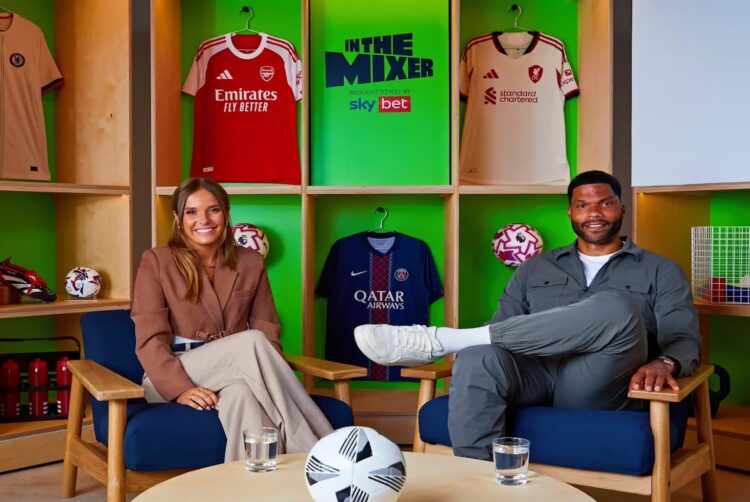
Series such as OK! Loves and podcasts, including Back Ten on All Out Rugby League and In The Mixer on All Out Football (pictured), have grown because they reflect their audiences.
In fact, In The Mixer, created in partnership with Sky Bet, was recently named Best Partner Podcast at the Publisher Podcast Awards, recognising the value of building original formats around genuine audience interests rather than simply adapting existing content.
How do you know when a brand is ready to grow into something new?
Strong publisher brands have earned trust over many years. This trust gives us approval to grow into adjacent areas while staying true to what audiences value.
A brand known for celebrating people, like Pride of Britain, can extend credibly into live events. A brand known for style can move into commerce and video, as done so successfully by OK! Loves and OK! Beauty Box. Extension lets us deepen the connection we already have with an audience. When done with care, it strengthens the original brand rather than diluting it, because each new expression reinforces what the brand stands for.
OK! has changed a great deal in recent years. What lessons does this evolution hold for other titles?
OK! is a good example because we’ve deliberately evolved it into a much broader lifestyle brand. Celebrity news remains important, but audiences now also engage with fashion, beauty, interiors, and money content through formats such as Off The Rails and Cash Queens. The success of OK! Beauty Box has also shown that audiences are happy to engage with the brand beyond publishing when the extension feels authentic. That gives us confidence to continue developing new experiences around the brand.
A trusted name gives you room to move into new territory, provided the move feels authentic. We know audiences respond to OK! across these areas, so extending the brand into them is a natural step. A well-loved brand is a platform for growth, not a fixed idea to preserve in its original form.
That same thinking is now extending into live experiences and retail activations. Experiences like OK! Loves Shopping creates another way for audiences to engage with a brand they already trust, while giving retailers opportunities to drive footfall into stores, deeper customer experiences and drive sales.
Where does social media now sit in the priorities of a modern publisher?
Social has evolved far beyond being a route back to publisher websites. It’s now where audiences consume journalism in its own right. The latest Reuters Digital News Report reflects that shift, with social media and video networks, for the first time, being the single most widely used way of accessing news online. We’ve taken this on board, and our focus has become creating journalism that feels native to each platform while maintaining the editorial standards people expect.
The balance is the hard part. Anyone can chase reach on social, but a passive scroll and an active community are very different things. Our advantage is that we already bring passionate audiences together around shared interests, and social gives us a way to serve those communities in formats that match how they actually engage.
Video is increasingly central to how audiences consume journalism. How has that changed the way you think about publishing?
Reuters’ latest Digital News Report showed video continues to grow as a source of news, particularly among younger audiences, so publishers need to think creatively about how stories are told rather than treating written articles as the default. The format lets us tell stories with sight, sound and motion, opening engaging environments for advertisers who want to reach audiences in premium, brand-safe surroundings. When these aspects genuinely connect with audiences, the scale can be significant. Since the start of the FIFA World Cup, our All Out Football content has generated more than 10m views, showing the appetite for original, creator-led sports coverage. We’re also seeing recognition for investing in quality formats, with our podcast work recently recognised at the Publisher Podcast Awards.
Ultimately, video isn’t an extension of journalism anymore. It is journalism and is often better suited to the platforms our users are already spending a lot of time on. That has shaped how we’ve invested across our brands, building dedicated teams and original formats designed specifically for video rather than adapting articles after the fact.
More publishers are moving into live experiences and commercial partnerships. What opportunities does this create?
Audiences want deeper relationships with the brands they follow, and live experiences create shared emotions, helping people build stronger bonds with each other and with the brand that brought them together.
Our events work extends trusted brands into physical moments that people choose to be part of. Retail partnerships offer another route, giving people a reason to visit beyond the transaction itself. The opportunity is not just commercial. These extensions let us turn a loyal audience into an active community, which is of far more value to our partners and to us.
Pride of Britain is a clear example. It’s a trusted editorial brand that naturally extends into a live experience, since people already have a strong emotional connection to it.
We’re seeing similar opportunities emerge through newer concepts such as OK! Loves, where editorial expertise helps create experiences that audiences actively want to attend, rather than simply observe. We’re only at the beginning of that journey, too. There are some very exciting developments in live experiences on the horizon that reflect our confidence in this space and the role it will play in the continued evolution of publisher brands.
How do advertisers benefit from this broader approach?
Advertisers increasingly want integrated campaigns with more audience touchpoints, which are more effective than those with one-off placements, and that’s what a publisher with multiple channels can deliver.
We can help a brand reach audiences across editorial, social, video, commerce, and live experiences through a single connected strategy. A campaign that begins with an event can generate editorial coverage, social conversation, and video that continue to reach audiences long after the day itself.
Partners get something with lasting value, not just a single moment in the spotlight. They also benefit from the agility of working in a live newsroom, where campaigns can respond quickly to the news agenda through timely creative executions that feel relevant in the moment, as seen with Tesco Whoosh’s World Cup cover-wrap activation.

What will define successful publishers over the next few years?
The publishers who thrive will keep evolving while protecting the trust they’ve built with audiences. Innovation is essential, yet it works best when grounded in strong journalism, a distinctive brand and a deep understanding of how audience behaviour is changing. The temptation is to chase every new format, but scaling reach without relationships rarely lasts.
The brands that win will treat their heritage as a foundation to build on rather than a constraint. They’ll create content, experiences, and partnerships that people actively choose, while building on the trust they’ve earned in local communities and at the national level. That combination gives publishers a distinctive role in helping businesses of every size, from local independents to national brands, connect with audiences in ways that feel relevant and meaningful. Success will increasingly be measured by the strength of those relationships, and not simply the scale of the audience.
Trust is the hardest thing to earn and the easiest to lose, so guarding it while you evolve is the real discipline.
 Charlotte Wells is the strategy director at Reach