



Revelations and under reporting of RAJAR at The Times
Opinion
Ray Snoddy heralds another journalistic investigation but finds The Times wanting in its reporting of the listener figures for its own radio station.
The Times and its associated publications have been rightly praised in recent weeks for reports from Gabriel Pogrund’s exposure of the financial affairs of Reform UK to Martyn Ziegler’s devastating takedown of FIFA President Gianni Infantino.
It’s time to add another name to the list: the previously unheralded Times Higher Education reporter and deputy features editor, Jack Grove
In truth, we may only know about the impeccable research of Grove because, quite disgracefully, he was investigated by the Metropolitan Police for “harassing” the star Cambridge sociology professor Jason Arday.
The “harassment” consisted of three polite, factual emails seeking information and offering a right of reply on allegations of plagiarism and overstating his academic, sporting and charitable achievements.
In fact, Grove produced a 63-page report on the black academic, and it is largely thanks to him that Arday is now a former Cambridge professor, although The Times’ reporters have also taken the story and run with it.
Grove, who did not know he was under investigation until informed by the police that the matter had been dropped, did at least receive an apology from the head of the Met, Sir Mark Rowley.
Naturally, Arday used the race card against his accusers, even though the case against him had nothing to do with who he was, and was all about what he had done, or more precisely what he had not done.
It was reminiscent of the attacks on the paper’s late Northern correspondent Andrew Norfolk, who successfully exposed the groups of men, mainly of Pakistani origin, who preyed on vulnerable girls.
Trivial shortcomings reveal room for improvement
From the big stories to the daily examples of analysis of the latest news in a useful form of fact-checking, The Times is doing a great job.
For instance, yesterday the paper did not just report the Reform leader’s defence of his bizarre plan to send prisoners to El Salvador. In the body of the story, the whole thing was debunked by setting out how similar plans had failed in the past.
But even the best of journalistic enterprises can be improved even if the shortcomings seem relatively unimportant – even trivial at first glance.
One important test of the impartiality and trustworthiness of any media organisation is how it reports on its own affairs, or matters concerning associated organisations.
The Financial Times was always scrupulous about treating news about itself exactly like any other story, and there is no reason to doubt that it still is.
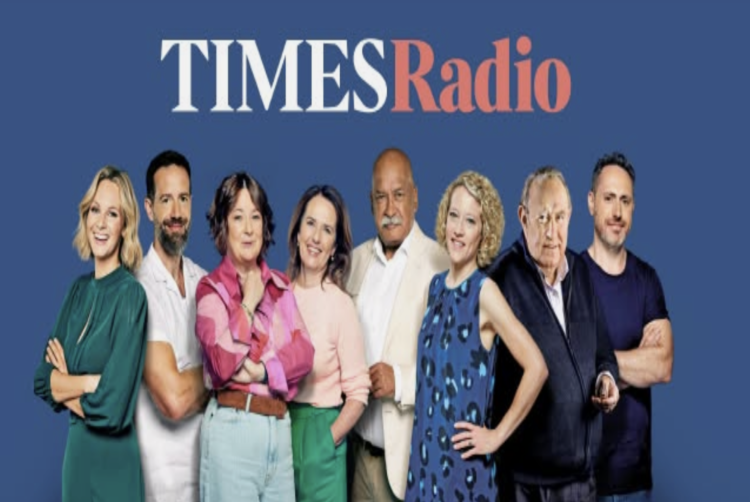
However, it seems the same cannot be said about The Times’ coverage of the UK radio industry and the performance of the paper’s broadcasting arm, Times Radio.
The idea of a national newspaper setting up a perfectly respectable commercial radio station is an admirable example of brand extension.
How the paper covers the performance of its radio station is less so.
At least when The Times covers how the station is doing, the ownership link is explicitly mentioned, something that would not necessarily have happened years ago.
One of the set pieces of the radio year is the quarterly publication of the RAJAR listening figures, when we find out who is up and who is down, and whether the once-dominant BBC is still losing ground to the expanding commercial radio sector.
Last week, The Times readers learned that Times Radio, which launched in 2020, has grown its audience to a new record level, reaching 660,000 in the second quarter of the year, an increase of 7% year-on-year.
Spearheaded by its breakfast show, total time spent listening to the station rose by a fifth to 6m hours a week.
A few more paragraphs were devoted to some of the station’s highlights of the quarter and noted the contribution of new breakfast presenter Kate McCann.
A laudable performance by any standard. But that was that. There was no mention of any other radio station or how the industry overall was doing.
Now, perhaps the reporter involved did a much longer piece that also covered other radio stations not owned by News UK, the publisher of The Times, and the piece was carelessly cut.
Perhaps.
If so, a quick word from the editor to stop such incomplete coverage in future should do the trick.
Commercial radio takes another bite out of the BBC’s audience figures
By way of comparison, BBC Radio 4’s breakfast offering, the Today Programme, despite increasing competitive pressure, not least from Times Radio, still managed 5.8m listeners across its six days of broadcasting.
As the Daily Mail, which does not have a radio station, reported, the real story, which The Times surprisingly failed to cover, was the rise of commercial radio against the BBC.
The Mail gleefully reported that commercial radio had taken another bite out of the BBC’s audience figures as the Corporation dropped by 750,000 listeners over the past year, a loss that is, of course, more than the total audience for Times Radio.
BBC Radio 1 had an audience of 6.9m in the quarter, down 579,000 on the same period last year.
Radio 2, despite scandals involving former presenters, is still the UK’s most listened-to radio station with 6.8m listeners, a drop of 2%, something Times readers were unable to learn.
Unfortunately, the Mail was unable to include news of the 7% rise in Times Radio’s audience, possibly because there is little crossover between Mail readers and listeners to the more upmarket Times Radio.
Most in the media try to put the best possible shine on their achievements and downplay the disasters, but from The Times, still aspiring to be a newspaper of record, surely more and better is required.
It may be a small thing, but such incomplete coverage of any other aspect of life would never be tolerated by The Times.
Quality newspapers should bend over backwards to cover their own business outlets with greater rigour and comprehensiveness and never allow themselves to produce puff pieces.
Ultimately it is a litmus test of integrity – albeit of small things.
It is the sort of flaw that can be fixed in seconds by an editor deciding to be better, fairer.
Then we can get on with admiring more of the groundbreaking scoops flowing from The Times.
 Raymond Snoddy is a media consultant, national newspaper columnist and former presenter of NewsWatch on BBC News. He writes for The Media Leader on Wednesdays — bookmark his column here.