



The glass walls that still divide us
Opinion
Opinion | Future of Talent and Leadership Week in Focus
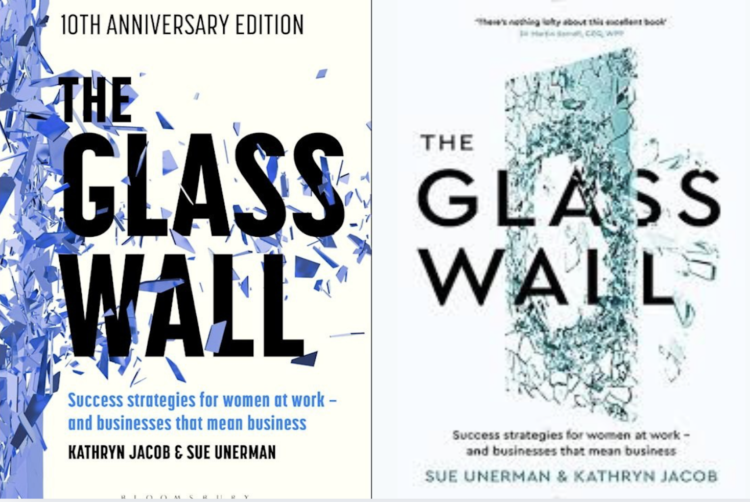
Ten years ago, Sue Unerman published The Glass Wall, a guide for driving change in gender equality and improving women’s careers. In new interviews for an updated edition, she reveals what’s changed.
A decade ago, there was a lot of discussion about how to bring real fairness into the workplace. Ten years on, companies have made significant efforts to change culture and train leaders in new attitudes; while there have been steps forward in some respects, much more needs to happen for women to achieve the careers they deserve.
What are Glass Walls? They are invisible workplace barriers that prevent women from rising to the top in the proportions they should. Firstly, because of the proportion of women in the workplace overall, and secondly, because of their talent.
In some respects, the context for women at work has changed significantly in the last decade: the MeToo Movement brought a spotlight on harassment; the Covid pandemic brought a step change in remote working from home; and menopause is now a topic of discussion, which was unmentionable at work a decade ago. And, for everyone, AI is revolutionising the workplace.
There have been some visible changes in culture and politics. In the UK, we currently have the first woman Archbishop of Canterbury. We (briefly) had the first woman as Chancellor of the Exchequer. In the US, we have had the first woman vice president. Mexico has had the first woman president; Italy and Japan have appointed the first woman prime minister. Women’s sport attracts bigger audiences worldwide. A panel show can have more than one woman comedian, which would still have been a surprise in 2016.
On the other hand, the gender pay gap has not changed materially; women still take on the majority of housework and caring responsibilities, and social media has arguably put even more pressure on young women to have a perfect career and life. Weight loss drugs and Botox have made a perfect body seem attainable, if not mandatory. Balancing on the high wire of success requires constant exhausting effort.
A geopolitical backlash against diversity and inclusion measures has emerged. We know of more than one head of diversity who has changed at least their title, if not their role, in the last 24 months.
What’s changed in the workplace?
According to new interviews, so-called “banter” in the workplace has risen, along with more people saying out loud what may have long been the underlying narrative. One woman described being made redundant while on maternity leave. When she challenged this by saying that she should, at least, have had an interview for a new role, she was told:
Sure, get HR to compel me to give you an interview. It won’t change the outcome.”
Remote working is far more common. It can give the appearance of a better balance for women, especially if they are mothers or caring for relatives. However, our interviews showed that this better balance often meant more burdens, without support, for women.
Some senior leaders privately told us that more women than men on their teams were working remotely. They said that when they worked remotely, they were invisible and certainly not up for promotion or new responsibilities in the workplace. Remote working is a double-edged sword.
This is also how we see the spotlight on menopause. Clearly, a condition which affects half the population should not be taboo. But older women are losing corporate roles at scale, especially in our sector in the UK.
The experience of menopause is very individual. A blanket policy will not suit everyone. Every woman in mid-life will face consequences, whatever her experience. If you are over 45, there is a distinct chance that you will now be considered perimenopausal or in menopause, due to the increased awareness. In a competitive, shrinking workforce, this will be used against you by those people who are competing for promotion, or even just to retain their jobs.
AI judges women differently than men
A major UN Women study found that 44% of AI systems show gender bias. AI routinely associates women with domestic roles and men with business success.
Professor Geeta Narlund, the chair of Pipeline, a consultancy for developing women leaders, wrote recently:
Women’s ambition, especially amongst younger women, is soaring, something that deserves celebration. Yet the barriers they face are not disappearing; in many ways, they are multiplying.”
The Pipeline’s report on women in work states that almost half of young women entering the workplace worry that AI will replace them. It is certainly true that some business models will change radically because of AI and that this creates economic pressure which, in turn, may well lead to a wider gender pay gap.
It is also true that women only account for around a fifth of AI professionals worldwide. This lack of diverse perspectives increases the chances of reinforcing traditional gender stereotypes in society.
Overall, the advice and recommendations of the original edition are still needed. Glass walls still exist in the workplace, and new ones have emerged.
Some argue that women have more options for a fulfilling career today. Younger women run successful start-ups in the creator and influencer economy, and women have dropped out in their 40s and 50s to set up their own businesses. But large businesses are still losing female talent, experience and potential, and failing to benefit from better gender balance.
In 2016, we advised any woman at work never to be the person who pours the tea in a meeting, because it would make her look like the assistant or most junior person in the room. Is it time for us to change that recommendation? Well, 10 years on, men still expect the woman to pour the tea, and unless you are the CEO, or you’re trying to lull them into a false sense of superiority, then we would still say: don’t pick up that teapot.
As a woman in the workplace, you need to take up space
Don’t minimise yourself, and don’t wait for permission to speak up or share your opinion. You have earned the right to play a significant, senior role.
Narratives still run that women can’t succeed at every career stage, despite inclusion initiatives and corporate training. As a young woman entering the workplace, you might find older men unlikely to sponsor or mentor you for fear of how it will be perceived post-MeToo. As you reach the age when you might partner up and have children, management often feels insecure about your time out of the office.
Paternity leave is still nowhere near equivalent in most organisations. As you become an empty nester, there might now be an anxiety that the menopause will affect your judgement at work.
That’s why we’ve updated The Glass Wall. And its core messages remain more relevant than ever:
If you are a business that wants the best talent, you can still gain an edge over competitors by breaking down the glass walls for talented women in the workforce.
And if you are a woman with career ambitions, the techniques in the revised 10th Anniversary Edition of The Glass Wall will help you succeed and achieve the career you deserve.
The 10th Anniversary Edition of The Glass Wall: Success Strategies for Women at Work and Businesses That Mean Business by Kathryn Jacob and Sue Unerman is published by Bloomsbury. At all good bookshops and directly from the publisher.