



The Mexican wave effect: Brands must harness social proof from small communities
Opinion
Football fans remind us that brand growth comes from earning trust within smaller, connected groups where recommendations carry weight and behaviour is visible, writes Herdify’s CEO.
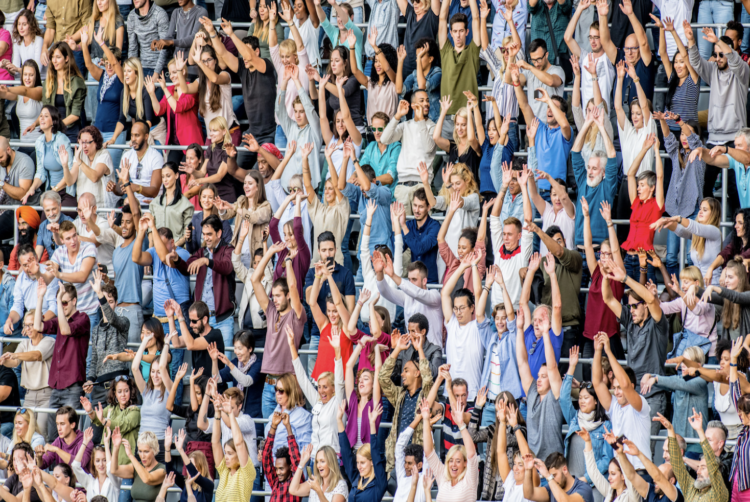
The Mexican wave is one of the world’s greatest demonstrations of social proof in action. It always starts the same way. A handful of fans stand up and throw their arms into the air. A few seconds later, the next section follows. Before long, an entire stadium of tens of thousands of people is moving as one.
Nobody gives instructions; there are no organisers directing the crowd; people simply observe what others are doing and decide to join in. It’s human behaviour in its purest form.
For marketers, that’s an important reminder. Growth doesn’t happen because everyone changes their mind at once. It happens because behaviour spreads through groups, one person at a time.
Sport is changing, but human behaviour isn’t
Sports audiences are growing faster than ever.
The Women’s Six Nations has seen attendance grow immensely. Padel has exploded across Britain, increasing from around 15,000 players to 860,000 in just six years. And the FIFA World Cup has seen record viewership. While popular sporting events are garnering even more attention, industries surrounding sport tell the same story. In gaming and betting, players who participate together generate more value and are retained longer than those who engage alone.
These are very different markets, yet they all point to the same conclusion. Fans spread.
Fandom no longer belongs solely to season-ticket holders. Take football as an example. Today’s fans might attend matches up and down the country, play the sport themselves in a local community team, watch highlights on social media, join FIFA World Cup fantasy leagues, place a bet with friends or simply become the person who recommends the next big thing to everyone around them. Participation is happening in the real world, and social behaviour is contagious, providing a massive opportunity for brands.
Why people always move first
Behavioural science helps explain why the Mexican wave works so reliably.
A small proportion of people are natural initiators. Research into the diffusion of behaviour consistently suggests that only a relatively small number of people are willing to act without seeing others do so first.
Everyone else has a threshold. Some people only need to see two others participate before joining in. Others may need 10, 20 or even an entire section of the stadium before they feel comfortable following. The exact number varies, but the underlying psychology remains the same. Humans copy humans.
When uncertainty exists, people look sideways before they look forwards. We all default to one of two behaviours: continue doing what we’ve always done, or copy the people around us. That’s why real-world social proof remains one of the most powerful forces in marketing.
The biggest mistake brands make
When it comes to sport, there can be a lot of change. We have new sports, shifting attitudes, and a calendar that keeps evolving, whether it’s fixtures or new leagues year to year. What worked last season might not exist in the next one. So how do you build a marketing plan around a world that won’t sit still?
Jeff Bezos says it’s smarter to build a strategy around what won’t change over the next 10 years rather than what will. The way humans behave is one of the things that’s been consistent. People will continue looking to others for reassurance. They’ll continue trusting recommendations over advertising. They’ll continue following communities they identify with.
Brands that understand this stop chasing every new platform and start building systems that encourage people to influence one another naturally.
Adoption happens locally
Another big misconception in marketing is that adoption happens nationally.
In reality, it happens locally. Most people live surprisingly local lives. We spend most of our time interacting with the same neighbourhoods, clubs, workplaces and friendship groups. These are the places where trust already exists and where behaviour spreads fastest.
Every running club, grassroots football team, padel club, supporters’ group or workplace has its own version of the Mexican wave waiting to happen.
Rather than waiting for global sporting moments like the FIFA World Cup or Wimbledon, brands should ask a different question: where are people already influencing each other?
This changes the way brands should think about sponsorship and partnerships. The role of marketing isn’t to manufacture advocacy, but to identify where it already exists, support it and make it easier for others to join in.
Whether you’re a brand investing in sport or a sports organisation looking for commercial partners, understanding where your fans are most influential is what turns a sponsorship from a logo on a shirt into genuine commercial value. As with the Mexican wave, it might look like one enormous movement, but it’s really thousands of individual decisions made one after another.
Where the next wave begins
While we might have seen a few Mexican waves during the FIFA World Cup, it reminds us that movements never begin with everyone. They begin with a few people willing to stand up first, then spread naturally through the surrounding communities.
The same is true for brands. Lasting growth rarely comes from targeting the biggest possible audience. It comes from earning trust within smaller, connected groups where recommendations carry weight and behaviour is visible.
Every club, workplace, friendship group and local community has the potential to become the next wave.
 Tom Ridges is the CEO and founder of Herdify