



VHS is 50. Is your media plan stuck on rewind?
Opinion
The smartest media plan isn’t necessarily the one that looks most like last year’s. It’s the one that best reflects how your audience behaves today, Snapchat’s general manager UK writes.
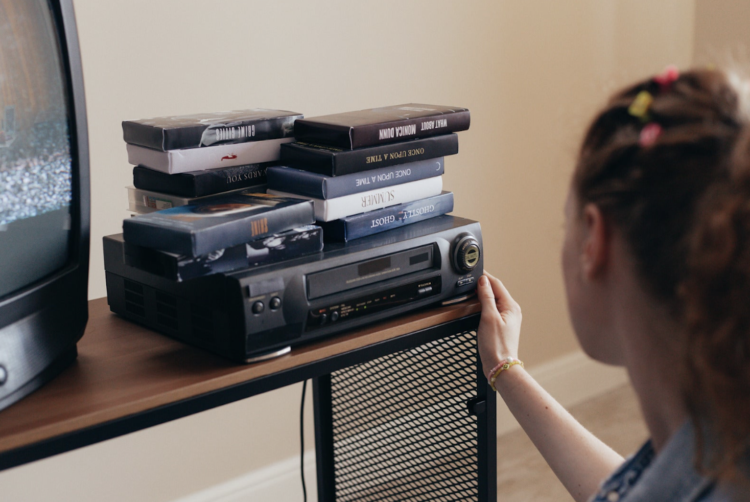
It’s hard to believe it’s been 50 years since the first VHS recorder went on sale.
I can still remember the ritual of family movie night. Putting the tape into the player, settling down in front of a slightly grainy picture and, of course, rewinding it when you were done.
Now it feels wonderfully nostalgic.
But VHS also changed something fundamental. For the first time, viewers had real control. We could record television, watch it when we wanted, pause it, rewind it and fast-forward it.
The assumption that audiences would simply consume media when and where broadcasters decided suddenly looked outdated.
Half a century later, and I believe there’s a useful lesson in that for our industry.
From VHS to DVDs, streaming and now short-form video, each shift in technology has changed our consumption habits. What’s most remarkable is how quickly each innovation has changed our expectations as audiences. What was once revolutionary is taken for granted and becomes the new norm.
Even as technology and devices change, one common thread remains for media planners. It’s very easy to assume that the way people consumed media a few years ago is the way they will consume it tomorrow. But the only constant in video today is change.
We’re incredibly receptive to change as consumers. But are media planners?
Comfort is expensive
Established media plans are comforting for a reason.
When budgets are under scrutiny, familiar channels come with familiar benchmarks, metrics and ways of explaining investment internally. And marketers are under more pressure than ever to demonstrate what every pound is doing.
That discipline is a good thing, but there is a difference between using historical performance as evidence and allowing history to dictate the plan.
I believe that the smartest media plan isn’t necessarily the one that looks most like last year’s. It’s the one that best reflects how your audience behaves today.
That matters commercially. If attention has moved but investment hasn’t, marketers risk paying for familiarity rather than effectiveness. And if the role a platform plays in someone’s life has changed, simply buying it in the same way as before can mean missing the very behaviours creating new opportunities for brands.
Follow the behaviour, not the habit, to spend smarter
People don’t consume media according to our planning cycles. Their habits change gradually, then suddenly, and often without us even noticing.
A decade or 15 years ago, for example, we might have planned around a TV audience very differently than we do today. People might watch a programme alone, catch clips on social media, watch creators review it, or stream the whole series weeks later. Then, discuss their thoughts with friends and family in group chats.
On Snapchat, Chat is our most-used tab. That tells us something important about why people are there: much of the experience is about communicating with people they actually know.
The way people use these platforms is much more varied than simply consuming content, and media planning needs to reflect that complexity. That makes it increasingly important to look beyond the channel plan itself and understand the behaviours underneath it. Because sometimes the biggest risk is assuming the old way still reflects how people spend their time.
This isn’t about abandoning tried-and-tested media or chasing every new format. When budgets are tight, experimentation without discipline is no better than sticking rigidly to the old plan.
Good media planning is about the alchemy of balancing a wide range of channels. It’s simply important that planners consider what each platform brings, what behaviours offer new and exciting opportunities, and that – more than anything else – they resist autopilot.
It should start with the audience and their behaviour, rather than forcing audiences into the shape of an existing media plan.
That means looking beyond reach and frequency in isolation and asking harder questions about how people discover, engage with and respond to content today.
It means understanding what different platforms are actually for in people’s lives, and how they complement one another rather than treating them as interchangeable boxes on a spreadsheet.
And it means leaving enough room in the plan to respond when behaviour changes.
That’s how brands will find the opportunities emerging in private conversations, AI-powered experiences, maps, creators and whatever comes next.
The magic of VHS is that one of its great innovations was giving people control. Viewers no longer simply accepted the schedule they were given; they could record, pause, and rewind on their own terms.
Fifty years later, audiences have more control than ever over what they watch, when they watch it and how they discover it. But that means where they choose to put their attention is more valuable and personalised than ever, for planners who can keep up with each behavioural shift.
Our industry is incredibly good at talking about change. We have become less good at understanding what that change means for the assumptions behind our plans.
So as we look back on 50 years of VHS, perhaps the most useful thing media planners can do is resist the temptation to rewind and instead take control of their media plans for today’s audiences.
 Jake Thomas is the general manager, UK, at Snapchat