



What an empty room can teach us about effective advertising
Opinion
WPP’s David Wilding went to see another David describe a room, which inspired four takeaways on how effective communication works.
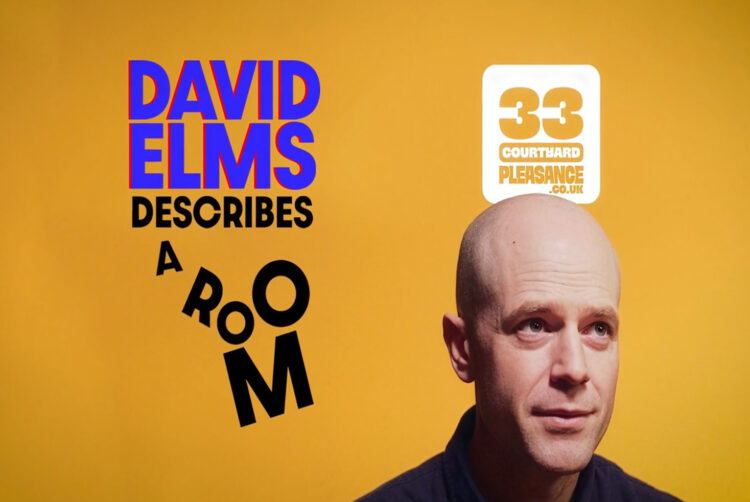
David Elms describes a room is a brilliant show with a title Ronseal would be proud of.
In the show, a man called David Elms stands alone in an empty space on a small stage and describes a room. The only set is a simple chair. For an hour, he asks his audience what is in different parts of the room, and together we slowly build a picture in our minds of what’s there.
Here’s an example of the first item from when I went to see it last week;
“So we have something hanging on the wall here. Lady there in the red top, what is it?”
“It’s a hula hoop.”
“Ok. Is it adult-sized or kid-sized?”
“Adult-sized.”
“And what colour is it?”
“Pink. But with silver bits.”
“Like ribbons?”
“Yes.”
“And is it made of plastic? Or metal?”
“No, it’s made out of a piece of hose, but it’s been melded together in a hoop.”
And this goes on for an hour. It sounds mundane, but it’s a joy to experience.
By the end, we’re all imagining the same room and its various parts. On our night, there was also a trampoline in the garden; the snooker player Dennis Taylor sat on the arm of a lime green armchair, looking elated; a frog sat on three gold bars; and a nameless cockerel stood perfectly still in an adjacent room. I suspect it’s different on other nights.
The Guardian calls it “A lesson in the transcendent power of collective imagining.” The List describes it as “A strikingly impressive feat of memory, world-building and forging of communal purpose.”
My takeaway was “oh wow, there’s so much that we could all take out of this about how effective communication works”. So here are four things:
With audio, our imagination does the rest
There were no visuals in the show, but we could all see something vivid. Afterwards, I reflected that it reminded me of this Kodacolour ad you can find in the History of Advertising Trust.
The ad invites people to imagine individual colours as sounds and then brings it all together in an incredible cacophony of sound at the end. Someone presented it to me years ago when I was just starting out in media. Which in itself tells you something about memory, doesn’t it?
By the way, you’re probably underinvested in audio because most brands are – our analysis with Radiocentre found that campaign ROI was most amplified when multi-platform audio accounted for 25% of media spend. This aligns with recent research from Mark Ritson and System1 that found that campaigns with audio outperform those without audio on profit, trust, price insensitivity and customer acquisition. Rory Sutherland calls radio “a grotesquely undervalued medium”. You will be doing your business a big favour if you get over that.
Strip everything back
It doesn’t get much more stripped back than one man on an empty stage for one hour with one chair, but let me tell you that everybody in the audience was captivated.
So by extension, you probably don’t need all those lines and logos on your poster. You definitely don’t need your 160 PowerPoint slides. You don’t need the autocue at your event to ensure you’re script-perfect. You don’t have to list every feature you have or to try to appeal to everybody all the time. And it doesn’t have to be a slick experience all of the time.
I recently attended a really vibrant event called Unscene, where they said that somebody had described the event the previous year as “vital, innovative and low-fi”. I enjoyed that description a lot. The low-fi, stripped-back nature of it made it better, not worse.
Find a repeatable format
David Elms describes a room is the same show every time, but a different show every time. He said at the end that “I hope to do this every day for the rest of my life”.
I loved that. Richard Osman is the master of this, by the way – Thursday Murder Club, House of Games, The Rest is Entertainment – repeatable formats but different every time. But a lot of brands struggle with it because of short-termism.
If your brand is lucky enough to have found the right repeatable format, hold on to it tight. And if you haven’t found one, don’t underestimate how effective it could be.
Human connection above all else. And it doesn’t have to be huge
What really happened in the show was that 100 or so strangers created a room together. After the show, David Elms gave a very short thank-you to the audience for “turning up and for being so playful”, telling us that “without your playfulness there’s no show.”
Genuine human connection and playfulness are life-affirming and memorable, but many macro trends are making them feel harder and harder to experience.
The obvious place to look for it is in huge, shared experiences (there’s a reason you can’t get Oasis tickets).
The wrong place to look for it is in our algorithmic feeds.
But we found it in a stripped-back room.
Where will your brand find yours?
David Elms describes a room has finished its run in Soho, but he’s doing a national tour next Spring.
 David Wilding is EVP strategy at WPP Media and writes a monthly column for The Media Leader.