



What does the future hold for CNN and CBS News?
Opinion
It’s finally a done deal, but what does Paramount Skydance’s acquisition of Warner Bros. mean for CNN and CBS News? Ray Snoddy looks at the evidence.
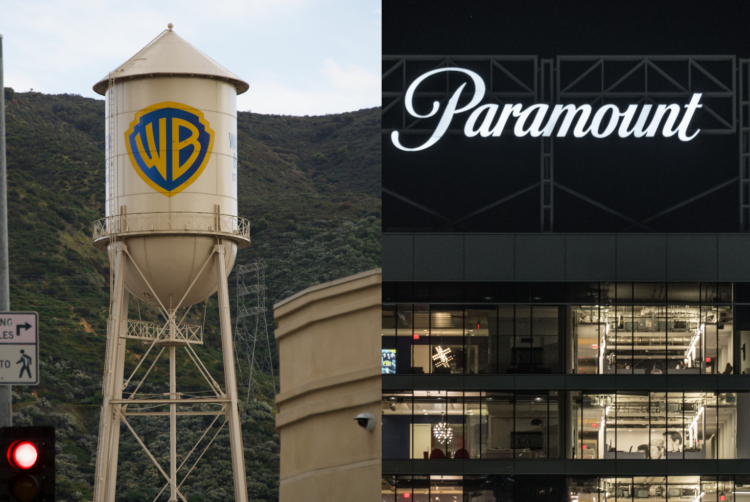
It is difficult to know what to make of the fact that yesterday the $111bn (£84.6bn) Paramount Skydance acquisition of Warner Bros finally closed after a last-minute appearance before the US Supreme Court by dissident Paramount shareholders failed.
Difficult to know, other than it is the most extreme example of the wave of consolidation spreading across the media and information industries with inevitable consequences.
You don’t need a Nobel prize in economics to be able to predict that many thousands of jobs will be lost, that the new business to be called Skydance will be loaded with debt – in this case more than $77bn -which adds to pressure on all of the businesses involved.
It is equally clear that eventually downstream, and maybe not all that far downstream, consumers will end up paying more for the services they consume by being forced to buy more expensive subscription bundles. Market power works for those able to wield it.
Then there is the small matter that puny national media organisations, however creative they may be, such as the BBC or Channel 4, will now inevitably look increasingly like the tiny minnows they already are in the scale of things.
But as with the media, issues beyond economics matter, such as freedom of speech, press freedom, and the obvious clout of politics.
Ellison and Trump
Critics have noted that along the trail of consolidation, the man atop the pinnacle, 82-year-old Larry Ellison, founder of Oracle, one of the richest men in the world, has had an easy ride from US regulators.
First, Skydance took over Paramount, and then Paramount Skydance swatted away critics and rival bids for Warner Bros. from the likes of Netflix, emerging victorious.
Difficult to prove cause and effect, but it might just have helped that the elder Ellison, his son David is the one running the businesses these days, is a friend of President Donald Trump and clearly shares the Trump worldview.
Larry Ellison donated $45m to organisations supporting Trump’s 2024 presidential campaign, and many millions have followed the same path after the second Presidential victory.
As for Trump, barely a day passes without new, ever more extraordinary statements. This week’s bon mots have included calls for New York Times reporters to be arrested for highlighting the banks of empty seats at Trump rallies.
Then there was the bizarre comment that if Los Angeles and San Diego were wiped out by Iran, it would have been “cheap at the price.”
A drift to the right
The record shows that when Skydance and the Ellisons took over Paramount, and with it the CBS Network and CBS News, there was a drift to the right, presumably to ingratiate themselves with Trump.
Trump filed a multi-million-dollar lawsuit against CBS, which was quietly settled, and CBS did not renew Stephen Colbert’s contract for The Late Show.
Financial reasons were cited, but the real reason was undoubtedly that Colbert criticised both Trump and the behaviour of CBS management.
The US president has made no secret of the fact that he cannot wait for Larry Ellison to sort out CNN – banned recently from the White House-and which, until yesterday, was part of Warner Bros.
Naturally, to get the Paramount Skydance – Warner Bros deal over the line, elaborate commitments have been made to protect the editorial independence of both CNN and CBS News.
We will see whether the agreements are worth the paper they are printed on – or whether financial issues will intervene again – it being notoriously difficult to make money from running international news organisations.
The agreements are elaborate, as indeed they should be. There will be separate independent journalism boards for both CBS and CNN, although the backroom newsrooms will effectively be merged, and no news writer layoffs are allowed for five years.
Sir Mark Thompson, former director-general of the BBC, will remain as chairman of CNN to steady staff nerves.
The biggest problems could arise from creating a five-member non-partisan “journalistic oversight board” to monitor bias and review disputes at CBS and CNN.
We shall see how non-partisan the members of the journalistic oversight board, presumably paid for by Skydance, turn out to be when President Trump or Larry Ellison make their views known.
Traditionally, multi-billionaires are very happy to set up endless committees designed to protect editorial freedom to get deals done, and anyway, five years is not such a long time in the evolution of media giants.
Probably the only real safeguard for editorial freedom at Skydance is that the current state of opinion polls in the US feeds into votes in next month’s Midterm elections.
If that happens, and as a result the Republicans lose control of both the House of Representatives and the Senate, and Trumpism starts to unravel, only then can CBS News and CNN begin to breathe more easily.
But the central problem of commercial funding for authentic news is unlikely to go away, and the situation could be much worse in five years when the guarantees run out.
The future of Sky News
Comcast, the American owner of Sky and Sky News, has, at least so far as an outsider can tell, an honourable record in protecting the editorial integrity of its news channel.
At the time of the takeover, Comcast agreed to guarantee Sky News for 10 years, which seemed like an eternity then but feels much shorter now.
The deal runs out in 2028 – almost the year after next -and Sky News, despite its many awards, is almost certainly a heavy loss-maker.
Last year, Sky News executives looked at different ways to create new income streams from things such as pay-walled podcasts, events and live shows.
It is not clear how long Comcast will continue to fund a television news channel in its present form once the guarantee period runs out.
The underlying problem is that, whether it is Sky News, CNN or CBS, young people are less likely to watch linear news channels, and it is difficult to make much money from streaming news alone.
Perhaps the best hope is that some of the multi-billionaire owners of media organisations will come to recognise that the societies in which their companies flourish cannot survive without properly researched and verified news.
 Raymond Snoddy is a media consultant, national newspaper columnist and former presenter of NewsWatch on BBC News. He writes for The Media Leader on Wednesdays — bookmark his column here.