



Neurodiversity in Media calls for inclusive office policies and improved management training
During a gathering convened by Neurodiversity in Media (NDIM), a panel of neurodivergent media leaders agreed the industry would benefit from improved management training, more inclusive office policies and spaces, and improved efforts to increase neurodivergence disclosure.
The panel, which took place at IAB UK’s London offices yesterday to mark the annual Neurodiversity Celebration Week, was chaired by Publicis Groupe global retail media lead Pedro Ramos. It included MiQ’s global head of inclusion Ally Tyger-Doyle, ex-Uber Advertising EMEA head Paul Wright, Neurodiversity in Business founding member David Pugh-Jones, and Nectar360’s director of digital media Alice Anson.
Wright called neurodivergence a “superpower”, but said business leaders must be willing to recognise that there are “quirks” in how neurodivergent people best accomplish their work that should be catered to.
Amazon, where Wright worked from 2019 to 2022, for example was a very document-oriented business, which he found challenging as someone diagnosed with dyslexia.
Pugh-Jones, meanwhile, candidly acknowledged that he had likely been discriminated against on the basis of his own neurodivergence. He is diagnosed with ADHD, and proudly referred to himself as “bouncy”.
“I do know that I lost quite significant jobs in my career because of who I am and my traits,” Pugh-Jones said. Now in a position of leadership, as chief marketing officer for AI-driven scientific research platform Corpora.ai, he has committed to a much more open practice of considering job candidates.
“We’re all just trying to find the best in ourselves, and trying to find the best in everyone else,” he added.
‘What’s good for the hive is good for the bees’
NDIM was founded in 2024 by media strategist and consultant Simon Akers in tandem with Omnicom Group’s Jasmine (“Jaz”) Poke. The initiative, which is neither a charity nor a non-profit, aims to foster conversation about and promote the needs of the neurodiverse community in the media and advertising industries.
Between 15% and 20% of the UK population is estimated to be neurodiverse, equivalent to around one in every seven individuals. The creative industries and technology companies, some have posited, are likely to overindex on the number of neurodiverse members of staff.
“In media, we’re so obsessed with portraits and personas — you know, ‘Barry shops in Asda and goes on Tui holidays,'” said Akers. “Why aren’t we looking at the people who are doing the work?”
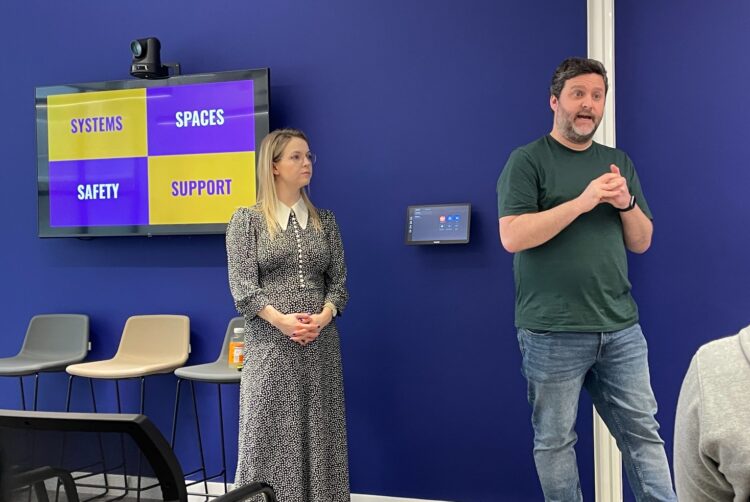
NDIM launched with a “4S’s Manifesto”, urging media businesses to consider systems, spaces, safety and support for their neurodivergent staff.
However, the effort has come up against waning support from business leaders amid a backlash to diversity, equity and inclusion efforts that came about amid the fallout from
The two most significant barriers to change, Akers and Poke described, are a lack of disclosure from neurodivergent employees, and a lack of understanding of neurodiversity by managers and other decisionmakers.
Neurodiverse action group launches after Future 100 manifesto
Citing 2024 research from Zurich Insurance UK, Poke noted that one in five British employees have been laughed at when disclosing their neurodivergence to their employer. More than half (51%) of neurodiverse individuals said they feel they are unable to disclose their neurodivergence due to stigma.
The perception of stigma is not unfounded. The study found that 39% of line managers find it difficult to have conversations around neurodiverse employees’ needs, while nearly half (49%) of employers lack sufficient organisational knowledge of neurodiversity to address staff needs.
Putting a fine point on the concern, Poke noted that two-thirds (63%) of neurodivergent adults said they believe employers view neurodiversity as a “red flag” rather than a strength to be harnessed.
Such a perception makes it challenging for neurodivergent people to disclose their status to their employees, let alone discuss with their managers how working practices might be best adapted for their needs.
But as Poke argued, “psychologically safer businesses lead to better business outcomes”. Neurodiverse staff, she said, have been found to increase productivity, embrace the transition to AI, and maintain a higher rate of staff retention.
“What’s good for the hive is good for the bees,” Akers added. “If you cater for the extremes, you make it good for everyone.”
RTO a barrier
The panel unanimously agreed on both the importance of providing physical spaces in offices that cater to neurodivergent staff — such as breakout rooms, soundproof booths, and sensory rooms — as well as greater flexibility in work-from-home policies. Anson, for example, said return-to-office (RTO) mandates have become a barrier to employment.
RTO, Wright agreed, is a “bizarre” policy for business leaders to be pushing, one that is not sensitive to the needs of their own labour force. Often, the office employees are being forced back into an office that doesn’t even have enough seats, he noted.
“I’m at a bit of a loss as to why we’re doing this, unless it’s just business leaders doing a power play,” Wright surmised. Anson suggested that RTO policies are merely being enforced because business leaders want a return on investment in their own real estate, rather than because they meet staff needs.
She asked that NDIM speak more with other groups that are harmed by RTO policies, such as carers, to make their “collective voice more powerful” in discussions with business executives.
Pugh-Jones also argued that office spaces are being designed “like battery hens,” and challenged business leaders to question the assumption that everyone in their organisation does their best work from nine in the morning to five in the evening, with a lunch break in between.
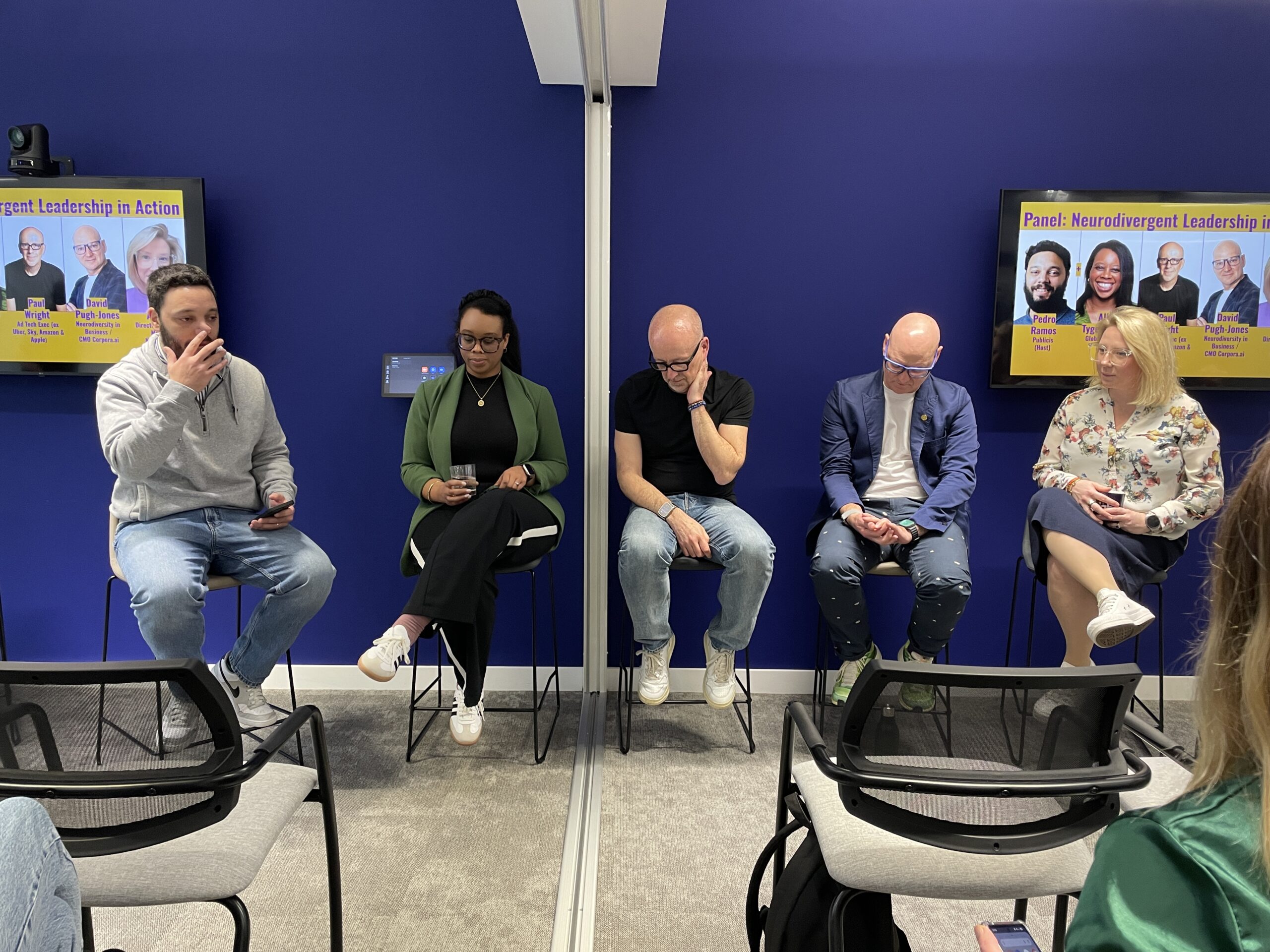
NDIM panel. L-R: Ramos, Tyger-Doyle, Wright, Pugh-Jones, Anson
Need for management training, new recruitment processes
Anson recognised that a lack of disclosure is a key issue the industry must reckon with. Despite being diagnosed with ADHD as a child, she did not feel comfortable disclosing that diagnosis to an employer until just three years ago, while at Nectar360.
Wright agreed that businesses should seek out disclosure and tailor ways of working to individuals. At MiQ, Tyger-Doyle described that the business has instituted a “passport of me” that can be used to streamline disclosures, identify, and meet individual needs.
Anson added that the “recruitment process needs ripping up”, noting that most neurodivergent people decline to disclose any diagnoses on applications because doing so has no upside and can only put their application at greater risk.
Such policies require better-trained leaders who are open to new ideas and able to proactively work with neurodiverse employees.
But as Wright described, media industry leadership “has got worse” in recent years, citing a collapse in in-person training efforts and a move to video-based training as a box-ticking exercise for HR.
Not only are managers not trained in neurodiversity, he said, but they aren’t even being adequately trained, full stop.
That needs correcting if businesses are to innovate, succeed and grow, Wright suggested.
He concluded: “All the best teams I’ve ever had are diverse, in every way.”